
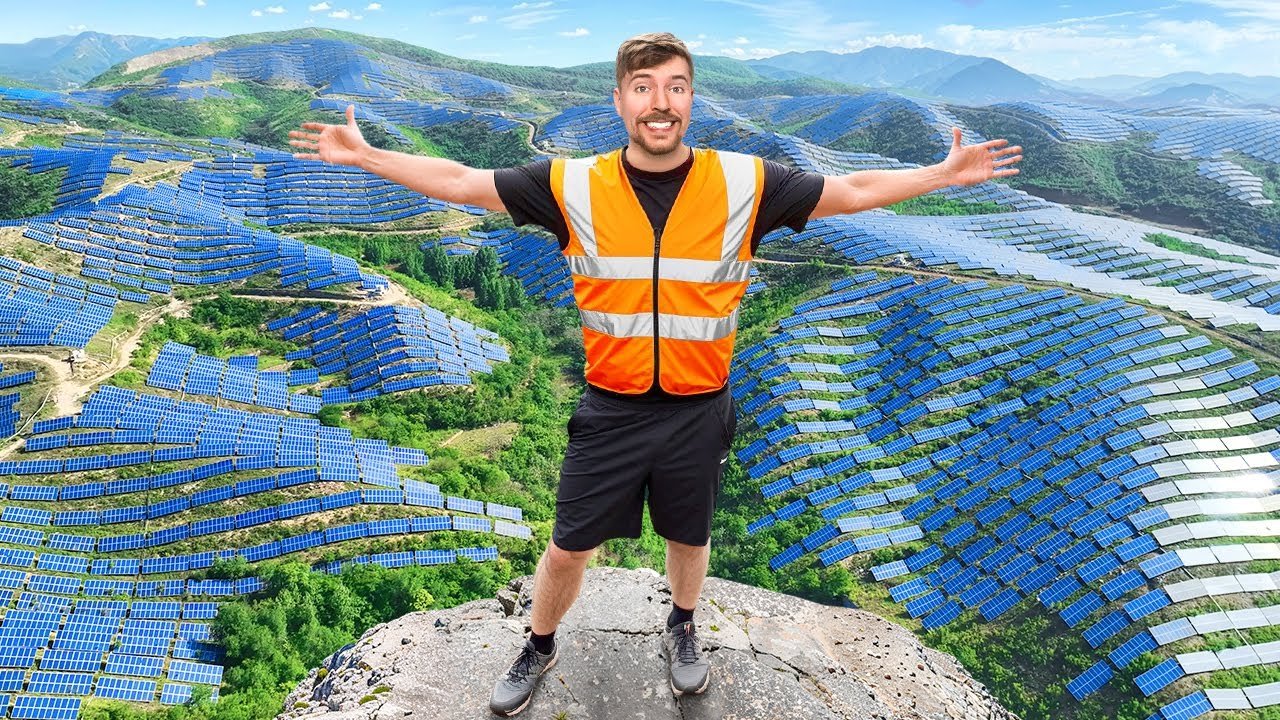
Perched above 2,700 meters in a remote region of Nepal, a crumbling, electricity-free hospital in the village of Kulagaun has been transformed into a fully operational medical facility — now powered by solar panels and equipped with a modern maternity ward, all documented by Beast Philanthropy in partnership with Give Power and the Green Program.
A Hospital Operating in Darkness — Until Now
Before the project began, local physicians at the Kulagaun facility were performing surgeries and complex medical procedures by flashlight, using only rudimentary tools. The community’s extreme geographic isolation meant that any patient requiring advanced care faced a seven-hour journey on foot to the nearest major medical facility. For a woman named Nira, that distance carried devastating consequences: she previously lost a child after being unable to reach a birthing center in time, traveling over monsoon roads that stretched far beyond her reach. Due to insufficient government funding, the government’s own timeline for extending electricity to this hospital stood at 2030 at the earliest.
Darrin, traveling alongside Dan as part of the Beast Philanthropy team, met Give Power’s local engineer Sanjay on the first morning of the expedition. Sanjay relayed Nira’s story directly, and Darrin described the encounter as the moment that made immediate action feel non-negotiable.
Darrin, Dan, Sanjay, and Melissa Build a Solar-Powered Future
Darrin connected with Melissa, founder of the Green Program, who brought a cohort of students and volunteers from around the world to support the construction effort. On Day 1, the full team completed all excavation and conduit work before sunset. By the following days, the support structure was erected and the solar panel array was mounted and wired — finishing ahead of schedule despite Dan falling ill mid-project. Kulagaun nurse Karuna conducted a basic examination of Dan on-site, but the absence of electricity meant she could do little more than a manual check. Dan was diagnosed with ‘ghate’ — a common cold — but the encounter underscored precisely what the project was designed to fix.
Darrin honored Sanjay with a personal gesture after learning about Sanjay’s invention: a baby warmer called ‘Nyano Nani,’ meaning ‘warm baby’ in Nepali, which Sanjay developed after discovering a newborn being kept alive beside a lantern in a wooden box high in the Himalayas. ‘Nyano Nani’ went on to win the People’s Choice Award in the United States. Darrin purchased ten additional Nyano Nani units on the spot, instructing Sanjay to distribute them to any hospital or community with similar needs.
On the final evening of construction, the entire village of Kulagaun gathered outside the hospital. Darrin closed the last bolt on the final solar panel as the team counted down together. When the lights turned on for the first time, Sanjay described the moment as a dream made real. The following morning, Sanjay brought Nira to the hospital to show her the fully equipped maternity ward, including the Nyano Nani warmers. Sanjay reported that Nira said she was deeply grateful and optimistic that no one in Kulagaun would ever experience what she had been through.
Mount Everest and the Road Home
On the final day, Darrin and Dan surprised Sanjay — a lifelong Nepali resident who had never seen Mount Everest — with a helicopter flight to the highest landing point accessible near the summit. With oxygen levels too thin for more than two minutes at that altitude before risking hypoxia, the trio took in the view briefly before descending. Sanjay dropped to his knees. ‘It is a dream for me to come here and see Everest,’ he said.
The completed solar installation now powers a hospital serving more than 16,000 people across the Kulagaun community — a figure that places this single project in the company of rural electrification efforts that the International Energy Agency identifies as essential to achieving universal healthcare access in high-altitude developing regions, where grid extension costs can exceed $10,000 per household. For Nira, for Sanjay, and for the 16,000 residents of Kulagaun, the lights that turned on that evening represent a permanent change in what survival looks like on the mountain.