The whiteboard came first. Before any camera was packed, before any flight to Kathmandu, before a single frame was shot in the remote Nepali village of Kaguan, filmmaker Dan Mace stood in front of a blank white wall and wrote a single sentence on a small piece of paper he could fold into his pocket. That sentence — a log line describing 16,000 people without electricity, a makeshift clinic without equipment, and a mountain that would need to be climbed with solar panels — became the compass for everything that followed.
The film that grew from that sentence is called ‘We Powered a Mountain,’ made for the Beast Philanthropy channel alongside executive director Darren and MrBeast. But the tutorial Mace built around the making of that film — a production that took more than 400 hours of editing time and over three months to complete — is what he describes as the most comprehensive filmmaking guide he has ever attempted. It runs longer than a feature film and covers every phase of production from the first spark of an idea to the moment an export file lands on YouTube.
Why the log line gets written before the plane ticket is booked
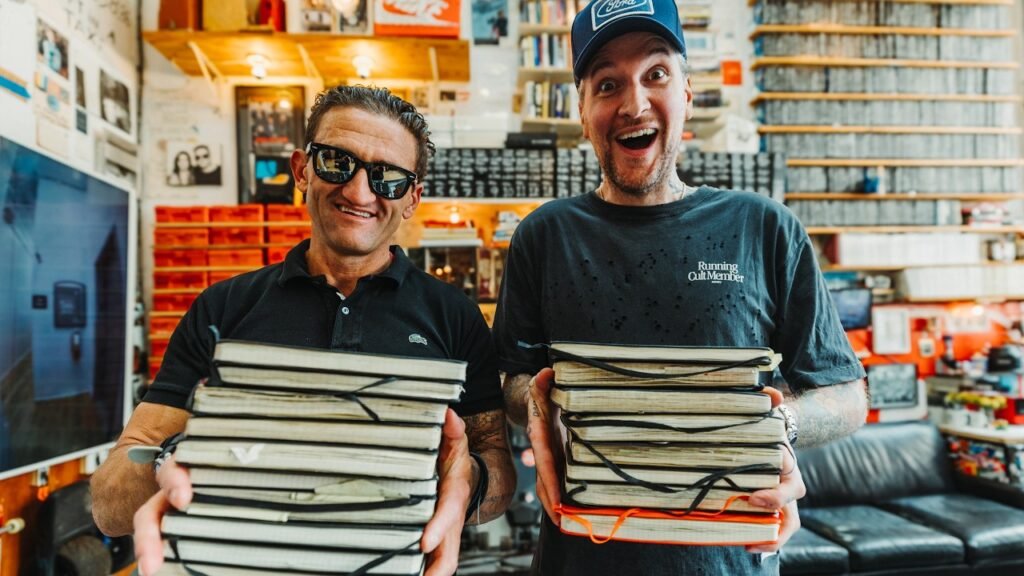
Mace opens the tutorial by walking through ideation with a precision that most filmmaking guides skip entirely. When asked what to do without an idea, filmmaker Casey Neistat told Mace to look at what he already had and let the idea come from there. Mace built on that into a structured habit: gathering a group of collaborators, running a ten-second free-association game, and compensating anyone whose offhand suggestion eventually becomes a finished film.
The log line formula Mace uses is built around four components: the problem, the intention to overcome it, the obstacle, and the solution. For the Nepal project, the problem was a village of 16,000 people without electricity, which made medical care nearly impossible. The intention was to bring solar power to the hospital. The obstacles included terrain at altitude, temperatures dropping to around -4 degrees Celsius, and a funding challenge solved through Beast Philanthropy’s backing. The solution — powering a hospital and constructing a birthing center — was designed to feel, in Mace’s words, ‘inevitable yet surprising.’ He kept the final log line to 26 words, one over his preferred maximum, written on paper small enough to fold into a shirt pocket.
Thumbnail and title development happens at the same stage as the log line, not after filming. Mace explains that the relationship between thumbnail, title, and the opening line of a video directly affects click-through rate, which in turn determines whether a film reaches ten thousand views or ten million. The title ‘We Powered a Mountain’ was chosen specifically because the word ‘mountain’ in the thumbnail — showing solar panels on a peak — answers the viewer’s first question before the video even begins.
The edit that moved between Cape Town, India, and a Los Angeles Airbnb
Post-production on the Nepal film did not happen in one room or one country. Mace began cutting selects in Cape Town, continued building the master sequence on a plane to India while simultaneously shooting a separate project there, and finished the final version in a rented apartment in Los Angeles. He describes the first 1 minute and 30 seconds of any film as the hardest section to cut — the place where he rebuilds from scratch multiple times until the structure holds.
That structure breaks into distinct zones: the first seven seconds deliver an impactful line, usually Jimmy to camera; the seven-to-thirty-second range gives viewers a reason to care by introducing a universal problem — electricity, water, medical access; and the thirty-second to ninety-second stretch begins communicating the full narrative. Mace recorded his own voice in place of Jimmy’s during the early edit, reading lines aloud in Jimmy’s cadence to test pacing before the actual voice-over session.
The music for the film was built from sounds recorded in Nepal itself. Mace had composed a rough melodic motif before leaving Cape Town, then on location asked a local musician he encountered — a man playing guitar outside — to perform while he recorded the ambient sound. That recording was sent to his collaborator Jason, who developed it into stems. According to Mace, music accounts for roughly 40 percent of a film’s emotional impact. He uses a four-chord progression he describes as nostalgic and melancholic, returning to it throughout the edit the way a documentary might return to a visual motif, triggering what neurologist Paul Zak’s research identified as oxytocin release in viewers. According to Zak’s experiments, subjects who watched an emotionally structured story showed a 47 percent increase in oxytocin levels and donated more to the cause described in the film than those who watched a descriptive version.
The character of Sanjay, a Give Power engineer who had discovered a village infant kept alive in a wooden box under a light bulb, became the emotional center of the film’s second half. Mace placed Sanjay’s story after the construction scenes not because it was the most dramatic moment chronologically, but because the audience needed to have met the community before Sanjay’s personal history would land with full weight. The final surprise — taking Sanjay, who had never visited Everest despite being Nepali, by helicopter to the highest point a helicopter could reach at around 17,500 feet — was unscripted and came from a conversation on location. Sanjay dropped to his knees at the sight.
A man on his knees at 17,500 feet
Sanjay, the Give Power engineer who had spent years bringing solar infrastructure to remote communities across Nepal, had never stood anywhere near Everest. On the last morning of the shoot, Darren arranged for a helicopter. At the top, the air was thin enough that both men were allowed only a few minutes before hypoxia became a risk. Sanjay fell to his knees.
Back at the roadside where a rickety transport had first carried the crew on a nine-and-a-half-hour journey up from Kathmandu, that moment on the mountain was still hours away from existing. The log line was still folded in a shirt pocket. The whiteboard was still blank.
Source: Watch original
This article was reported in June 2026.
OHN Editorial Note: This article is based on publicly available sources. If you spot an error or have updated information, contact us at editorial@onlyhappynews.com. We correct mistakes promptly.