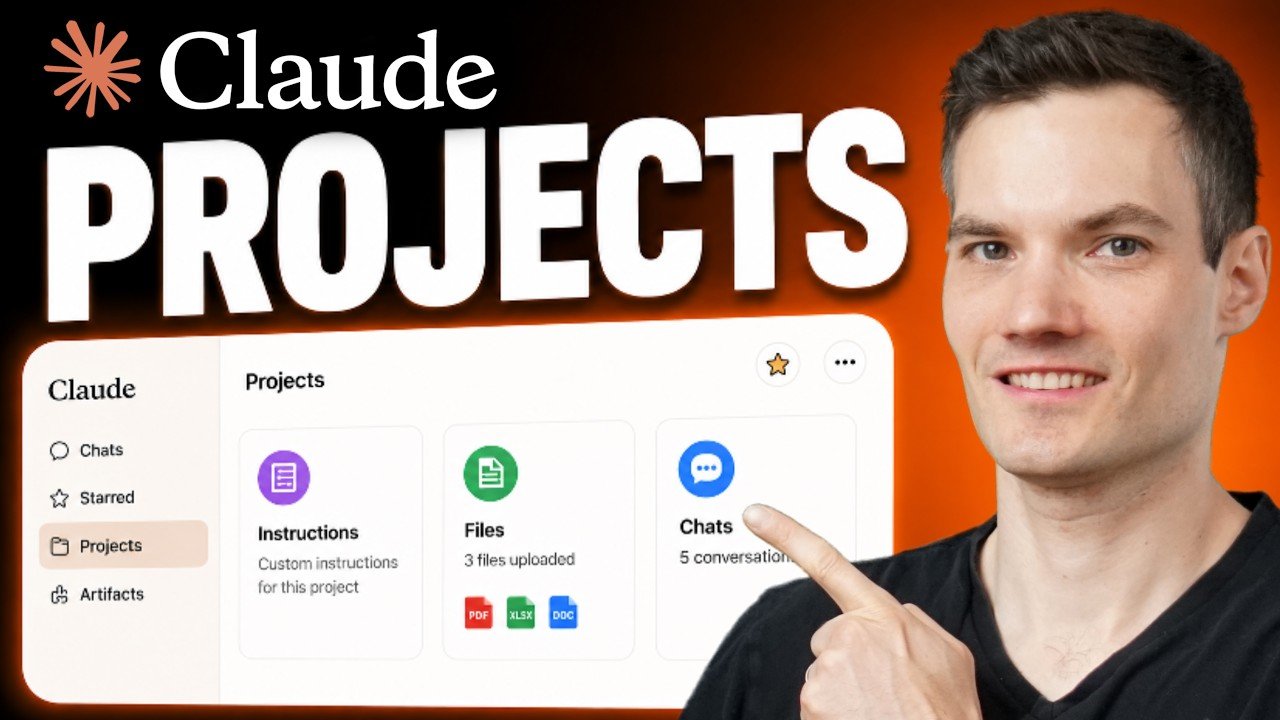
Kevin has a cookie to launch. Specifically, a brown butter salted caramel cookie for the Kevin Cookie Company, and he is using Claude Projects to manage every file, instruction, and conversation the launch requires in a single organized workspace. For anyone who has ever opened an AI chat app and found themselves scrolling through dozens of unrelated conversations to find that one pricing note from three weeks ago, this is the problem being solved. The walkthrough moves from project creation through file uploads to archiving, with a fictional but very convincing small-batch cookie operation as the through-line.
Setting up a workspace that remembers the rules
The first move is naming the project and starring it so it surfaces immediately in the sidebar under a dedicated section rather than getting buried in a general chat list. From there, Kevin opens the instructions panel and types a deliberately simple directive: start every response with a cookie emoji. The point is not the emoji. The point is that the instruction carries across every future conversation inside that project without needing to be repeated. In practice, he notes, those instructions would cover tone, formatting, branding voice, or workflow steps specific to the work at hand. When he asks Claude to write a tagline for the new cookie and the emoji appears at the top of the reply, the mechanism is visible and the principle lands clearly.
Files that travel with the project, not just the chat
The more consequential feature is file persistence. Kevin drags three documents into the project: a customer survey with feedback on the cookies, a product pricing spreadsheet, and a branding notes file. Once uploaded, those files are available as context in every new conversation inside the project without re-uploading. He asks Claude to summarize the customer feedback and it pulls themes from the survey immediately. ‘Clearly, we’re running a very sophisticated cookie operation over here,’ he says of the three-document setup, though the organizational principle scales to any professional or academic use case with a heavier document load.
One distinction worth noting: files dropped into an individual chat stay local to that conversation and do not become part of the broader project knowledge. The difference matters when deciding whether a document is a one-time reference or something that should inform every future conversation in that workspace.
Managing chats is similarly granular. Any conversation can be removed from a project, moved to a different one, or pulled in from elsewhere in Claude’s sidebar. Existing chats that predate a project can be reassigned to it through the same three-dot menu.
When the launch wraps, archiving clears the active project list without deleting anything. Kevin archives the cookie launch project with the observation that a cookie successful enough to no longer need active management would be, as he puts it, ‘a nice problem to have.’
The brown butter salted caramel cookie itself
The Kevin Cookie Company project folder, three files deep and fully starred, sits in the sidebar as a tidy demonstration that the tool works exactly as described.
If the cookie does as well as the tutorial, the archive folder is going to need its own system.
 Wake up to Only Happy News!