Somewhere in the deepest lake in Europe, a creator ditched the tripod, ditched the boom mic, ditched eight years of heavy-camera habits, and swam back to shore with footage that looked like it came off a cinema rig. The question that framing raises is not whether the technology is impressive. It is whether that technology finally makes the invisible possible, meaning gear that disappears so completely that the story takes over. After eight years of vlogging, including time behind a Red Monstro with cinema rails and anamorphic glass, that is the only question that still matters.
The feature that ended the argument for him
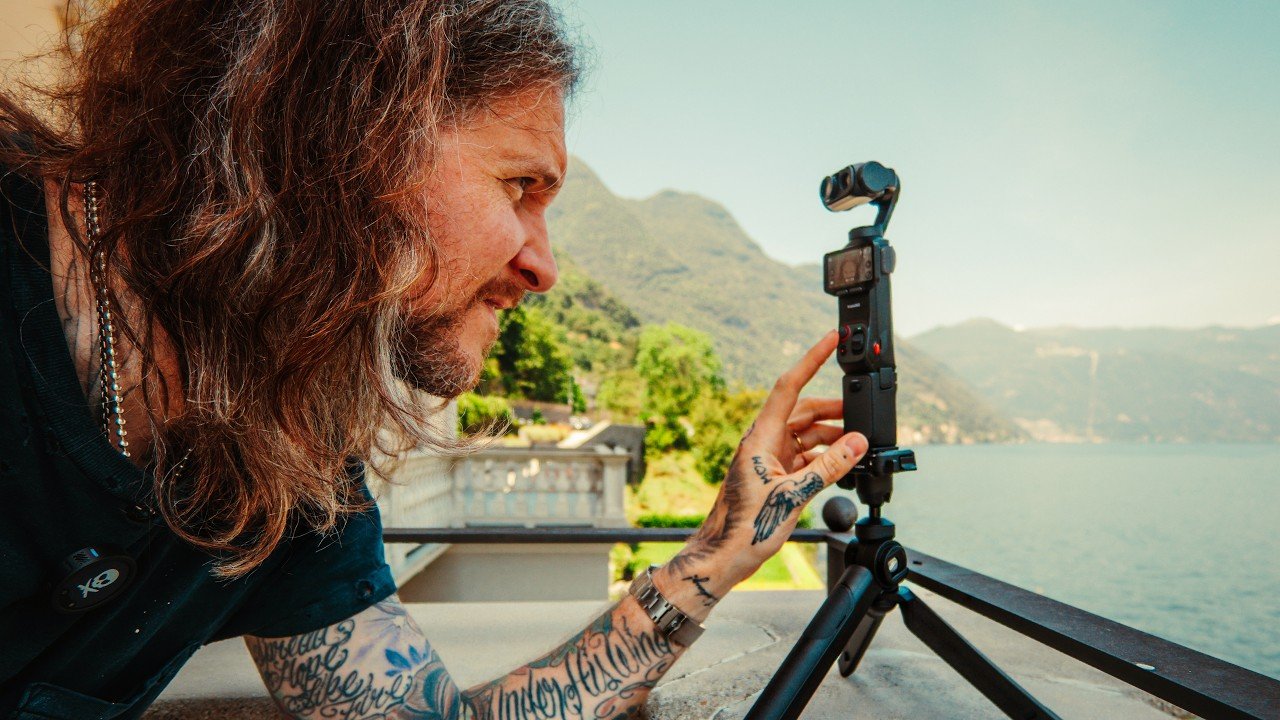
The camera at the center of this is the Insta360, and the single detail that keeps returning to the conversation is the detachable front panel that doubles as a wireless microphone and monitor. Shoot from the pool. Shoot from a dock. Talk at a normal volume while swimming. None of that was logistically possible before without a boom operator, a body-worn wireless rig, or a lot of shouting. Now the front panel pops off, you frame up from across the pool on a six-times or twelve-times optical zoom backed by a Leica lens, and the audio comes with it. As the creator put it plainly: ‘if you also don’t have that then it’s game set match, it’s over.’
The Leica optics matter here beyond the brand name. There is a varium inside the unit, which means the zoom is lossless because the camera is capturing 8K and downsampling to 4K rather than digitally degrading the image. Two physical lenses ship with it, a 20 mm and a 60 mm equivalent, and there is a macro mode that did not even make it into the full test run. The dynamic range held up in a direct challenge: the creator sitting in deep shade with a sun-bright lake behind him, and the monitor showed clean detail in both the sky and the shadowed face at the same time.
What a water bottle pocket says about filmmaking in 2026
The honest reservations are here too. The built-in fold-out feet drew an immediate and accurate comparison: ‘my friend put it perfectly, they are paperclips.’ A passing breeze, a kid walking by, any minor disturbance and the camera is going over. A small tripod or a flexible mount pod is the real answer for any surface placement. The active tracking, triggered by a double-tap on a subject, works fast and keeps up even when the camera is mounted high and the subject moves away. For anyone filming alone, that matters more than almost any other single feature.
The low-light footage from the night portions of this test was shot without ever switching into the dedicated pure video mode, a mode that specifically optimizes for dark environments. The footage still looked good. That is less a boast and more a practical data point: the camera performs at a baseline that most users will never bother to push past, and the ceiling is higher still.
The paperclip feet, still holding
The little fold-out legs are propped against a poolside surface, the camera framed, the monitor live across the water.
The question the creator kept circling back to is not really about gear at all. Would you rather make fewer videos with a heavier, more cinematic kit, or more videos with something that fits in the water bottle pocket of a backpack and still delivers 8K with a Leica lens? Eight years behind a camera, and the answer is the second option every time, because the footage that does not get made does not exist, and the lake is right there.
 Wake up to Only Happy News!