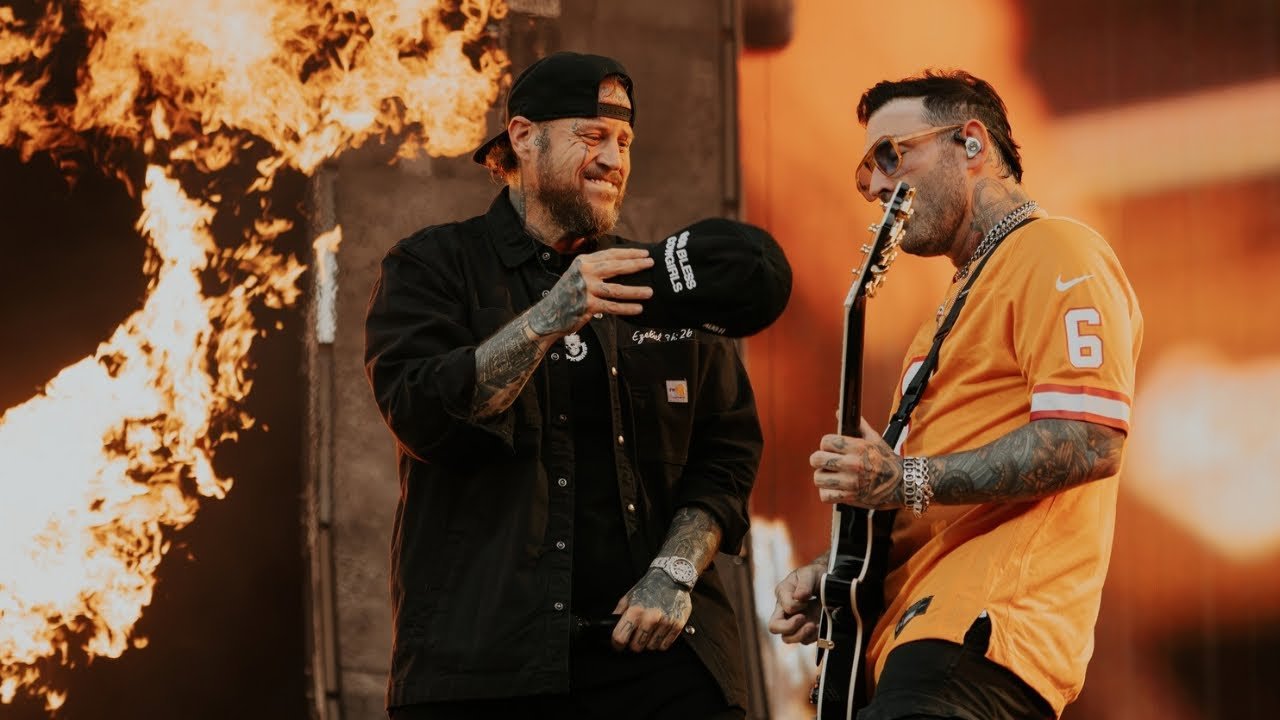
Somewhere in the crowd, a handwritten sign caught Jelly Roll’s eye mid-show: an 80-year-old woman named Marley was standing in the venue, and this was her first concert ever. He stopped, called her up, and she made it to the stage faster than he expected. ‘I couldn’t move that fast, baby,’ he told the crowd, laughing. What followed was one of those small, unrepeatable human moments that no setlist can plan for. But the night in Virginia was only the most visible chapter of a longer story about a musician navigating recovery, food addiction, stadium storms, and a bowling alley in Toronto.
The skillet cookie that started a five-day spiral
Before the stadium lights, there was a catering tent and a dairy-free skillet cookie. Jelly Roll has spoken openly about his relationship with food, but the conversation on this leg of the tour got specific in a way that cuts through the usual recovery-speak. He described eating one cookie backstage, then stopping at a taco truck, then finding himself at a rest stop at 3:00 in the morning asking his tour manager JB whether there was dark chocolate inside. JB told him there was none and steered him back out. ‘If you want to catch me,’ he said, ‘go look through the car. You open that car, it’s all right there. You see five Snicker wrappers, you know I’m off.’
The point he was making was not about willpower. It was about the architecture of addiction. He has never had a single shot of alcohol, never done a line of cocaine, never smoked a joint in moderation. It has always been all or nothing. Once he recognized the same pattern in food, the approach changed: not restriction, but removal. The skillet cookie is not something he can moderate, so he simply does not eat it. ‘You can have one for a cheat meal,’ he said. ‘I can’t. It could be a five-day food bender for me.’ His rule going forward was not to swear off the cookie forever but to go a month or two without one and not to punish himself for the days it went sideways. ‘You hit a bad note, who cares? The next note already started.’
A rain tour, a rented bowling alley, and a stadium with Post Malone
The tour itself had taken on an unofficial nickname by the time the crew reached Virginia, where crew member Alex grew up near Richmond. Rain had followed nearly every show. The production team evacuated the lawn, sheltered fans in place, and projected a clearance window around 7:00 p.m. before the gates reopened. Jelly Roll greeted the update with a flat deadpan: ‘I love it when you walk in with such great news.’
On a day off in Toronto, Ontario, he rented out an entire bowling alley for the crew, which the tour camp described as a standing tradition. He has done the same with water parks. Post Malone was on the bill at Rogers Stadium that night, and the two greeted each other with the specific warmth of people who do not see each other enough. ‘Every time I see you, I get excited, dog,’ Jelly Roll told him.
At the Rock and Roll Hall of Fame in Cleveland, Ohio, newly installed artifacts from Jelly Roll now occupy a gallery: a John Varvatos jacket worn to the Grammy Awards and a custom Levi’s jacket alongside custom Nike sneakers from the same night. A staff member at the Hall noted that he uses the platform to raise awareness around addiction and visits rehabilitation centers and juvenile detention centers during tour breaks.
Miss Marley, moving fast
The sign in the crowd said 80 years old. Jelly Roll admitted he did not believe it. Then she started walking toward the stage. ‘She was on hot wheels,’ he told the crowd. ‘That lady was cooking.’ He told her he thought she looked 60, thanked her for making him her first, and said he hoped it started a run of 50 more concerts over the next 20 years.
Marley made it to the stage and back, first concert done, in a Virginia shed venue that had been soaked and dried and soaked again all tour long. The rain, as it turned out, was not the story.
 Wake up to Only Happy News!