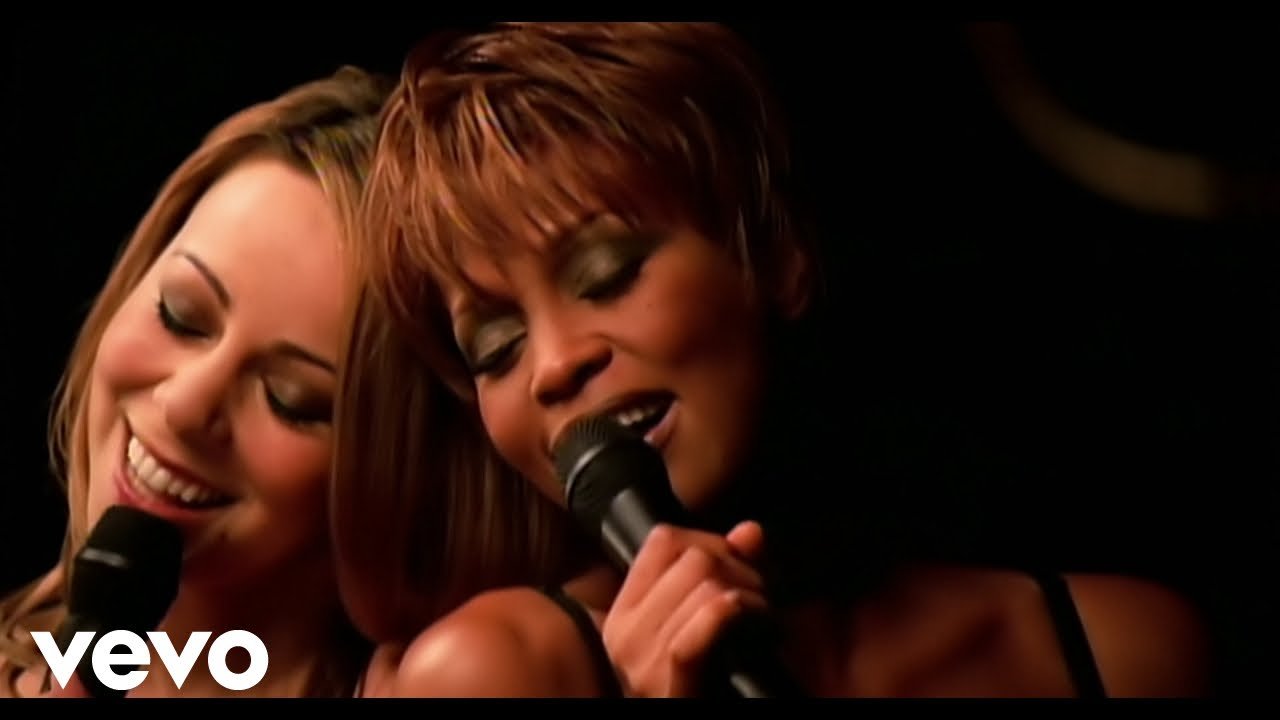
Two voices, one quiet piano line, and a lyric that opens on pure doubt. Whitney Houston and Mariah Carey begin ‘When You Believe’ not with triumph but with the admission that they prayed for years without any proof someone was listening, and that the song they carried in their hearts was one they barely understood themselves. That tension between fear and faith is exactly why the collaboration has endured. When two of the most powerful singers of their generation choose to open softly, the listener leans in.
A lyric built from the inside out
The song moves through three distinct emotional positions without ever announcing the shift. The opening verse sits in the past, describing nights of unanswered prayer and a hope so fragile it is compared to summer birds gone too quickly. The second verse pivots to the present: a narrator standing somewhere new, heart too full to explain, speaking words she never thought she would say. The bridge lands the complication that makes the whole thing honest rather than merely uplifting. ‘They don’t always happen when you ask,’ the lyric acknowledges, ‘and it’s easy to give in to your fear.’ The resolution is not a guarantee but a posture: when pain blinds you and you cannot find your way through the rain, a still, resilient voice says love is near. The song earns its chorus because it admits the cost first.
What the arrangement lets the voices do
The production keeps space around both singers throughout. The gentle instrumental opening gives way to verses where each voice is relatively contained, which makes the chorus land harder by contrast. The repeated return to ‘somehow you will’ in the final movement strips the arrangement back rather than building it up, and the result is that the last ‘believe’ carries more weight than a conventional orchestral swell would have. Carey’s final extended notes and Houston’s layered harmonies in the outro function less as a vocal competition than as a demonstration of what two people can hold together that neither could hold alone.
The line that stays
The bridge contains what is arguably the most specific image in the entire song: ‘when you’re blinded by your pain, can’t see your way safe through the rain.’ The phrase ‘safe through the rain’ is an unusual construction, not dramatic, not poetic in a showy way, just precise about the sensation of needing someone to guide you through something you cannot see past. It is the kind of detail that does not announce itself as a great lyric but surfaces in the memory later.
Whitney Houston’s vocal on that bridge line sits just below full power, which is the choice that makes it land.
The song closes where it began: two voices, a piano, and the word ‘believe’ left in the air without resolution, still asking the same question the opening verse raised, just from the other side of it.
 Wake up to Only Happy News!