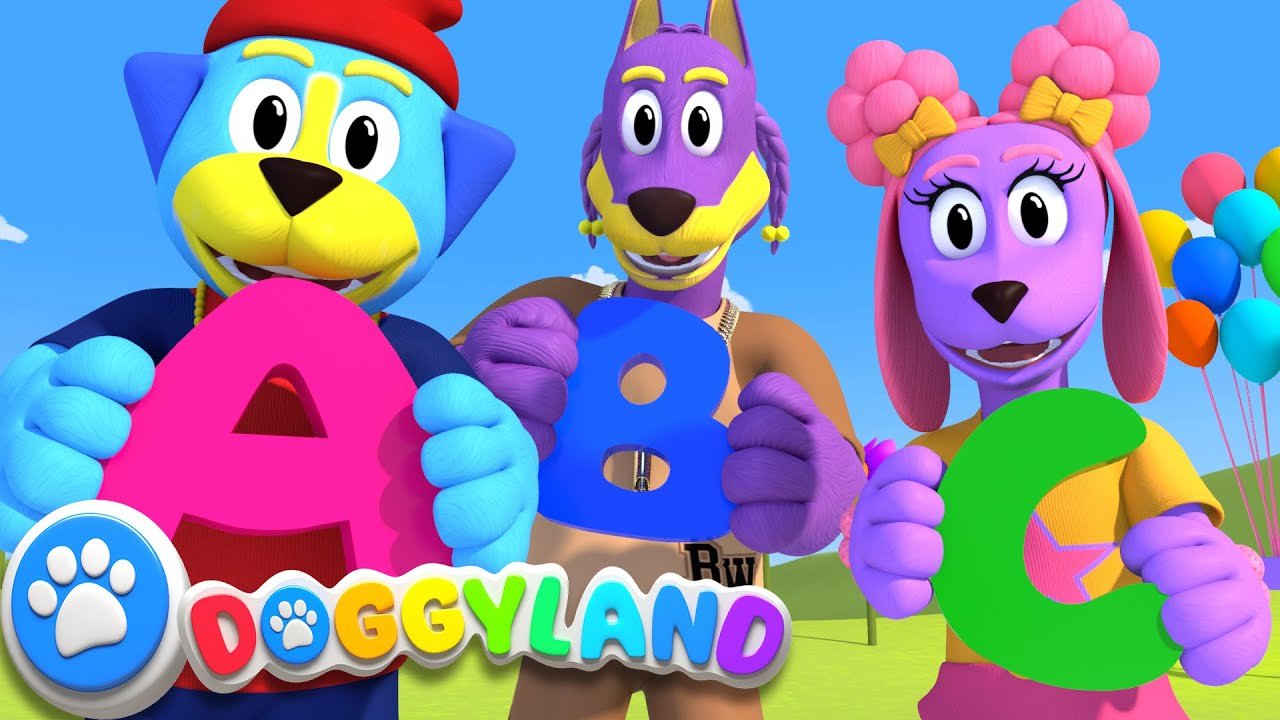
Bow Wizzle called the room to attention the moment the horn sounded and Doggyland erupted in cheers. For any child who has ever struggled to remember whether L comes before M, or whether the stretch from Q to V is one letter or five, this is the kind of repetition that actually sticks: the same song, sung three times in a row, each round building just a little more confidence than the last. The session opens with Bow Wizzle rallying a group of young pups for a shared sing-along, the whole thing framed less like a lesson and more like a celebration that happens to involve the alphabet.
Three rounds and the volume keeps climbing
The first run through the alphabet is straightforward and clean, all 26 letters accounted for from A to G all the way through to Z, closing on the familiar ‘now I know my ABCs, next time won’t you sing with me.’ Before the echo fades, Bow Wizzle calls for a second round. ‘You guys are getting better and better and better each time,’ he tells the group between passes, and the encouragement is specific enough to feel genuine rather than automatic. By the third attempt, the instruction shifts: ‘if you’re ready, sing it louder.’ The repetition is the pedagogy, the kind of low-pressure looping that language researchers have long connected to early phonemic retention, and it is dressed up here in enough warmth and momentum that no child in the room would recognize it as a drilling exercise.
Why the format works for the youngest learners
Doggyland, the children’s music project fronted by Bow Wizzle, builds each session around exactly this structure: a hook that kids recognize, a character they trust, and a repeated invitation to participate louder. The ABC song used here follows the traditional melody without modification, which matters because familiarity is the entire point. A child who has heard the tune before is already halfway there; hearing it again in this setting, surrounded by enthusiastic peers and a host who sounds genuinely delighted, gets them the rest of the way. Bow Wizzle put the goal plainly at the top of the session: ‘we got all our special friends to come and sing the ABCs with us.’
A small voice in the second row
Somewhere in the group, a child’s ‘yeah’ comes out half a beat early when Bow Wizzle asks if everyone is ready for the final round, before the question is even finished.
The horn that opened the whole thing could easily belong to any Saturday morning, any living room floor, any child who just figured out that W, X, Y, and Z are four separate letters and not one long sound. Bow Wizzle gives them three chances to prove it, and by the third, they are singing louder.
 Wake up to Only Happy News!