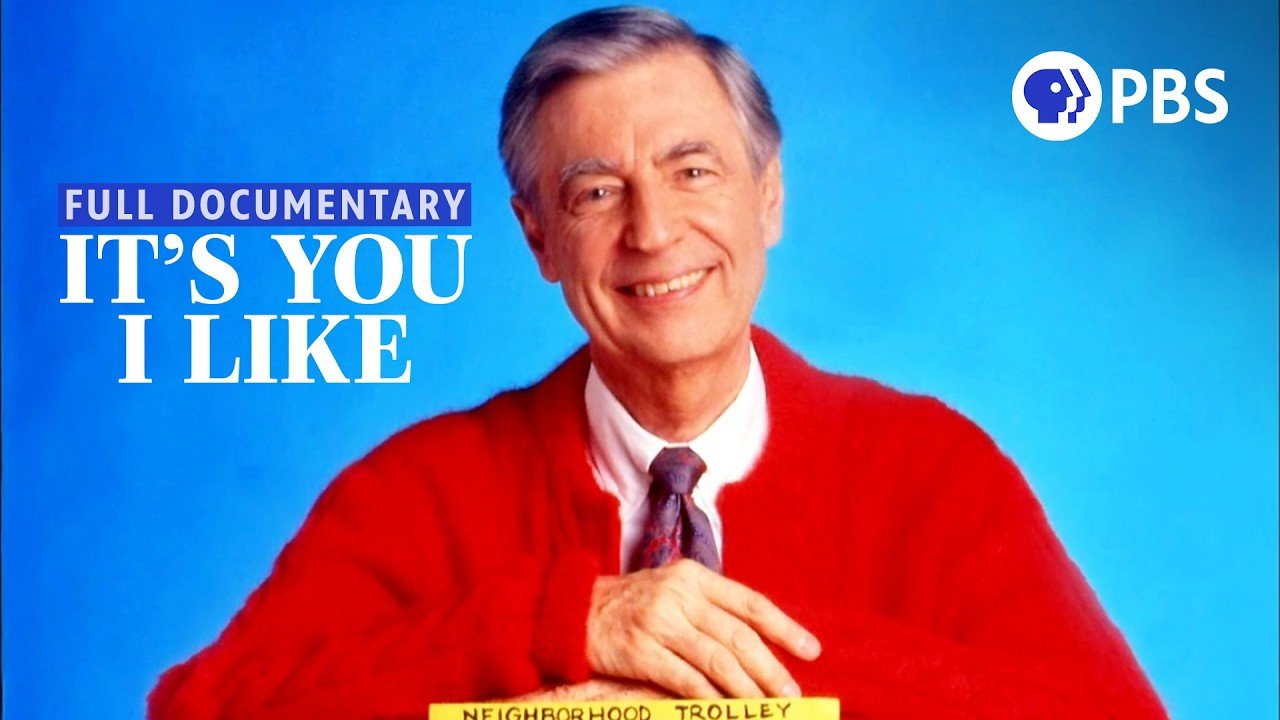
Fred Rogers walked through his front door, changed into a cardigan sweater, fed the fish, and looked directly into the camera at the one child he believed was watching. That simple ritual, repeated across nearly 900 episodes of Mister Rogers’ Neighborhood, turned out to be one of the most quietly radical acts in the history of American television. The show asked something that almost no other program dared: what if children deserved to be told the truth, all of it, the scary parts included? What followed was a neighborhood built from live music, hand-operated puppets, factory field trips, and conversations about death, divorce, anger, and disability that most adults still struggle to have.
The music that changed what kids thought was possible
Fred Rogers held a degree in Music Composition, and music was never background noise on the show. It was the point. Jazz pianist Johnny Costa led a live band on set every day, underscoring the emotional temperature of each scene in real time. When Wynton Marsalis visited, Marsalis was only in his twenties. He demonstrated how to produce sound from a trumpet, explained that strong lungs were required, and then joined the house musicians for a blues session. After about four choruses, according to the show’s handyman Joe Negri, a smile crossed Marsalis’s face and he said, ‘Okay, I’m in the right place here.’ Yo-Yo Ma brought his son Nicholas onto the set twice, once when Nicholas was six and once when he was sixteen, both times to perform together on camera. Nicholas later recalled that only Mister Rogers could have convinced him to do that. Esperanza Spalding, watching at age four or five, saw the episode where Yo-Yo Ma performed a Bach Cello Suite and ran before it ended to ask her mother if she could play that instrument. That single episode, she said, is why she started playing music. Violinist Hilary Hahn appeared as a teenager and demonstrated not just technique but how to bow when an audience applauds, a detail Rogers seized on with visible delight. Itzhak Perlman walked onto the set with his crutches, sat down, and played a phrase that Rogers described as dancing. Perlman told the children watching that he had contracted polio at age four and three months, that both his legs had been weakened, and that the important thing was to separate one’s abilities from one’s disabilities.
The moments Fred called most treasured
Out of all 900 episodes, Rogers himself named his visit with Jeff Erlanger as his most treasured. Jeff arrived in an electric wheelchair. He explained to Rogers, plainly and without prompting, that a tumor at seven months old had severed the nerve signals to his hands and legs. Rogers listened, asked follow-up questions, and then sang ‘It’s You I Like’ directly to him, changing one lyric: instead of ‘not your toys, they’re just beside you,’ he sang ‘not your fancy chair, that’s just beside you.’ The two of them sang the verse together. When Rogers finished, he said, ‘And it is you I like, Jeff.’ Jeff said, simply, ‘Thanks.’
Margaret Hamilton, who played the Wicked Witch of the West, visited to show children that the green skin was makeup that washed off, the cackle was a performance, and witches existed only in pretend. Actor and filmmaker Judd Apatow, reflecting on his own childhood viewing, said what he absorbed from the Jeff Erlanger episode was ‘the look on Mister Rogers’ face of pure love, not just for him, but for everybody. It was the bar of how I would like to behave.’
Civil rights history entered quietly through a wading pool. In 1968, Rogers invited Francois Clemmons, a classically trained tenor he had heard singing in a Pittsburgh church, to play Officer Clemmons, one of the first African Americans to hold a recurring role on a children’s television series. On one of their most remembered afternoons together, Rogers invited Clemmons to cool his feet in a backyard wading pool, and when Clemmons was done, Rogers dried his feet for him.
Yo-Yo Ma said it plainly near the end of a later reunion: ‘Fred is still with us. He’s with us on film. He’s with us in our memories.’
A small red trolley, still running
Michael Keaton, who worked at WQED in Pittsburgh early in his career, was sometimes the young crew member positioned behind the set to flip the switch that sent the little red trolley into the Neighborhood of Make Believe.
The trolley is still running. Mister Rogers’ Neighborhood continues on public television stations and their websites, and Daniel Tiger’s Neighborhood carries the same characters, the same emotional honesty, and the same invitation forward for a new generation of children who have not yet learned that it is alright to wonder.
The cardigan sweater goes on. The fish get fed. The trolley rolls.