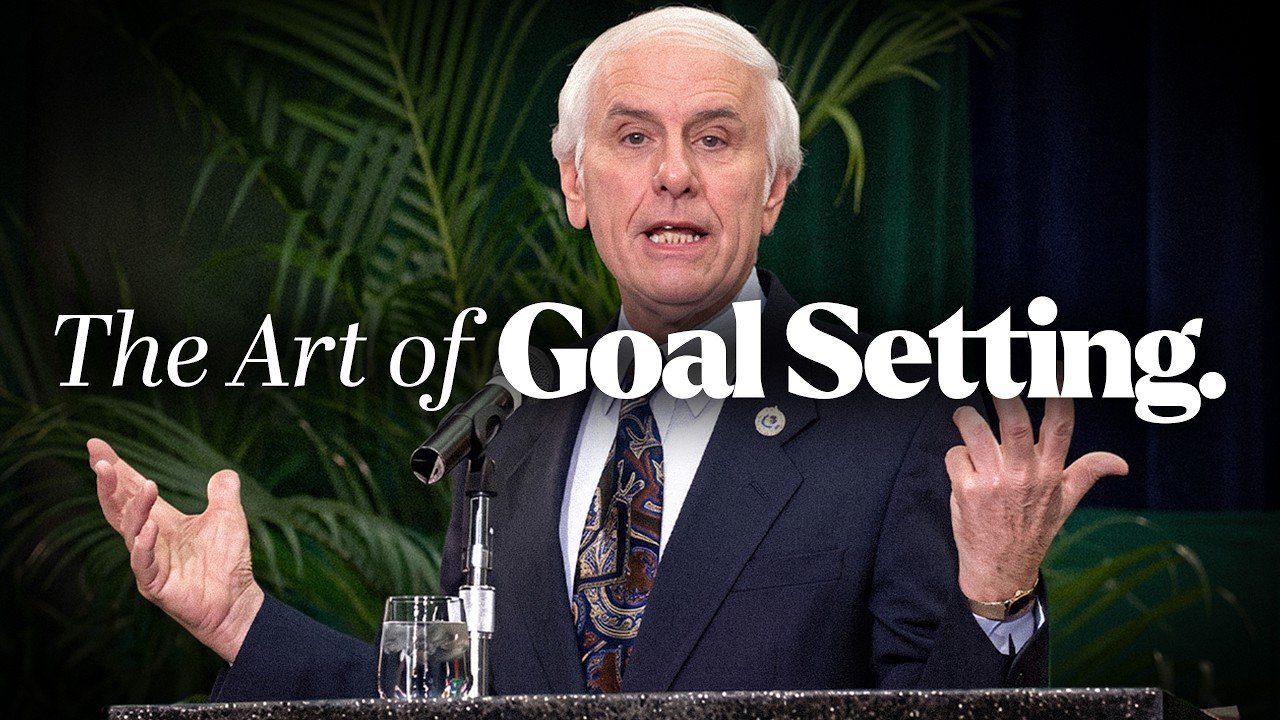
By 31, Jim Rohn had made his first million. By 33, every dollar was gone. Standing in front of a packed seminar room years later, the farm boy from Idaho did not apologize for losing it, did not dress it up, and did not pretend the collapse was part of a clever plan. He just said his mentor had been right all along, and the money was never really the point.
The question that changed how Rohn thought about goals
Rohn was in his mid-twenties when his mentor, Earl Shoaff, told him to put ‘become a millionaire’ at the top of his goals list. Rohn’s first instinct was practical: a million dollars would be nice to have. Shoaff stopped him there. ‘No, then you’ll miss it,’ Shoaff said. The reason to pursue the goal, Shoaff explained, was not the money itself. It was what the pursuit would force a person to become: disciplined, well-read, skilled in decision-making, fluent in markets and people and economics. Rohn later described that moment as the one that ‘changed my whole life’ after it ‘burst on my consciousness.’ He was 25. He never looked at a goal the same way again.
That philosophy held up even through the wreckage of his early thirties. After reaching his first million, Rohn made what he described plainly as ‘foolish’ decisions and bad business calls. The money vanished. But the skills, the thinking, the understanding of markets and people, those did not vanish. Shoaff had told him that what was truly valuable was not what he possessed but what he had become. Losing the fortune proved the point in a way keeping it never could have.
Setting goals that cost you something to reach
For Rohn, the practical lesson came down to two guardrails on goal-setting. The first: do not set goals so small that reaching them requires no reading, no change, no stretch. ‘If you don’t need to become much, set a small goal,’ he told the room, without softening it. The second guardrail was sharper. Do not pursue something by trading away your values to get it. He reached for the story of Judas, who walked away with thirty pieces of silver and was so wrecked by what he had done to earn it that he eventually threw the fortune away entirely. ‘He was not unhappy with the money,’ Rohn said. ‘He was unhappy with himself.’ That internal fracture, he argued, is where most unhappiness actually begins: not from outside forces but from the quiet daily act of doing a little less than you know you could, and not feeling quite right about it afterward.
The alternative, in Rohn’s framing, was to chase goals large enough to demand something real. Go where the expectations are high. Get up early. Read the books. Learn the next skill. Not because the prize at the end is the reward, but because the person who comes out the other side of that effort is the reward.
The Idaho farm boy who admitted he ‘went crazy’ with his first money
Rohn did not spare himself in the retelling. ‘Farm boy from Idaho,’ he said, describing his early spending habits after the first money came in. ‘I used to say, how many colors does it come in? I’ll buy them all.’ He flagged it without drama: foolish. The candor landed harder than any cautionary framing would have.
Decades after that first fortune was made and lost, Rohn was still walking the road Shoaff had pointed him toward at 25, still arguing that the muscle built chasing a hard goal, the mental muscle, the actual discipline, is what becomes permanent. The million dollars is optional. The person you become earning it is not something anyone can take back.
 Wake up to Only Happy News!