Carol, the principal of multiple schools in Kenya, has a simple way of telling which children arrived that morning without eating: during recess, they do not run. They sit. They do not have the energy to chase each other across the yard, and they certainly do not chase a drone. Jimmy Donaldson, the creator known as MrBeast, watched that change in real time after a meal program began at a lower-income school where most children were getting less than a thousand calories a day. Kids who had been seated and silent started laughing, sprinting, and throwing themselves after a camera drone buzzing overhead. ‘I think I accidentally created a cult,’ he said. The shift pointed at something bigger: 733 million people go hungry every day, roughly 1 in 11 people worldwide, and the reasons behind that number turn out to be stranger and more solvable than most people expect.
Where the food already exists
The trip began in Kenya, where the team had previously installed clean water access, but this visit was about food. Research cited during the journey found that providing school meals can raise attendance rates by up to 50 percent and push test scores up by up to 20 percent. At one school alone, over 500 students were fed and set up with ongoing resources. The goal was not a single handout but a consistent daily meal program that would follow each child through the school year.
From Kenya, the journey moved to Ghana, which carries a more personal weight. Ghana is where Feastables, Donaldson’s chocolate brand, sources a significant portion of its cocoa. He described standing on those farms and confronting a supply chain detail that had shaken him: there were children under 16 working the fields because adult farmers were earning, on average, less than a dollar a day. Feastables responded by committing to pay 100 percent of its cocoa farmers a living income reference price and obtaining 100 percent Fair Trade Certification. The connection between the chocolate bar and the school enrollment number became concrete at one newly launched meal program in Ghana: it had started with 10 enrolled students, and within a few days of the free meals beginning, 11 more had joined. The community noted that roughly 97 percent of local children had come from cacao farms.
Donaldson was formally welcomed into the town during a ceremony, wrapped in a traditional kente cloth, and named sub-chief as a gesture of thanks. He accepted with visible awkwardness and genuine warmth in equal measure.
The warehouse that beats the trash trucks
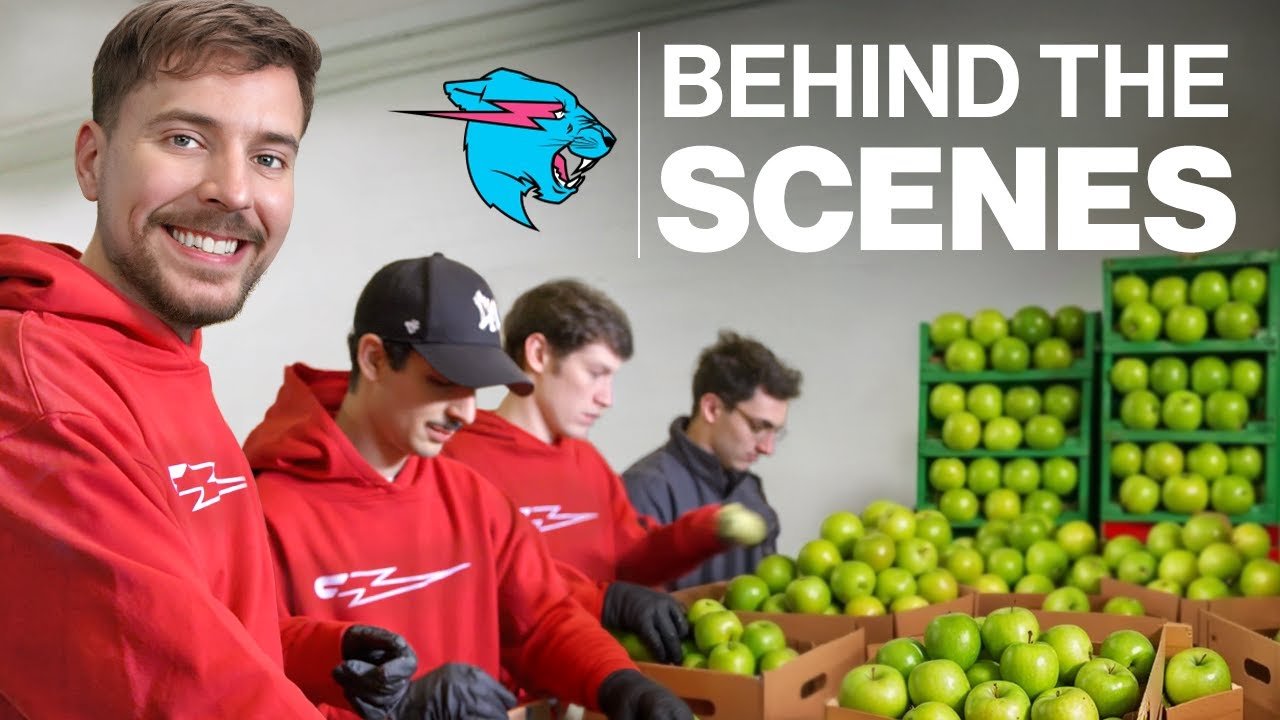
The other half of the story played out not in Africa but in a refrigerated warehouse the size of 14 football fields, somewhere in the United States. Evan, the founder of Sharing Excess, has spent six years building a nonprofit that intercepts food before it reaches a landfill. In America, nearly 133 billion pounds of food goes to waste every single year. One distribution partner alone had been discarding roughly 10 million pounds of produce annually and spending one million dollars to do it. Sharing Excess now recovers that food instead, saving that partner at least 1.5 million dollars in disposal costs and converting the rescued produce into meals.
Evan put the math plainly: ‘We’re there as consistently as a trash truck would be there. We kind of beat the trash trucks.’ A pallet of food that would cost a company a hundred dollars to throw away costs Sharing Excess nothing to recover. Over three years, this single building processed 24 million pounds of produce. Evan himself is formerly unhoused and has been candid about past struggles with drugs and alcohol. He described knowing what hunger feels like from the inside, which is why he builds meal programs from the outside.
Chef Matt turns the rescued food into meals daily, customizing recipes around whatever arrives. During production, 300 meals came out of that kitchen. A food drive held in North Carolina, Donaldson’s home state, distributed boxes of perishable food, grapes, bananas, meat, vegetables, and pre-made meals, to every car that pulled through. In total, more than 7,000 people were fed across the production of this project.
The chef who locked someone in the freezer
Chef Matt needed more peppers mid-cook and sent a crew member named Nolan to retrieve them from cold storage. The door closed. Whether it locked is, according to Donaldson, ‘a matter of what you mean by locked.’
Across 73 philanthropy projects and more than 90 million dollars spent, the throughline connecting a Kenyan schoolyard, a Ghanaian cocoa farm, and a North Carolina food drive is the same: the world already produces enough food. The problem, as Donaldson put it after spending time with Evan, ‘is honestly the world’s dumbest problem.’ Carol the principal could explain it faster than any economist: when the food shows up, the kids get up and run.
 Wake up to Only Happy News!