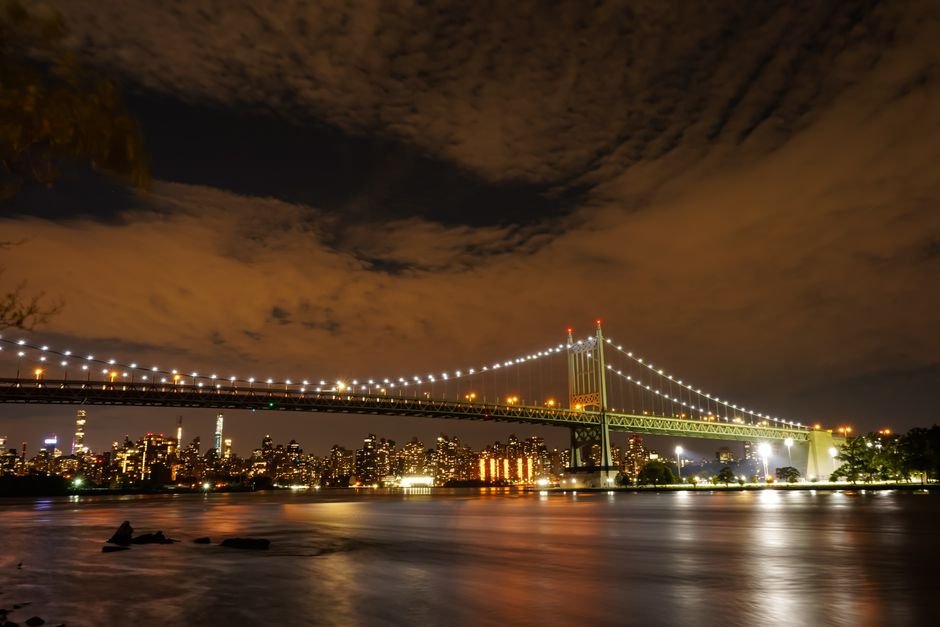
On July 11, 1936, a massive series of bridges and viaducts opened across New York City’s waterways – connecting Manhattan, Queens, and the Bronx in a single infrastructure push that stretched over 5,000 feet. Here’s a quick look at what the Triborough Bridge actually is, what it crosses, and why its anniversary still resonates in the city today.
How 5,000 Feet of Bridges Crossed Three Separate Waterways
The structure now officially known as the RFK Bridge isn’t a single bridge – it’s a complex. The first section clears the Harlem River, and successive spans carry traffic across the East River and the Bronx Kill, making it one of the few fixed crossings in the city to touch three distinct boroughs at once. At the time of its completion, it was one of the largest bridge projects ever tackled in the United States, and it required connecting to three separate landmasses rather than simply spanning two riverbanks like a conventional crossing.
The project was driven largely by Robert Moses, New York‘s notorious parks commissioner and master builder, who used the Triborough Bridge Authority as a funding mechanism to bankroll infrastructure across the city for decades. The bridge complex itself cost roughly $60 million to build – a staggering figure in Depression-era dollars – and immediately began generating toll revenue that Moses would funnel into further construction projects across the five boroughs.
The RFK Renaming and the Bridge’s Modern Identity
The structure carried the Triborough name for most of its life before the New York State Legislature voted in 2008 to rename it the Robert F. Kennedy Bridge, honoring the senator and attorney general who was assassinated in 1968. The Triborough name, however, stuck in everyday use – most New Yorkers still call it that, and the old Triborough Bridge and Tunnel Authority continued operating under a merged identity within the Metropolitan Transportation Authority long after the official rename.
Today the bridge handles a significant share of vehicle traffic moving between the outer boroughs and Manhattan, and its toll plazas operate under the broader MTA Bridges and Tunnels system. What opened 90 years ago as a public works solution to Depression-era unemployment has become a daily artery for millions of commuters.
What the Triborough’s $60 Million Construction Cost Reveals About Robert Moses’s Grip on NYC
The bridge’s Depression-era price tag funded far more than concrete and steel. Moses structured the Triborough Bridge Authority so that toll revenues flowed back into his own office rather than to the city’s general budget – a financial arrangement that let him build parks, parkways, and public facilities for roughly three decades with minimal democratic oversight. The Triborough was less a single project and more the first engine in that machine. Cities still debate how infrastructure authorities can accumulate that kind of autonomous financial power.
Ninety years on, the bridge’s toll lanes keep moving traffic through the same chokepoints Moses identified in the 1930s – three boroughs, two rivers, one continuous crossing that still hasn’t found a replacement.
Source: Read original
 Wake up to Only Happy News!