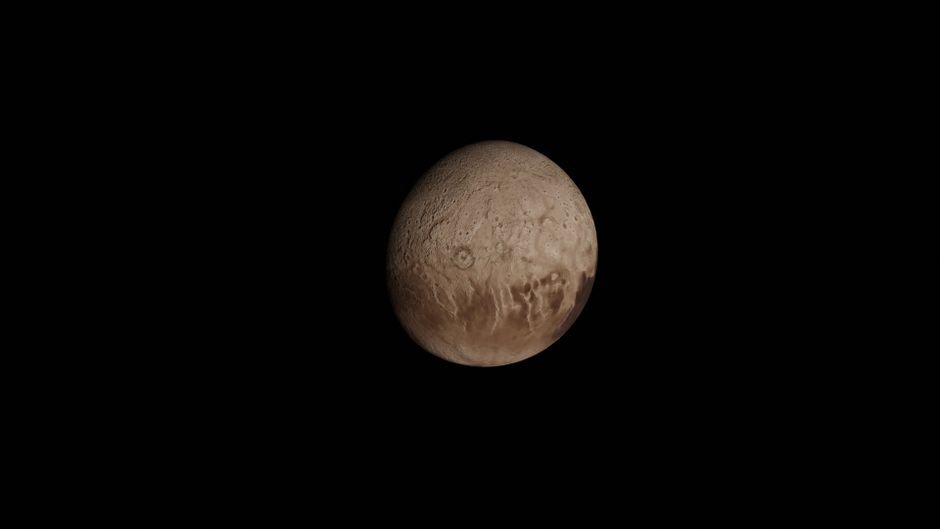
On July 14, 2015, a spacecraft the size of a grand piano reached Pluto after a 10-year, 3-billion-mile trip through deep space – and in doing so, gave Earth’s scientists the last close-up look needed to complete the first full survey of our solar system. New Horizons had launched in January 2006, moving at roughly 36,000 miles per hour, and its flyby of Pluto lasted only a matter of hours before the probe kept going, sailing out past the edge of everything mapped and known. Here’s a look at what that milestone actually involved and what the probe has been doing since.
How New Horizons Closed the Last Gap in Solar System Mapping
Before July 14, 2015, Pluto was a blur. The sharpest images astronomers had came from the Hubble Space Telescope, which rendered the dwarf planet as little more than a fuzzy smudge. New Horizons changed that in a single pass – sending back photographs sharp enough to reveal mountain ranges made of water ice, a vast nitrogen-ice plain now nicknamed Tombaugh Regio, and a hazy, layered atmosphere nobody had expected to find in such detail. The probe carried seven scientific instruments, and the data it collected during that flyby took more than 16 months to fully transmit back to Earth, because the signal traveling at the speed of light still needed 4.5 hours to cross the distance. Every planet, dwarf planet, and major body in the solar system had now been visited and photographed up close – a checklist that took humanity roughly 50 years to complete, starting with the first Mars flybys in the 1960s.
New Horizons’ 2019 Arrokoth Flyby Extended the Mission Beyond Pluto
After Pluto, mission controllers at Johns Hopkins Applied Physics Laboratory didn’t park the probe. They aimed it at Arrokoth – a small, contact-binary Kuiper Belt object roughly 1 billion miles past Pluto – and New Horizons flew by that target on January 1, 2019, capturing the most distant close-up images of any solar system object ever taken at the time. Arrokoth turned out to be two lobes gently fused together, reddish in color, and remarkably undisturbed, offering scientists a near-pristine sample of material left over from the solar system’s formation roughly 4.6 billion years ago. The probe still has enough power and fuel to operate into the 2030s and will eventually cross into interstellar space, joining Voyager 1 and Voyager 2 on a one-way trip out of the solar neighborhood.
What the New Horizons Pluto Data Revealed About Early Solar System Formation
The Pluto flyby didn’t just tick a box on a list. The geological complexity discovered on a world that small and that cold – active-looking terrain, possible subsurface ocean indicators, and an unexpectedly thick interaction between its surface and atmosphere – pushed planetary scientists to revise assumptions about where active geology can exist. Those findings fed directly into how researchers now approach the search for potentially habitable environments in the outer solar system, particularly around icy moons like Europa and Enceladus. A single flyby of a dwarf planet, in other words, shifted the working model for where conditions worth studying might actually turn up.
Eleven years later, New Horizons is still moving outward at roughly 300 million miles per year. The spacecraft that closed humanity’s map of the solar system is now quietly writing the earliest pages of whatever chapter comes next.
Source: Read original
 Wake up to Only Happy News!