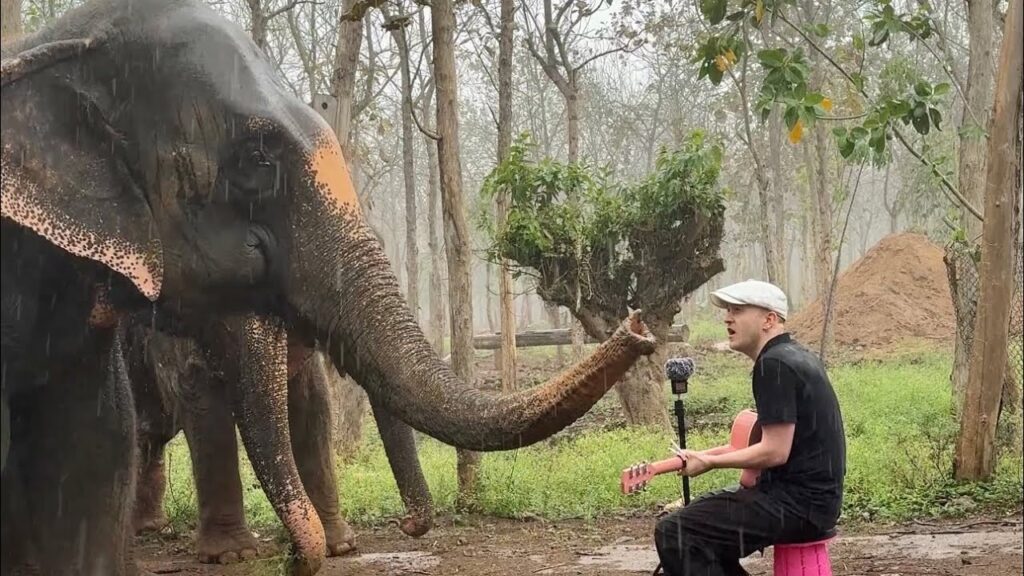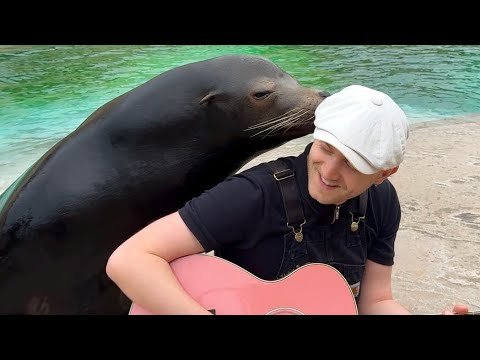
Somewhere between a lullaby and a love song, Plumes sits close to animals and simply sings to them. No stage, no audience of humans, no performance anxiety on either side of the exchange. Just a voice, a creature, and the kind of stillness that arrives when two beings decide, without any shared language, to stay in the same place for a while. What makes this compilation land so gently is not the songs themselves but the choice to direct them at animals who cannot applaud, cannot request an encore, and cannot pretend to be moved when they are not.
Songs chosen for ears that have no idea what lyrics mean
The setlist moves through a range of emotional registers, from the soft domestic warmth of ‘you are my favorite place, you are my getaway’ to the raw ache of lines about makeup running down a face and dreams left behind. These are songs written for humans in crisis or in longing, and yet delivered here to creatures who receive them without the weight of that context. The animal hears the tone, the vibration, the closeness. What arrives is not the meaning of the words but the sincerity behind them. That gap, between what the song says and what the listener understands, turns out to be where all the feeling lives.
The recurring thread through the songs is a kind of devotion that refuses to be practical. ‘I need your voice as a key to unlock all the love that’s trapped in me,’ goes one line, sung with the same earnestness to a creature that cannot respond in kind as it would be to a person who could. Another song circles the idea of wanting someone to stay, of holding on because the absence would be worse than the difficulty of staying close. Directed at an animal, these words stop being romantic and become something older and less complicated.
The moment the song shifts from performance to presence
Plumes put it directly in one of the songs: ‘we put the world away.’ That line, repeated twice across different tracks in the compilation, functions almost as a statement of intent for the whole project. The blinking lights, the noise, the disconnection that the opening song names explicitly, all of it recedes when the singing starts. What replaces it is attention, the specific, unhurried kind that animals seem to recognize even when they cannot name it.
One of the gentler passages borrows from a lullaby register: ‘sleep little darling, do not cry, and I will sing.’ Sung to a creature that may or may not be distressed, may or may not be sleepy, it carries the same weight as any parent singing to a child who does not yet know what the words mean but knows, precisely, what the voice is doing.
A line delivered to no one who can argue with it
The final song in the compilation settles on a quiet declaration: ‘all I want is you to understand that when I take your hand, it’s cuz I want to.’
The voice, the creature, the small unremarkable space between them where none of that gets questioned or complicated.
 Wake up to Only Happy News!