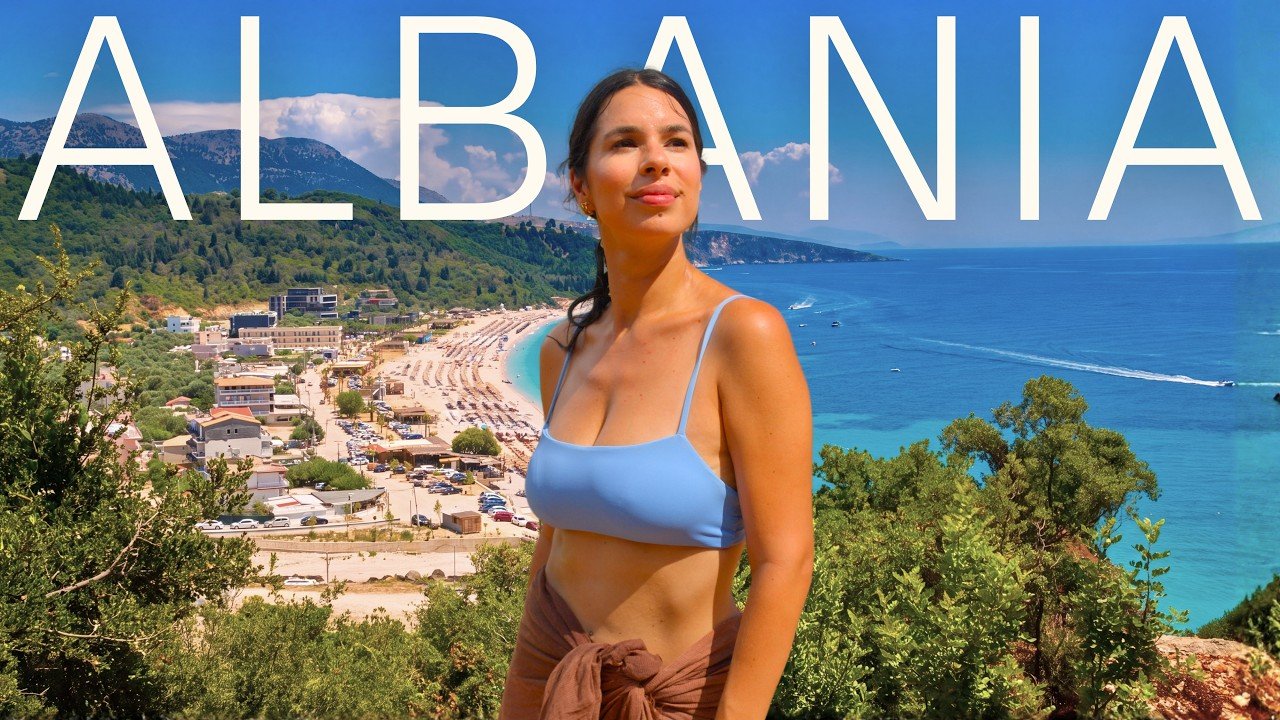
Captain Fodi pushed the boat out past the cliffs of Himara on a clear Ionian morning, and the first cave opening appeared in the rock face like a mouth swallowing light. Albania had been talked about in travel circles for a while, the Albanian Riviera in particular, a stretch of southwestern coastline directly across the water from the Greek island of Corfu. The country spent nearly 50 years under communist rule, almost entirely sealed from the outside world, and now, quietly, it was becoming one of the most discussed summer destinations in the Balkans. Malini Angelica had come to find out whether the reputation was real.
Caves, coves, and a castle the Ottomans built for a wife
Himara was the starting point, a coastal town with a lively seafront promenade that has grown in popularity without tipping into overdevelopment. The boat tour with Fodi of Himara Beach Hopping Tours moved north first, past Aquarium Beach and a cove called Fussa, both visible only from the water. Then came the pirates cave, a vast sea cave carved into the limestone cliffs where, according to Fodi, fishermen once hid their boats and their treasure inside its stone dark. The cave is large enough to enter by boat, and the vegetation growing at the top catches the light filtering down from above.
Heading south, the ruins of Porto Palermo Castle emerged from a headland, an Ottoman-era fortress reportedly built by the ruler Ali Pasha for his wife. Nearby, an abandoned submarine bunker sat behind huge rusted doors and a graffitied stone entrance, its mushroom-shaped military structures dotting the coastline as blunt reminders of how recently Albania was closed to the world. The final stop was a secluded bay that Fodi called his personal favorite, where fresh water running down from the mountains keeps the sea cold even in summer.
Lunch came at a one-woman fish restaurant run by a woman named Val, who served sardines in season, deep-fried calamari, and plump shrimp, all of it fresh that morning. That afternoon, a short hike from a nearby beach led down to Aquarium Cove, and the following day a 30-minute walk along a rocky unpaved path reached Jippy Beach, a raw strip of sand backed by a limestone canyon filled with birdsong and cicadas.
A city of a thousand windows and wine made in secret
From Himara, the route turned inland through mountain passes to Berat, a UNESCO-listed city on the Osum River. The hillside neighborhoods stack Ottoman-era stone houses with rows of tall windows so dense they gave the city its nickname. The older quarter of Mangalemi was settled by the Muslim population that arrived with the Ottomans; the neighborhood of Gorica across the river held the displaced Christian community. Above both sits Kala, a medieval castle quarter still inhabited by families today, its Byzantine church ruins and a well-preserved mosque minaret standing side by side.
At the Cobbo Winery just outside Berat, the youngest generation of the family walked through the estate’s history. His great-grandfather made wine before the communist period; his grandfather continued making it in secret even during those years. When the regime ended, his father and uncle moved to Italy, earned enough to buy land back home, and started with one hectare of vines. Now the estate covers almost 40 hectares. Their sparkling wine, called Shende, a very old Albanian word for the particular feeling of being tipsy but not yet drunk, won a silver medal at a world competition in Belgium and sits in the top three percent of sparkling wines globally. Their red, made from a grape variety called Vlosh, is grown nowhere else on earth.
The mosaic floor that stopped her mid-step
At Butrint National Park south of Saranda, a UNESCO World Heritage site sitting at the edge of a lagoon, the floor of the Byzantine baptistry is still covered in intact mosaics: fish, birds, the imagery drawn from the estuary and sea surrounding the city. The stone columns still stand.
From Himara’s pirate cave to a winery rebuilt from a single secret hectare, Albania delivered something well past its coastline. As Malini Angelica put it after standing in the ancient theater at Butrint, built by the Greeks and still intact: ‘I think it’s so easy to think about Albania’s history as just limited to its recent communist past, but then you come somewhere like this and you realize it’s actually got thousands of years of history.’ The cold mountain-fed water in Fodi’s favorite bay is still there, exactly as advertised.
 Wake up to Only Happy News!