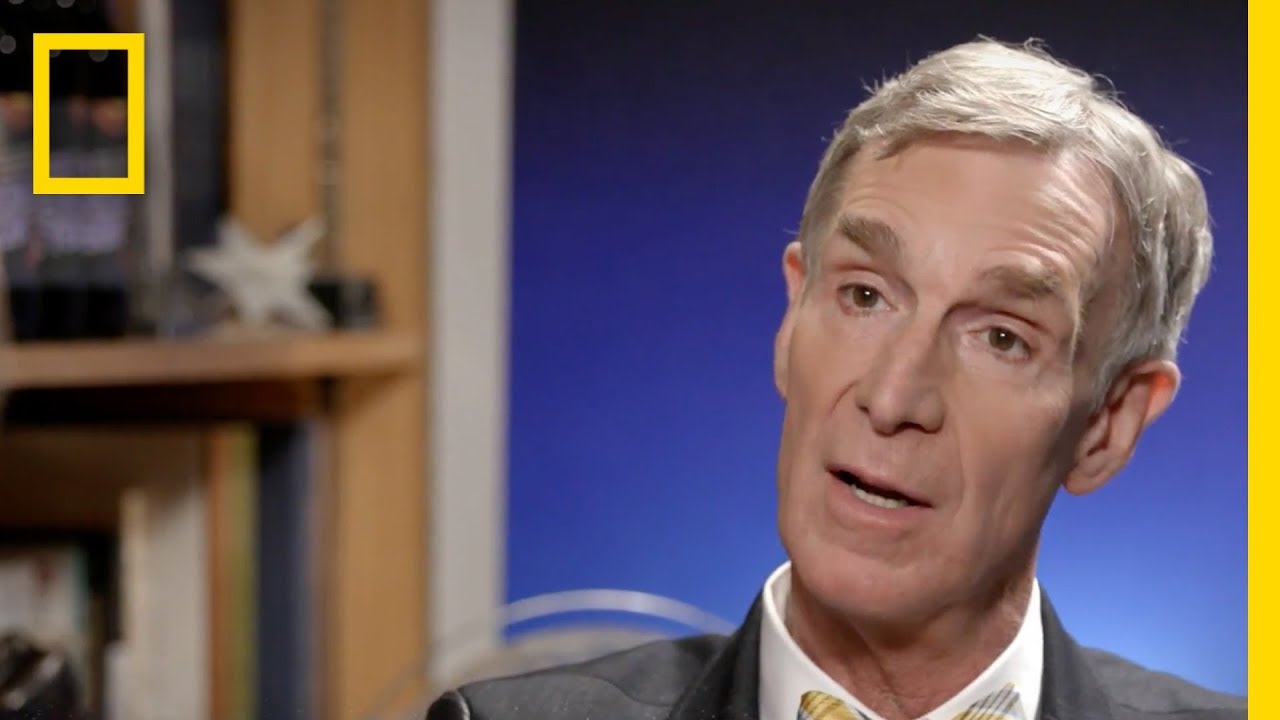
Bill Nye was standing at a drawing board by day and bombing or maybe not bombing at comedy clubs by night, trying to figure out what, exactly, he was supposed to become. The question of how a mechanical engineer ends up as the most recognizable science communicator of a generation turns out to have a surprisingly unglamorous answer: a lot of naps between shifts, some frozen marshmallows, and a genuine fear that America was losing its industrial edge. What Nye told Neil deGrasse Tyson during their conversation for StarTalk peels back the origin story to something far more personal and urgent than a television pitch.
Electrocuting yourself while fixing a blender is apparently funnier than it sounds
Nye’s first attempt at a double life had him working engineering jobs in Seattle and then heading out after hours to try standup comedy. The material, by his own admission, leaned hard into what he knew. ‘Hilarious jokes about electrocuting yourself while trying to fix a blender,’ he said, deadpan. ‘Wow, is that funny.’ He added chewing marshmallows frozen in liquid nitrogen so that steam pours out of your nose. ‘It’s hilarious, come on, it’s a payoff.’ The engineering never really left his head while he was onstage, he told Tyson, and he actually said he still misses it.
What sharpened his sense of purpose was not the comedy itself but the industrial anxiety of the era. Nye came of age as a mechanical engineer at a moment when the Chevy Vega and the Ford Pinto were rolling off American production lines, cars he described plainly as badly designed. The United States had also declined to adopt the metric system, a decision he and Tyson noted they have not fully agreed on. ‘I felt like the United States was falling behind industrially,’ Nye said. ‘I’m not kidding, very concerned.’
A science center in Seattle and a TV host named Mr. Wizard changed the math
The pivot came while Nye was working at a science center in Seattle, where he kept watching young people light up around hands-on science. He connected that energy to his own childhood experience of being excited by teachers and by a television personality named Don Herbert, known as Mr. Wizard. Tyson, who said he remembered Mr. Wizard immediately, framed it as a unique arc of life converging into one identity. Nye’s response was characteristically plain: ‘That’s my claim. That’s my story.’
The realization was not that kids needed more science content. It was that they needed to feel what Nye had felt, the specific, slightly ridiculous thrill of something unexpected happening right in front of you, whether steam pouring from your nose or a blender fighting back.
The drawing board he kept coming back to
Somewhere in Seattle, a mechanical engineer’s drawing board sat waiting while its owner went out to make people laugh at science they did not yet know they cared about.
The comedy clubs and the engineering desk and the science center turned out not to be three separate detours. They were the same road, and Nye was already most of the way down it before he had a name for where he was going.