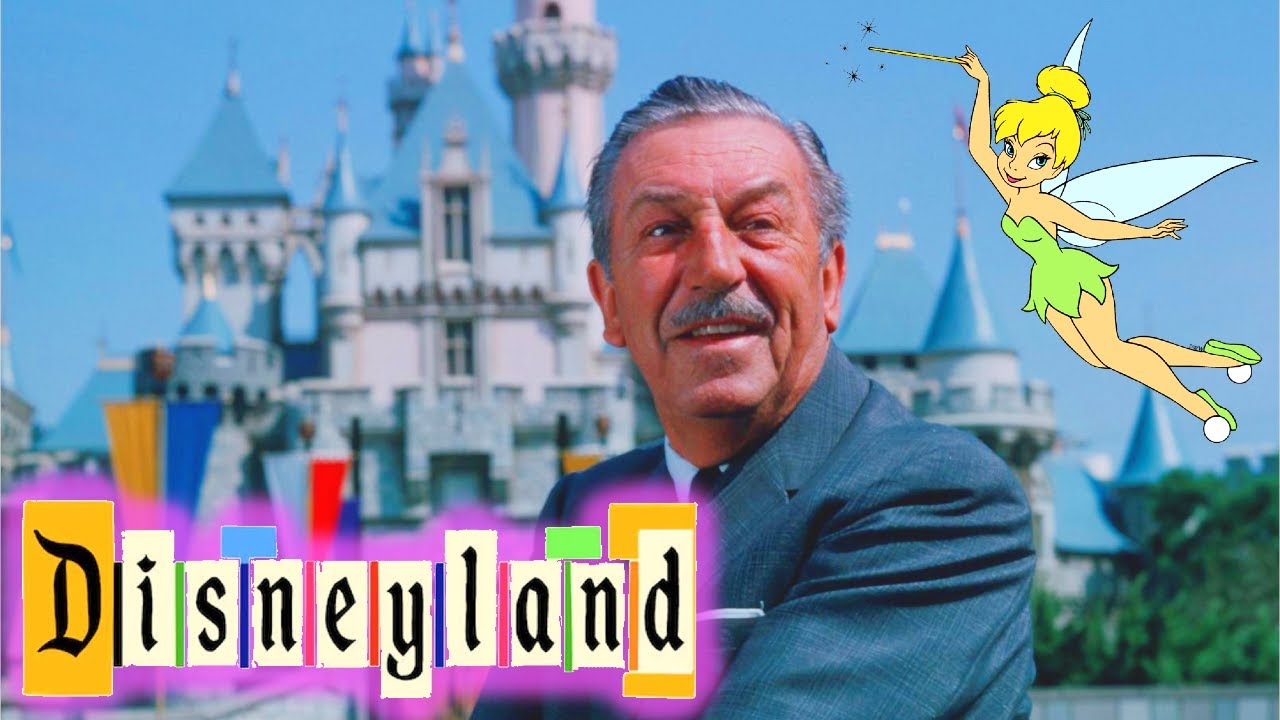
Walt Disney arrived in Los Angeles in 1923 with $40 in his wallet and half a suitcase of clothes, following his older brother Roy to a city where neither of them had much of a plan. The story of how that arrival became Disneyland is not a story about a powerful entertainment empire. It is a story about two brothers who repeatedly bet everything they had on ideas that almost everyone around them believed would fail. The stakes were never abstract. They were personal, financial, and absolute.
The bench where a bigger idea started
Saturday was Walt’s day with his daughters. He would take them to the merry-go-round and sit on a bench eating peanuts while they rode, and he kept thinking that there should be a place where parents and children could have fun together, not just watch. That quiet frustration on a park bench became the seed of a project that would consume the next decade of his life and nearly destroy the company he and Roy had spent 27 years building.
By early 1953, the park idea had outgrown every practical boundary. The Burbank City Council rejected his proposal to build across from the studio. A hired architectural firm delivered concepts Walt found useless. His friend the architect Welton Beckett reviewed the plans and told him plainly: ‘Walt, no one can design Disneyland for you. You’ll have to use your own people.’
To finance the project without interference from the Walt Disney Productions board, Walt created a private company called Retlaw Enterprises in 1950. The name was Walter spelled backwards. By licensing his own name to the larger company, he received a weekly income of $3,000 to fund development. He also took out $50,000 against his life insurance and sold his Palm Springs vacation home. When his wife Lillian discovered he had spent over $100,000 of their personal money, she was livid.
The land search covered five counties and roughly 35,000 square miles. Harrison ‘Buzz’ Price and CV Wood eventually brought Walt a specific parcel: 200 acres of orange and walnut groves in the rural town of Anaheim, California, pressed against the still-under-construction 5 freeway. One of the farm families, the Dominguez family, had a single request. Two Canary Island date palms on their land had been planted during a family wedding years earlier. They asked Walt not to cut them down. Being the sentimentalist that he was, he gave his word. Both trees stand today, adjacent to the Jungle Cruise loading area.
Three hundred and sixty-six days and everything on the line
Groundbreaking happened on July 21st, 1954. Walt set opening day for July 17th, 1955, giving his construction crews 366 days to build the world’s first true theme park. The deadline was not bravado. If the park did not open on schedule, creditors and shareholders might pull out, and the resulting collapse would take the studio with it.
The construction problems were relentless. The bulldozer driver responsible for clearing the orange groves was colorblind and had been guessing which ribbon-marked trees to remove. The Rivers of America were dug and filled with water, only for crews to arrive the next morning and find the water had soaked entirely into the sandy Anaheim soil. Horticulture Imagineer Bill Evans, who had smuggled exotic plant specimens into the country by hiding seeds in his socks, eventually had a plant species named after him, Philodendron evansy, and those plants are still alive in the Jungle Cruise today.
Walt mortgaged his remaining home to fund the completion of the Mark Twain riverboat after money ran thin. Roy pleaded with him to delay the opening. Walt refused. He had been here before. In 1934, newspapers had called Snow White and the Seven Dwarfs ‘Walt’s Folly.’ That film cost $1.5 million, all borrowed, and failure would have meant bankruptcy. Instead, it earned $8 million on its initial release in 1937. Walt was not willing to flinch.
Opening day on July 17th, 1955, was an unambiguous disaster behind the scenes. The park received 28,000 people against a capacity of 18,000, after printed invitations were counterfeited and each legitimate guest was allowed to bring additional attendees. Women’s high heels sank into asphalt that had been poured that same morning. A plumber strike had left the park short on drinking fountains. The Mark Twain filled with over 500 passengers at once and water washed over its lower deck. A gas leak in Fantasyland forced ride closures for the rest of the day. The press called it Black Sunday, a name Walt hated.
Fifty-five days after opening, Disneyland welcomed its one millionth visitor.
Roy, at the foot of the bed
Walt Disney died on December 15th, 1966, at 65 years old, from complications following the removal of a lung tumor. His daughter Diane described arriving at the hospital that morning and finding her father lying peacefully in bed. Her uncle Roy was sitting at the foot of the bed, massaging Walt’s feet.
Roy, then 73 and planning his retirement, postponed it immediately. He oversaw the completion of Pirates of the Caribbean in 1967, which Imagineer Alice Davis later said ‘literally saved Disneyland’ by reversing the attendance drop that followed Walt’s death. He then turned to Walt’s unfinished Florida project and saw it through to completion, insisting along the way that the resort be called Walt Disney World so that, as he put it, ‘people will always know that this was Walt’s dream.’
On opening day of Walt Disney World, Roy stood at the microphone before the crowd and then paused. He turned around and said quietly, ‘Somebody go find Mickey for me. We don’t have Walt anymore.’ Mickey appeared, and instead of waving or jumping as he typically would, he stood at Roy’s side with his hands folded.
Roy Disney died on December 20th, 1971, two months after the opening, at 78 years old.
The two palm trees by the Jungle Cruise
The Dominguez family’s two Canary Island date palms, planted during a wedding ceremony on the land that became Disneyland, are still standing today next to the Jungle Cruise loading area.
Walt gave his word that they would stay, and they did.
The orange groves are gone and 800 million people have passed through the turnstiles since that first chaotic July. But those two trees predate all of it, and they are still there because a farmer’s family asked a man with $40 in his wallet and a dream to please just leave them alone.