In a sunlit backyard, a pug named Louie crouches at the entrance of a mini tunnel, every muscle coiled, ready to show his three seven-week-old pups exactly how it is done. What follows is a sprawling, riotous portrait of animal fatherhood across species, from agility-master pugs to chronically horizontal Siberian cats, and the one thing every family has in common is a dad who eventually figures it out, or at least gets close enough.
Brave ones, stubborn ones, and dad in the middle
The pug household sets the template. Freddy is bold, Ivan is allergic to effort, and Susie is somewhere in between but persistent enough to win her dad’s full attention simply by refusing to quit. When the mini tunnel arrives at nine weeks, Freddy clears it, Susie reverses back out the way she came in, and Ivan gets stuck and stays stuck while his siblings helpfully offer no assistance. Louie eventually steps in, crouching low to guide his son through, because sometimes a pup just needs someone big to show him the way.
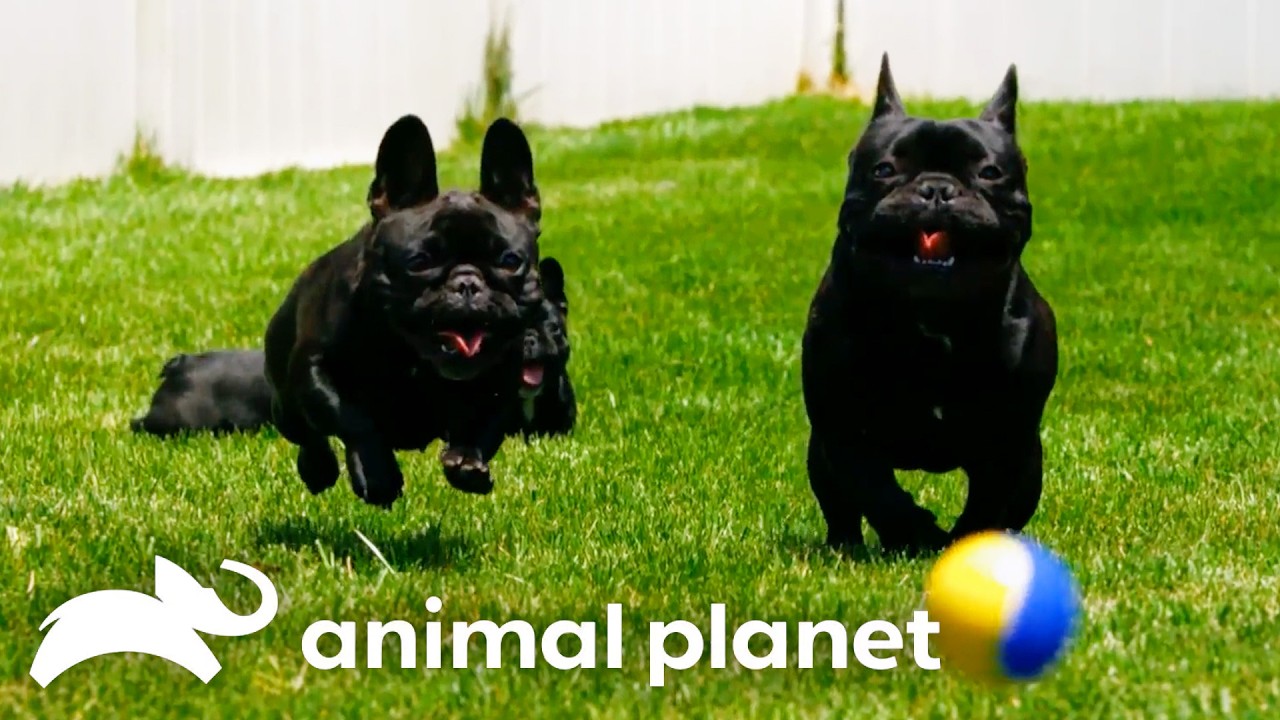
The French bulldog household runs a similar dynamic. Three-week-old Coco is already restless while mom Chanty naps through her favorite show. Dad Angus, himself not exactly a textbook role model, at least keeps a watchful eye when mom is away. By five weeks, Coco drags her reluctant brother Chanty outside for the family’s first outdoor outing. Chanty barely clears the doorway. Angus, the sporty one, eventually coaxes both pups into embracing the backyard.
The Greater Swiss Mountain Dog story gives the formula its most satisfying shape. Dallas is 130 pounds of working-dog enthusiasm, built for cart-pulling and packhiking, carrying 20 percent of his body weight over a 10-mile trail. His smallest pup, Sheriff, is the tiniest in a litter of seven, perpetually buried at the bottom of the pile. But Sheriff is the one who scrambles up every obstacle, masters the leash first, and earns his father’s proudest look. Biggest brother Bandit, meanwhile, mostly falls over things and yodel-howls until Dallas comes running. At 12 pounds and 12 weeks old, the whole litter gets its first taste of packhiking gear. Bandit immediately demonstrates what not to do with a leash. Sheriff demonstrates what to do. Dallas is just glad to have pups by his side.
The rebels, the strategists, and one very patient golden retriever
The Samoyed household is the purest comedy. Mom Roxy runs a spotless operation: toys in order, fur immaculate, puppies arranged in a tidy pile. Rebel dad Major arrives like a weather system, two-toned and gloriously unkempt. Young Bandit, drawn immediately to his father’s chaos, steals a toy and makes a fine mess, earning Major’s full attention for the first time. Roxy’s sidekick Pearl diligently reports the infraction. Major considers Bandit’s work almost as good as he could manage himself.
The Siberian cat story swaps fur-coat chaos for strategic parenting. Dad Boris rarely leaves his perch, but his method of letting kittens tire each other out works, almost. Only boy Calvin, the household’s small red-headed fireball, outlasts his four sisters every single time. Boris eventually admits, as Animal Planet’s narrator puts it, that Calvin has persuaded him to ‘adopt a more hands-on approach.’
And then there is Pucho, a five-year-old golden retriever in Kansas who befriends Josh Earl, a one-year-old olive baboon orphaned in the wild and brought to an animal sanctuary. Josh Earl rides on Pucho’s back, commandeers two tennis balls simultaneously, and spends a rain-soaked afternoon testing every limit of Pucho’s famous patience. Pucho holds on longer than most would. Eventually, the sun comes out and Pucho quietly rejoins his old friends.
Carly, the chin who had to wait her turn
The Japanese Chin household deserves its own line. Dad Kazoo performs a signature move called the chin spin, a breed-specific doggy dance of joy whose origin, the source notes, ‘is a mystery that’s as old as this ancient breed itself.’ Kazoo is desperate for one of his four pups to inherit the talent. His three boys, Baron included, show little interest. His only girl, Carly, watches every spin with absolute focus, wobbles through her first attempt, and lands it before anyone notices. Mom is impressed first. Dad takes longer, distracted by the boys who never deliver. Carly gets her twirling time with Kazoo in the end, but she has to work considerably harder than her brothers to earn it.
Across all these households, the pattern holds: the smallest pup finds the courage, the laid-back dad finds the motivation, and the one who refuses to quit eventually gets the spin right.
In the Briard household, quiet Marvin spends weeks tracking a scent he cannot quite locate. His dad Anger is a reluctant newcomer to a family of ten, always retreating just as Marvin closes in. One afternoon in the woods, Marvin’s nose finally delivers. Father shows son the way home. After that, no amount of hiding keeps Anger away for long.
The fetch game Marvin refused to lose
Deep in the woods behind the Briard house, a stick sits in the leaves where Marvin dropped it after his third failed retrieval attempt. Dad Anger watched every one, nudged the stick back each time, and stayed considerably longer than he had planned.
By the time Roxy the Samoyed finally lets her mud-coated pups back through the front door, she pulls Bandit aside for double and triple inspection. Standing there, soggy and sheepish, the pup apparently works out that getting messy with dad is fun, but getting clean with mom is pretty nice too.