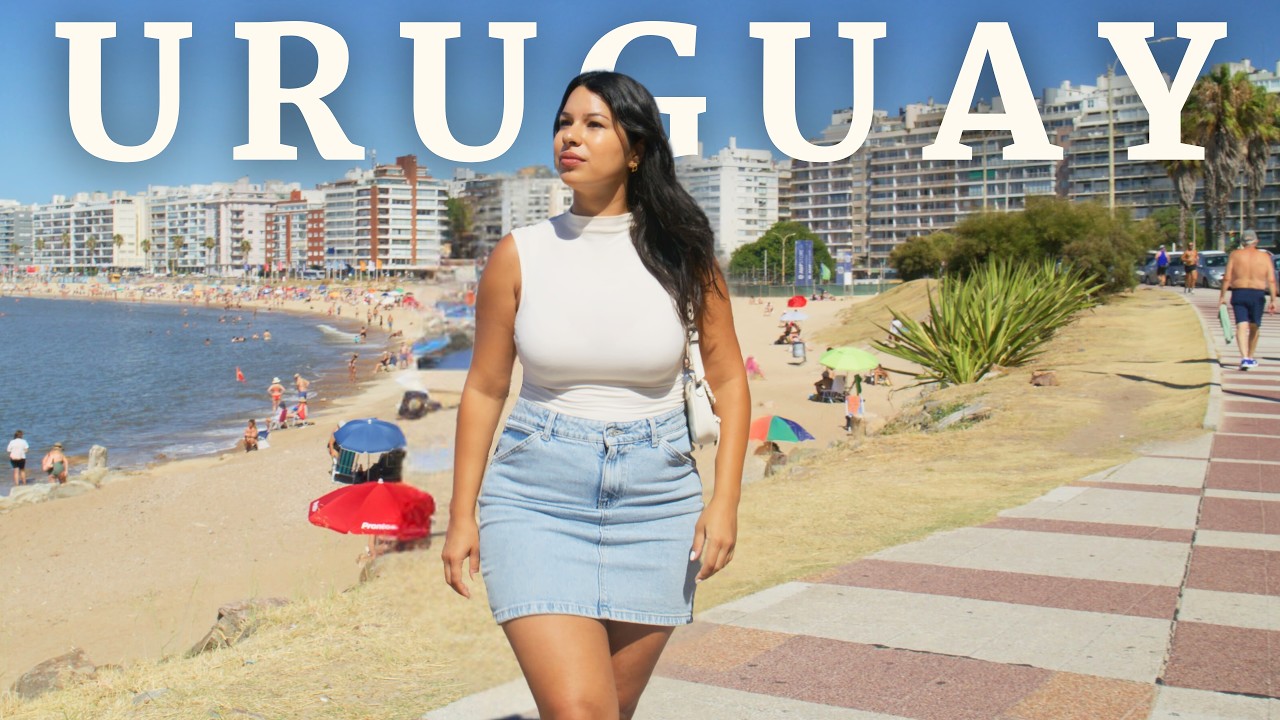
Montevideo does not announce itself. While its neighbors Brazil and Argentina trade on spectacle and scale, Uruguay’s capital earns its place through a different kind of gravity: old colonial plazas shaded by history, a Waterfront promenade stretching further than any other in the world, and a national character so genuinely unhurried that even the carnival feels like an invitation rather than a performance. Travel writer Malini Angelica spent time moving through the country from the old town streets of Montevideo to the cattle ranches of the interior and the golden coastline near Punta del Este, and what she found was a place that has figured out something most countries are still arguing about.
Where the city began
The Ciudad Vieja, Montevideo’s old town, is the logical starting point. Plaza Zabala holds a statue of Bruno Mauricio de Zabala, the Spanish colonial administrator who founded the city in 1726 specifically to stop Portuguese expansion southward from Brazil. The military logic is long gone; what remains is some of the finest colonial architecture in the Southern Cone. A short walk brings Plaza de la Constitucion into view, where the Metropolitan Cathedral and the colonial Cabildo once housed everything from government administration to the city’s prison. Further along sits Plaza Independencia, anchored by a statue of Jose Gervasio Artigas, the national hero who defeated Spanish royalists in 1811, surrounded by striking Baroque and classical buildings including the Palacio Salvo, which today houses a Tango Museum.
Inside a gorgeous early-1900s coffee shop and bookstore nearby, Angelica came across books on one of Uruguay’s most singular political figures: former president Jose ‘Pepe’ Mujica, who served from 2010 to 2015. During his time in office he legalized marijuana, abortion, and same-sex marriage, but his personal choices drew equal attention. He refused to live in the presidential palace and instead stayed in the small farmhouse where he had always lived, and he gave away 90 percent of his presidential salary to the poor. He had also spent a total of 12 years in prison as a member of a radical national liberation movement before eventually being elected to the country’s highest office. As Angelica put it plainly: ‘to many he was a bit of a hero, but to others they disagreed with his politics.’
Meat, carnival, and football in that order
Bar Rosas in Montevideo’s Carrasco neighborhood has been open 24 hours a day, seven days a week for the last 100 years, serving the chivito: steak, ham, and bacon stacked with cheese, hard-boiled egg, mayo, and garnishes into a sandwich so substantial it requires a knife and fork. Across town, the parrilla tradition runs just as deep. Cows outnumber people three to one in Uruguay, and uruguayans eat meat an estimated 10 to 12 times a week. At a local parrilla, the cooking begins with giant chunks of hardwood burned down to golden embers, over which morcilla blood sausage, cheso, ribeye, tender ribs, lean entraña, and sirloin are all slowly rendered. Grilled potato with garlic, parsley, and butter arrives on the side; a syrupy flan with dulce de leche closes it out.
February brings the inaugural parade of the Uruguayan Carnival, one of the longest in the world at 40 days. The dominant rhythm is the candombe, rooted in the African musical heritage of a community whose ancestors arrived through the slave trade that once moved through this port. The drumlines are enormous and layered, and the sound is entirely distinct from the carnivals that draw more international coverage.
The Estadio Centenario, also in Montevideo, hosted the first ever FIFA World Cup in 1930. Uruguay won it. They won it again in 1950, and with FIFA’s recognition of their football gold medals at the 1924 and 1928 Summer Olympics, they count four world titles in total, though the last official World Cup win was 1950.
The coast and the countryside
A two-hour drive east of Montevideo, Punta del Este draws uruguayans out of the capital every summer with miles of golden coastline, beach clubs, and surf breaks that rival anything on the continent. A few hours north into the interior, the landscape shifts entirely to open cattle country, where third-generation rancher Juan works the family estancia in an area called Lavalleja.
Back in Montevideo, a stop at Bares Flores offers the Uruguayan take on Italian pizza, a legacy of the significant Italian immigrant wave of the early 1800s: thin-crust mozzarella pizza paired with fainá, a thin chickpea flatbread, which locals lay directly on top of the pizza slice before eating.
The fainá at the counter
A square of fainá sitting on top of a mozzarella slice at Bares Flores, the chickpea batter still faintly warm from the oven.
Uruguay is sandwiched between two of South America’s most-visited countries, and it does not seem to mind. The people who live here are not performing their culture for an outside audience, and that indifference to approval turns out to be exactly what makes arriving feel like a genuine discovery.