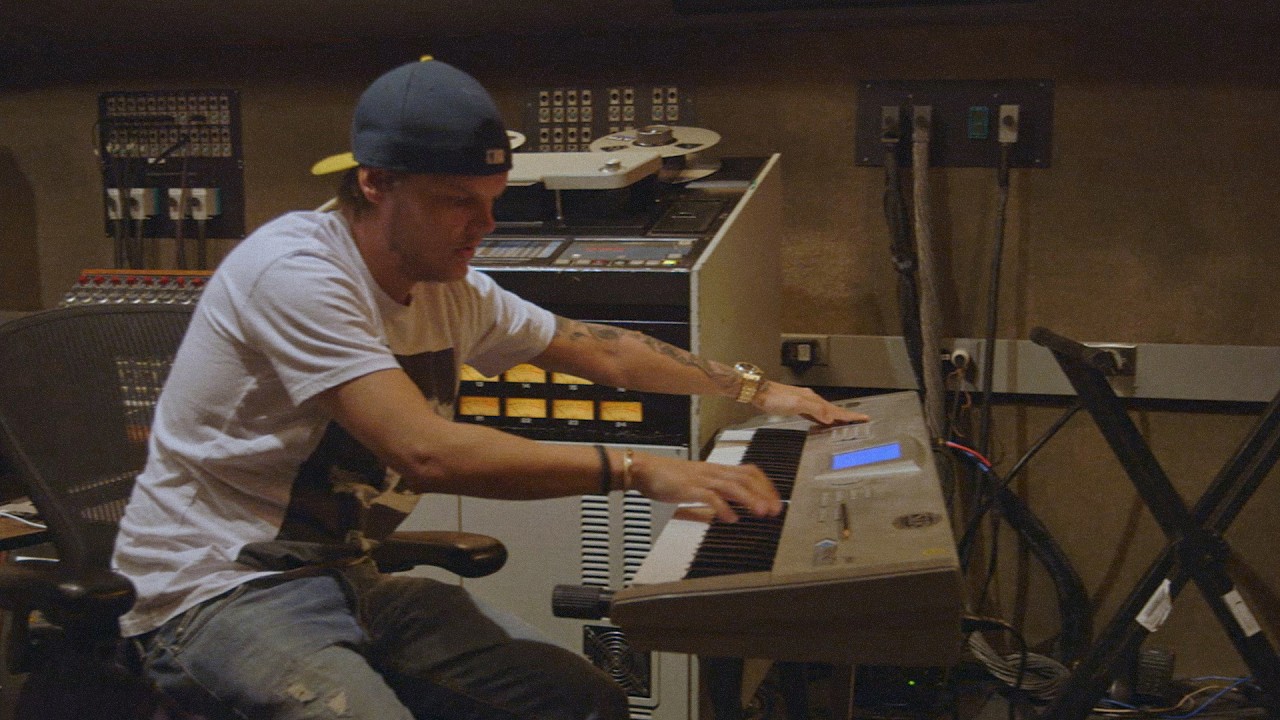
Somewhere in the middle of an eight-hour studio session, Tim Bergling leaned toward a piano that he freely admitted he could not really play and landed on a single chord that had been hiding in the song all along. That moment, buried inside the creation of ‘For A Better Day,’ captures something true about how music actually gets made, and why the messiest sessions sometimes produce the clearest results. The story of that one chord is the story of Avicii‘s album ‘Stories’ itself: an artist deliberately going off-road, trying things he had never tried before, in rooms full of people doing the same.
Explorers in the sandbox
The session began, as so many do, with something that almost worked. The melody for ‘For A Better Day’ kept moving around the piano, circling a lyrical idea that nobody could quite pin down. Early lines passed through the room: ‘beneath an old street light, I called your name.’ The phrase ‘I called your name’ survived. The street light did not. ‘I don’t like how it sings,’ Tim said, and that was that.
What made the room function was a shared admission of limitation. Neither Tim nor his collaborator considered themselves real pianists or real guitar players. They were songwriters, and that gap between technical mastery and creative intention turned out to be the whole point. ‘It felt like we were explorers,’ his collaborator recalled. ‘Playing in the sandbox. Is this the chord, or is this the chord?’ The melody kept moving. The chords kept shifting under it. The structure of the track, a verse that needed a transition, a hook that needed to earn its return, a breakdown that might want an entire string section underneath it, all of this got argued out in real time, against a clock. At one point, with a meeting approaching, someone checked the time and pushed the next obligation back 45 minutes. Then another 45. They had until 7:45. Then they had two hours.
Celestial archeology and a bass note that had to go
The collaborator had a phrase for what Tim did with melody. He called it celestial archeology: ‘It’s like you’re putting a city together, or you’re putting an animal together. You’re figuring out the bones that you found, and you’re like, I found this piece, where does it go?’ Tim, by that account, was unusually attuned to where a melody wants to go, not where a writer forces it.
The final breakthrough, when it came, was absurdly simple. Someone said the song might not need anything complicated before the verse returns. Just something that gets a little more melancholic, a step into it. ‘Super simple,’ Tim said. ‘That’s a chord.’ They added it in MIDI on the piano. Then someone noticed there was another note buried in it: the bass. That had to come out. And then, with the bass removed, the chord was exactly right. It had been there the whole time.
‘That was the chord,’ someone said. ‘We did it all along.’
Eight hours. One chord. Hallelujah.
The question nobody could really answer
At the end of it, someone in the room asked the obvious question: how did you guys come up with that chord? Tim laughed. ‘That’s going to be the million dollar question.’ His answer was honest and not particularly satisfying: hours and hours and hours.
The sessions for ‘Stories’ were all filmed, every one of them, with the idea that people should be able to see what actually goes on in the studio. Tim knew audiences assumed the music arrived fully formed, and he wanted to show the circling and the dead ends and the single bass note that had to be removed before the right answer appeared. The last thing he said before the room cleared was aimed at whoever was holding the camera: ‘Don’t ever let this documentary out.’
The piano in the corner of the studio, the one with better sound that Tim had already noted in writing, sat with the session still open on the screen.