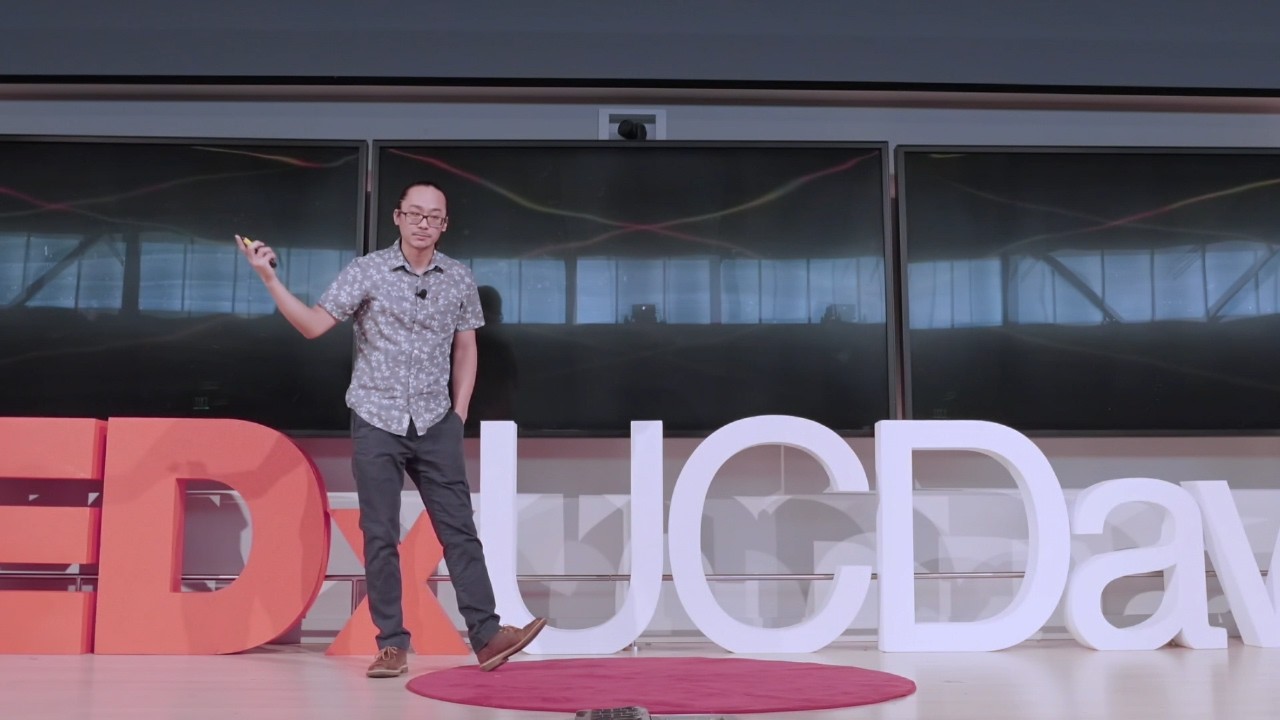
Kenjiro Quides grew up with a phrase that, by his own account, ‘would ring through the household, pierce the ears of all my family, outright annoy everyone’: Mom, I’m bored. It was not a complaint about having nothing to do. If anything, he had too much pulling at his attention. It was a reflex, a signal that whatever had captured him a moment ago had quietly let go. What nobody in that household could have predicted was that the same restless, wandering attention would one day become the core of a PhD-level teaching philosophy, one that lands in front of hundreds of undergraduate students every winter at UC Davis.
When a phone beats a lecture
Quides teaches microbiology to small lab sections of 24 students in what he calls his ‘native setting,’ a tight, manageable room where he can spot a glazed expression and walk straight over to fix it. But for the past four winters, he has migrated into a full lecture hall, facing hundreds of students at once, every one of them holding a smartphone with, as he puts it, ‘the world at their fingertips.’ The practical problem is brutally simple: how do you stay more interesting than ten 60-second videos or a few rounds of a short mobile game?
Best practices for large-format lectures, he explains, cap continuous talking at ten to twelve minutes at a stretch, with structured activities in between. But activities alone do not solve the deeper problem, which is getting students to care about microbiology in the first place. Many arrive openly skeptical. Quides described the pattern directly: students tell him they ‘came into this class not expecting to like it,’ then finish the sentence by saying they really enjoyed the course. Something shifted between entry and exit, and he has spent years working out exactly what.
His answer borrows a financial metaphor. He reframes ‘compound interest’ so that interest is not monetary but cognitive, and the principal is not capital but a scientific principle. The goal is to build that cognitive interest in layers, each connection compounding on the last.
Sourdough, fiber, and beer in a science lecture
The first layer is relevance. Quides anchors microbiology to things students already encounter: fiber and gut health, sourdough starter as a living microbial community, and non-alcoholic beer as an experiment in swapping out a yeast that cannot ferment maltose while keeping everything else constant. The grain you use, whether you refrigerate your starter or leave it on the bench, the specific strain of yeast in the fermenter: each of these, he argues, is a variable in a real experiment that students can run in their own kitchens.
The second layer is peer interaction. He uses classroom heat maps, grids that visualize where students have checked in across the lecture hall, to run simulations of disease spread. Students throw paper airplanes to model vector transmission. The activity might seem loose in the moment, and students sometimes say exactly that, only to follow up later by noting they remembered the principle because of it.
Quides is candid that his own interest in microbiology, ecology, and evolution ‘comes and goes.’ When it drifts, he pulls something back from whatever captured him instead: the way baseball announcers hold an audience, the food science inside a loaf of bread, the storytelling logic of anime. ‘I’m trying to bring back some aspect of whatever took my interest and bring it back to microbiology,’ he said.
He expects the same elastic relationship from his students. They will not be locked into microbiology for the full term, and that is not the point. The point is that for the stretch of time he has them, they pull out one transferable principle and carry it into whatever they actually care about.
The student who said the activity was useless
One student told Quides that an in-class activity felt pointless during the session itself, then added that the memory of the principle stuck precisely because of it. That unsolicited two-part verdict sits at the center of what he is testing: that indirect, even reluctant engagement can still leave a residue of understanding that a student feels ownership over.
Back in that childhood house, the phrase ‘Mom, I’m bored’ was a reflex, a gap between one interest and the next. Quides now teaches from inside that gap, building the bridges his students need to cross it on their own terms. The boredom never fully went away. It just found a more useful job.