The first thing janisjanis01 ever built in Roblox Studio was, by his own admission, barely a thing at all. A teenager home from school, clicking through free models with no scripting knowledge and no real plan, he was stuck at the very beginning of a process he did not yet understand. That friction is exactly what millions of aspiring Roblox developers face every day, and it is precisely why his path from that blank screen to games with tens of millions of visits is worth following step by step. The journey did not start with talent. It started with a decision to record the process, which forced him to learn.
The idea is the only thing that actually matters first
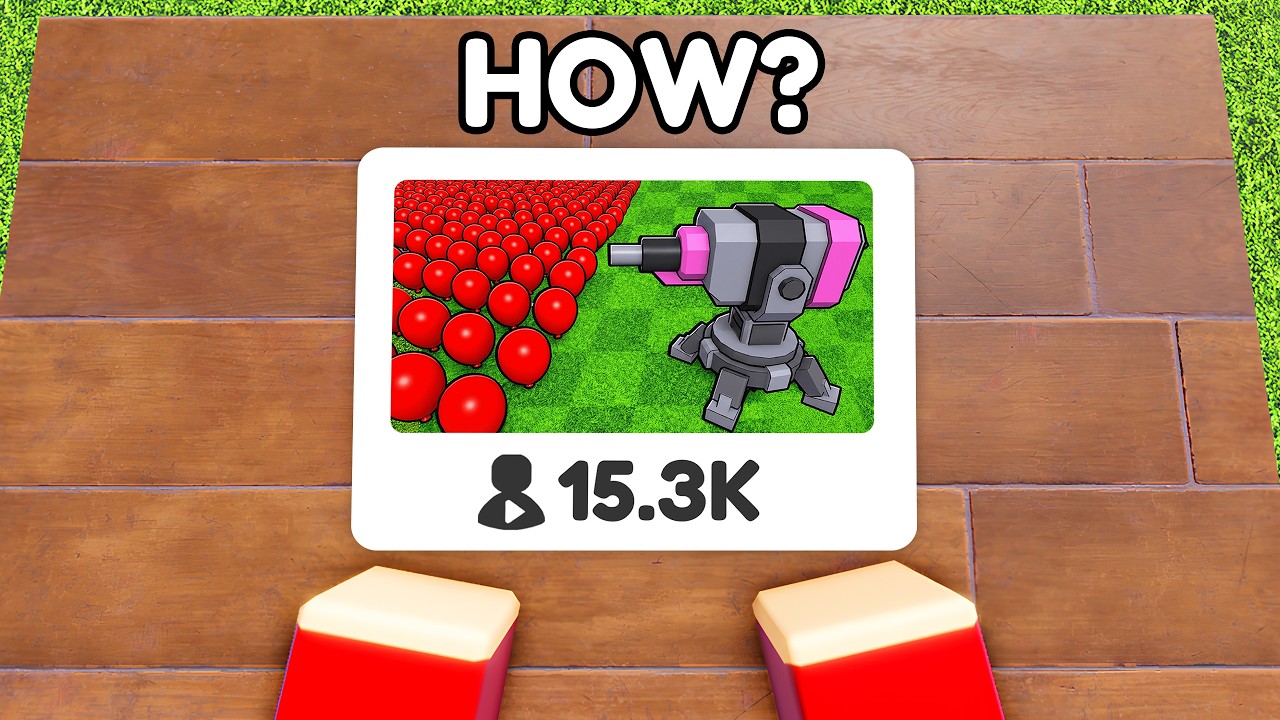
Before a single line of script gets written, the idea has to work on its own. janisjanis01 is blunt about this: when people ask how many ad credits he spent to go viral, he tells them the idea is the real answer. A weak concept cannot be rescued by marketing. The good news, he points out, is that originality is not required. Fish drew from Stardew Valley. Murder Mystery 2 borrowed the energy of Garry’s Mod. His own tower defense game came directly from playing Bloons Tower Defense, then stripping it down and rebuilding it in Roblox’s ecosystem with a twist that felt native to the platform.
Once the idea exists, the core loop has to be engineered deliberately. His game Defend the Village, which reached 2.4 million visits, ran on a four-beat rhythm: fight zombies, earn tokens, buy upgrades, fight more. Simple enough that a new player grasps it immediately, deep enough that they want the next unlock. Boxing Stars reached nearly 700,000 visits on the same principle. Roebucks Simulator 2 hit close to 900,000. None of them were technically complex. All of them were mechanically tight.
Monetization belongs in the design from the beginning, not bolted on at the end. He recommends a starter pack that helps with progression, purchasable in-game currency, and limited-time items that create urgency. The limited window is the point: players who might ignore a permanent item will act when the clock is running.
Getting into the algorithm and staying there
Launching is the most anxious moment in the process. janisjanis01 runs his first ad campaign at eight credits per day for two days with no auto-reload, testing two to three thumbnails simultaneously to find which one earns the click. One day in, a second campaign launches at 16 credits per day. The goal is not to sustain paid traffic indefinitely. The goal is to generate enough momentum that the platform’s recommendation system takes over and starts distributing the game for free. A player count above 50 after the ads stop is the signal that the algorithm has engaged.
His bubble balloon game averages around 1,000 concurrent players on a quiet day. When he runs an in-game admin abuse event, giving players something valuable and treating the update like an occasion, that number jumps to 3,000. He points directly to how that event model helped one game reach 20 million active users. Sneak peeks matter too: blurred screenshots posted to a community server before an update drops get players speculating, talking, and counting down hours until release.
YouTubers found Pop a Balloon on their own once the concurrent player count crossed a threshold, and their coverage pushed it to 15,000 players. That kind of attention is not something a developer can manufacture, but it is something a developer can be ready for by keeping the game stable and the updates coming.
The moment the stats stopped being exciting
There is a specific point in the growth curve where watching the player count every few hours stops feeling like a reward. janisjanis01 describes it plainly: ‘Getting to the top is the easy part, but keeping your position is not.’ One poorly received update, a few days of dropping numbers, a YouTube video suggesting the game is fading, and the pressure starts compressing everything. His answer is not a system. It is a disposition: listen to the community, push the next update anyway, and accept that some players will complain regardless of how good the work is.
Even if a game eventually winds down, the developer who built it walks away with a skill set and market instincts that make the next attempt faster and sharper. That, he argues, is the real asset.
The free model screen he still remembers
The blank Roblox Studio window from that afternoon in 2023, open on a school-night desk with nothing in it but dragged-in assets.
Two years later, tens of millions of visits logged, and the next update already being teased in a Discord server where players are guessing what is blurred out in the screenshot.