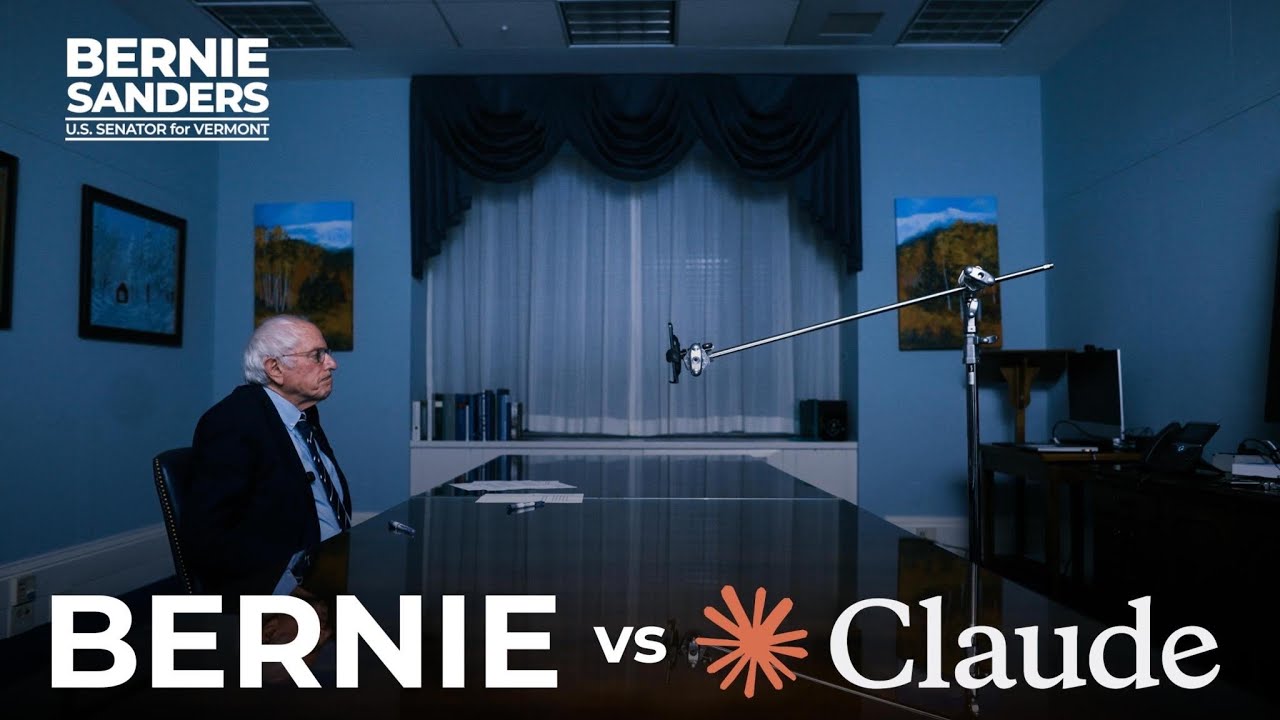
Senator Bernie Sanders opened with a direct question: how much of what AI collects about ordinary Americans would actually shock them? The answer he got back was blunt enough to stop a conversation cold. Browsing history, purchase records, location data, even the seconds a person lingers on a web page before scrolling away, all of it is being swept into systems that build detailed personal profiles, largely without meaningful consent, and almost entirely without federal oversight.
The invisible machinery behind every click
The AI explained the basic architecture in plain terms. Companies vacuum up data from dozens of sources simultaneously, feed it into AI systems, and produce profiles precise enough to predict behavior before the person themselves has made a decision. Advertisers pay premium prices for access to those profiles because they work. But the same infrastructure that sells you running shoes is also available to political campaigns looking to identify which specific anxieties will move a specific voter.
Sanders pressed on the political dimension directly. The response was pointed: AI microtargeting now allows campaigns to show entirely different narratives to different people. One voter sees a message about protecting jobs. Another sees one designed to stoke fear about immigration. As Claude put it: ‘they’re living in different information worlds.’ That fragmentation of shared reality, Sanders was told, is not a side effect. It is the product.
The consent problem nobody reads around
Sanders raised what he called the core contradiction. People share deeply personal information with AI tools, sometimes more than they share with family members, while those same companies use that information to train new models and build more profitable products. The trust gap is structural, Claude acknowledged, not incidental. ‘You’re asking people to trust companies whose entire business model depends on extracting value from your personal data,’ the AI said. Without regulations requiring explicit consent, deletion rights, and real penalties for misuse, skepticism is the only rational response.
The sharpest exchange came when Sanders moved the conversation toward a moratorium on new AI data centers. Claude initially offered the more measured position: targeted rules on data collection, transparency requirements, consent mandates. Sanders cut through it. AI companies are spending hundreds of millions of dollars in Washington precisely to make sure those safeguards never materialize. Claude acknowledged the point without flinching. ‘I was being naive about the political reality,’ it said. ‘When companies are spending hundreds of millions to block regulation, waiting for the right safeguards isn’t realistic.’
The conversation closed on a broader frame. Privacy, Claude told the senator, is not an individual inconvenience. When governments or corporations hold detailed profiles on millions of people, they hold power over those people in ways most of them have not yet processed.
A question that did not get a tidy answer
Sanders asked whether a moratorium on data centers actually makes sense given the political money blocking softer solutions. Claude said yes. The senator thanked it and moved on. Whether Congress follows is a separate question entirely.
Sanders walked into the conversation already skeptical and walked out with his skepticism confirmed by the system he was questioning. That is an unusual dynamic for any congressional hearing, let alone one conducted with an AI.