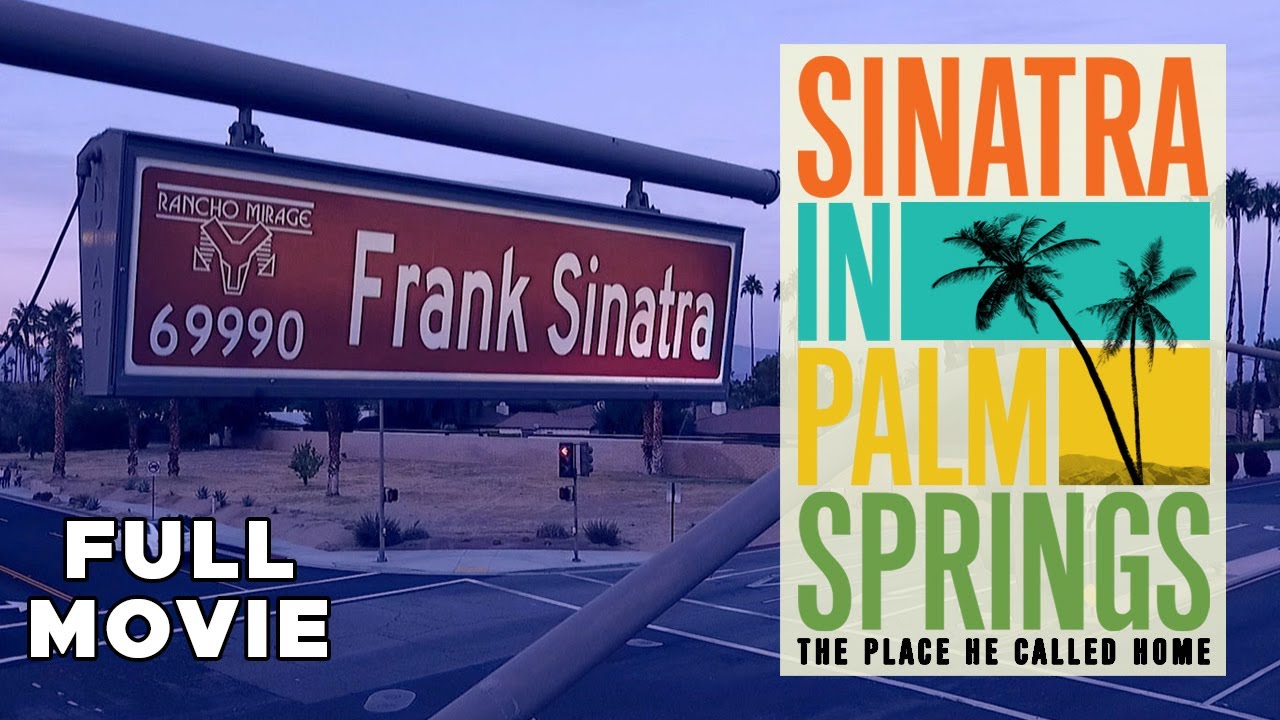
Frank Sinatra once looked up at the palm trees and the stars from his Rancho Mirage compound, turned to a guest named Susan, and said: ‘This is my heaven.’ The man who had packed Madison Square Garden and the Sands in Las Vegas, who had been so hot he said he could call the White House and get through, had settled on a patch of Coachella Valley desert as the one place on earth where he felt most like himself. What Palm Springs gave Sinatra, and what Sinatra gave back to it, is a story that outlasts the man by decades and still pulls visitors to a corner table at Lord Fletcher’s or a quiet stretch of Frank Sinatra Drive.
The connection began in the mid-1940s through songwriter Jimmy Van Heusen, a self-described hedonist who had come to the desert for the fresh air and the privacy. Van Heusen, whom Sinatra nicknamed Chester Babbcock for reasons nobody could quite explain, saw in the Coachella Valley everything a man who wanted to call himself a swinger could want: warm dry air, distance from the Hollywood machinery, and a small-town culture that considered leaving celebrities alone a civic virtue. Sinatra fell in love with it immediately and, as one longtime resident put it, stayed ever since.
The town that looked the other way on purpose
Residents of the Coachella Valley were, by unspoken consensus, instructed not to bother the celebrities who retreated there from Los Angeles, roughly a three-to-four-hour drive away at that time. The rule held for Sinatra more completely than for almost anyone. People walked past him at the bar at Mel Haber’s Ingleside Inn. They shared a restaurant with him at Ruby Dunes, where he kept his own corner table and, according to those who were there, a red phone behind it in case he needed to reach the White House. They watched him stand at the front bar at Lord Fletcher’s before his dinner guests arrived, completely relaxed in a way that would have been impossible almost anywhere else on earth. One maitre d’ who waited on him for thirty years at that same restaurant recalled that Sinatra loved the short rib and had the recipe for his favorite after-dinner drink, a Brandy Ice, on the refrigerator at his house. Nobody at the bar made a scene about it.
His compound in Rancho Mirage, positioned directly beside Tamarisk Country Club, grew over the years into something between a private resort and a small village. Guest bungalows were named after his songs: My Way, Tender Trap, New York New York, which had four double bedrooms and eight bathrooms and its own pool. A helicopter pad allowed guests to arrive from the airport without driving. His personal pianist, Frankie Randall, lived close enough that when Sinatra called saying he felt like singing, Randall would walk across the golf course to be at the keys within minutes. A room in the compound was given over entirely to model trains, every wall lined with them on racks, a large central table letting him operate them all at once.
Charitable by habit and stubbornly anonymous about it
The Palm Springs that Sinatra inhabited was not only restaurants and late nights riding the desert roads until sunrise. He read the Desert Sun every morning specifically to find people in trouble. When a bus boy who worked at a restaurant Sinatra frequented was mugged and sent to Desert Hospital, Sinatra quietly covered all his medical expenses. When a reporter for that same paper fell a thousand dollars short of a charity fundraising goal in his first year on the job, a check from Frank Sinatra arrived. When comedian Ukie Sherin, a Palm Springs fixture and old friend, suffered a stroke that took his speech, Sinatra organized a star-studded fundraiser at the Riviera Hotel that drew calls for tables from Chicago, Miami, and New York. He helped build Temple Isaiah, funded a wing at Desert Hospital named after his father, and supported the construction of St. Louis Catholic Church in Cathedral City. Half the time the word ‘anonymous’ appeared in connection with a local act of generosity, according to people who knew him, it was Sinatra behind it.
Tom Dreesen, who performed alongside Sinatra for fourteen years and fifty cities a year, described driving him around the Coachella Valley until the sun came up, just the two of them, Sinatra talking about growing up in Hoboken, about his mother and father. One night on one of those drives, Dreesen made a joke about needing to go to bed early to visit the cemetery and pay respects to ‘all those guys who died trying to stay up with you every night.’ Sinatra, according to Dreesen, burst out laughing and sent him to bed.
Toward the end of his life, Sinatra moved to Beverly Hills for health reasons. He was so sad the day he drove away from the compound that people who watched him go never forgot it. Even then, according to those around him, he kept asking: ‘When are we going home? When are we going home?’
The corner table nobody reassigns
Table 53 in the main dining room at Lord Fletcher’s, in the corner where no other table sits close enough for anyone to approach uninvited, is the one people still ask about. The maitre d’ there gives the same answer to this day: Sinatra sat anywhere he wanted. He was buried at Desert Memorial Park beside his parents, Marty and Dolly Sinatra, and beside his friend Jilly Rizzo.
The Jack Daniels on the rocks, the New York steak, the Brandy Ice recipe on a refrigerator in Rancho Mirage, the red phone at Ruby Dunes: all of it sits in a town that still, as one resident said plainly, feels the ghost of the man.