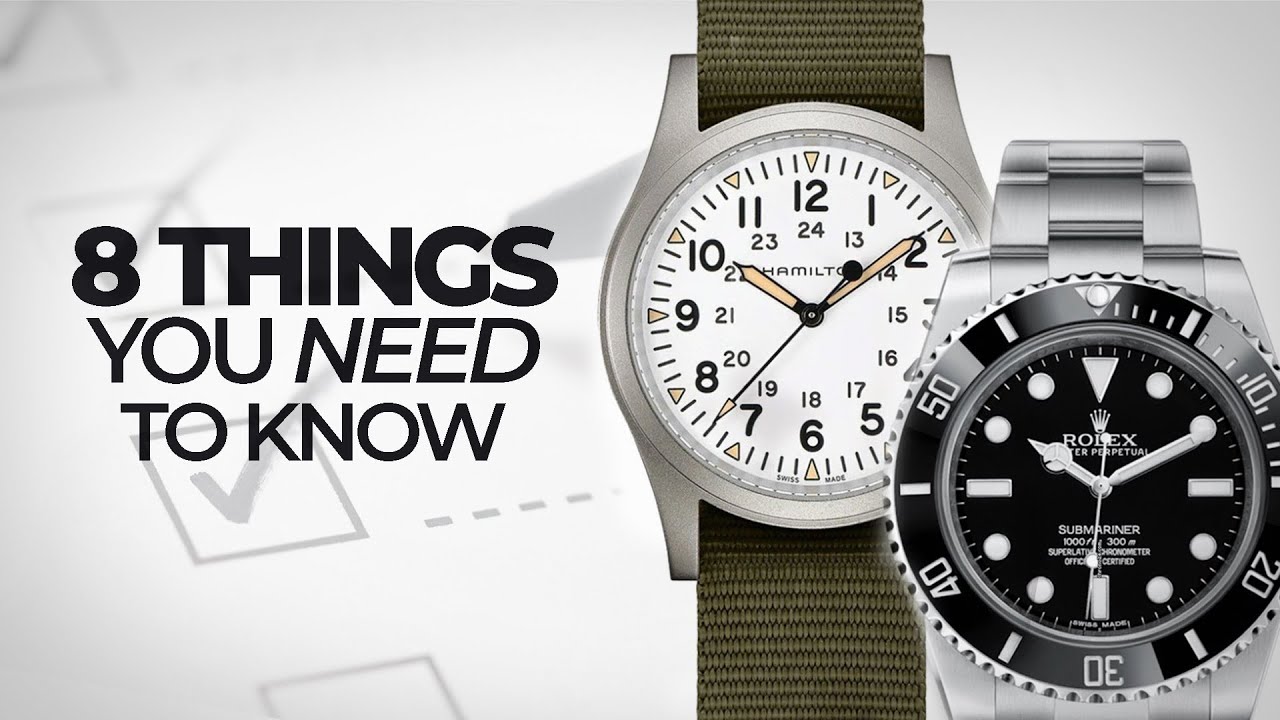
The second hand is the tell. On a quartz watch it ticks once per second, clean and decisive. On a mechanical watch it sweeps in a continuous flow, driven by nothing more than coiled steel and a balance wheel rocking back and forth like a tiny pendulum. That single visual difference unlocks one of the most enduring debates in horology, and for anyone stepping into the watch world for the first time, it is the perfect place to start. Teddy Baldassarre, who runs an authorized dealership across 20 brands, built an eight-part crash course around exactly this kind of foundational knowledge, and it moves from the physics inside the case all the way to where to safely buy a watch without getting burned.
What is actually happening inside the watch on your wrist
A mechanical watch stores energy in a coiled mainspring housed inside a barrel. As that spring gradually uncoils it releases energy through a gear train down to an escapement and a pallet fork, which locks and unlocks in rapid succession while a balance wheel oscillates back and forth to regulate the rhythm. That rhythm is what produces those sweeping seconds. The entire system runs on no battery, no external power, just gears and springs, which is why collectors find it so compelling even though a cheap quartz watch is statistically more accurate over a month than many mechanicals are over a single day.
The quartz movement earns that accuracy by vibrating a tiny crystal at exactly 32,768 times per second through what is called the piezoelectric effect. An electrical charge from a battery triggers that vibration, the frequency loops back through an integrated circuit, and electromagnetic pulses through a coil block move the hands. The tradeoff is the battery itself: every few years it needs replacing, whereas a mechanical just needs to be worn or wound.
Baldassarre put the collector appeal plainly: ‘there is a lot of just endearing attributes about it and it really goes into more the romantic idea rather than it is more of the technological feat.’
The details that actually determine whether a watch fits your wrist
Most buyers focus on case diameter, but Baldassarre argues that lug-to-lug distance is the most important fit dimension and the one manufacturers almost never publish. It measures the watch from the tip of the bottom lug to the tip of the top lug, dictating how far the case spans across the wrist. He demonstrated this with a watch wearing 38.5 millimeters in case diameter but 45 millimeters lug-to-lug alongside a different piece at 35 millimeters case diameter and 44.8 millimeters lug-to-lug. On the wrist, they wore nearly identically, despite the 3.5-millimeter case difference. For his own 6.25-inch wrist he keeps dress watches between 34 and 36 millimeters case diameter with lug-to-lug around 40 millimeters, and sports watches up to 42 millimeters case with a 50-millimeter lug-to-lug limit.
Thickness adds another layer. A watch that carries most of its height in a domed crystal, like one piece he demonstrated at 14.5 millimeters total, wears far flatter on the wrist than a watch where that same thickness comes from the case itself. For buyers shopping online, sourcing lug-to-lug data from third-party databases rather than manufacturer specs is often the only way to get it.
Straps are the overlooked variable in the whole equation. Because most watches use a standard lug width, swapping a NATO strap, a leather strap, or the original metal bracelet takes only a spring bar tool and a few minutes. A fork-end spring bar tool compresses the small spring-loaded bar inside the lug and releases the strap. Baldassarre recommends a Swiss-made tool brand that has been in business since the 1700s; he keeps one on hand daily.
On water resistance, the numbers mislead almost everyone. A 30-meter rating means splash resistance only, not swimming. At 100 meters most water activities are fine. At 200 meters, snorkeling and recreational scuba diving are covered. But those ratings reflect static testing, not the dynamic pressure of moving arms through water, and gaskets degrade over time, so periodic pressure testing matters if the watch is being pushed regularly.
For crystals, sapphire sits at the top for scratch resistance and clarity, especially when paired with dual-layer anti-reflective coating that makes the glass nearly invisible over the dial. Acrylic and hesalite crystals scratch more easily but carry a warm vintage character and can be polished out with a product like Polywatch. Mineral falls in between on both cost and hardness.
On where to buy: authorized dealers carry factory warranties and new inventory; reputable pre-owned sellers offer strong value if the seller’s track record is verified; gray market sellers offer discounts but often list watches they do not have in stock, ship without factory warranties, and can complicate future servicing with the major conglomerates. Counterfeit sellers are simply illegal and carry prosecution risk for everyone involved.
The spring bar tool sitting on Teddy’s desk
A small fork-ended tool, its tip worn from daily strap changes, rests beside a row of interchangeable straps in leather, NATO webbing, and brushed metal. It costs almost nothing compared to the watches it serves.
For anyone who ever assumed a watch came permanently attached to whatever strap it shipped with, that tool is the first thing worth buying.