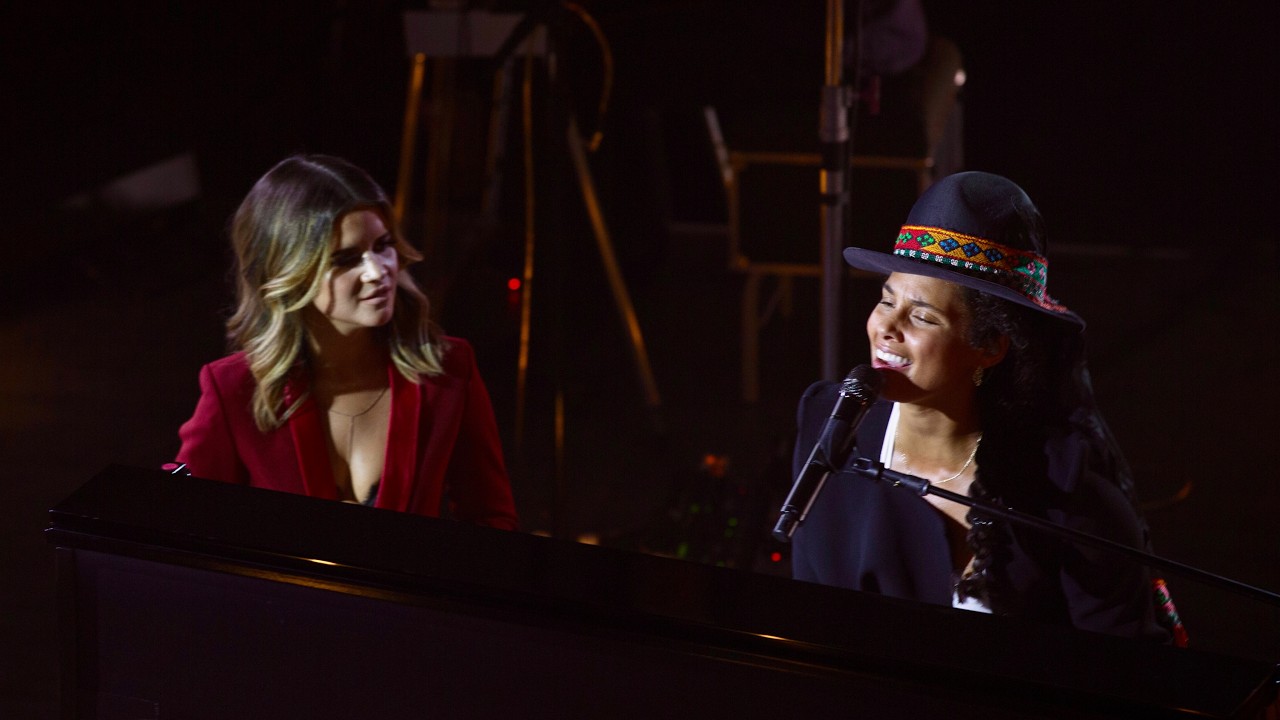
Alicia Keys was sweating in Tennessee, trying to memorize six Maren Morris songs, when she landed on a theory that made the whole project click. Country and soul, she decided, were never really that far apart to begin with. The CMT Crossroads pairing of two artists from opposite ends of the genre map was being called the least expected collaboration the series had ever attempted, but Keys was not convinced it was a stretch. She had been there long enough to feel why it worked.
Six songs each, from scratch
The ground rules for CMT Crossroads are simple and demanding in equal measure: each artist learns the other’s catalog well enough to perform it live, together, on a single stage. For Keys and Morris, that meant six songs apiece, chords, lyrics, melodies, and the harder question of how they would actually blend. Keys described the preparation as a serious commitment, working through every chord change and trying to understand not just the notes but the architecture of Morris’s writing. She found it spunky, full of attitude, and built around strong song structure, which she said mirrors her own approach. ‘It’s all about the songs,’ Keys said. ‘It’s all about the lyrics. It’s about the structure of the songs. And that’s a lot how I approach my writing as well.’
Morris, for her part, grew up with a foot in two worlds at once. Classic country artists on one side, Motown on the other, and she traced most of her vocal instincts and songwriting habits back to that split root. The overlap with Keys’s foundation was not manufactured for the occasion. When the two of them sat down together, sweating in the Tennessee heat and talking about where it all came from, they kept arriving at the same two words: the roots. The gospel.
Where country and soul actually meet
Keys put the connection plainly during one of their early conversations. ‘Country is married to the blues. Soul music is married to the blues. So it’s really all from the same kind of beginning.’ Morris agreed that rootsy was the word, and the word kept coming back. The more they rehearsed, the more the crossover felt less like a creative experiment and more like a reunion of styles that had been pretending to be strangers.
The live performance they were building toward was designed to let both of them stand on that shared ground without apology. Two voices, two catalogs, one stage in Nashville, the city Morris jokingly noted they were both currently melting in.
The joint they never actually rolled
At one point during the rehearsal stretch, Keys looked at the camera with the easy candor of someone who has stopped trying to sound polished and said if Maren would just roll a joint and ride with her and Diggy, she’d be rich. Morris laughed. It was the kind of offhand moment that said more about their chemistry than any rehearsal clip could.
Morris called Keys iconic without any of the hollow reverence the word usually carries. She meant it structurally: this was someone who had already shaped the music world, and the fact that they were standing in the same room preparing to share a stage was not lost on her.
The harmonies from their run-through of a song built around the line ‘we got way too much in common’ drifted out of the rehearsal space and into the Nashville air, which was already thick and warm and not getting any cooler.
Two artists, twelve songs between them, one stage still being set.