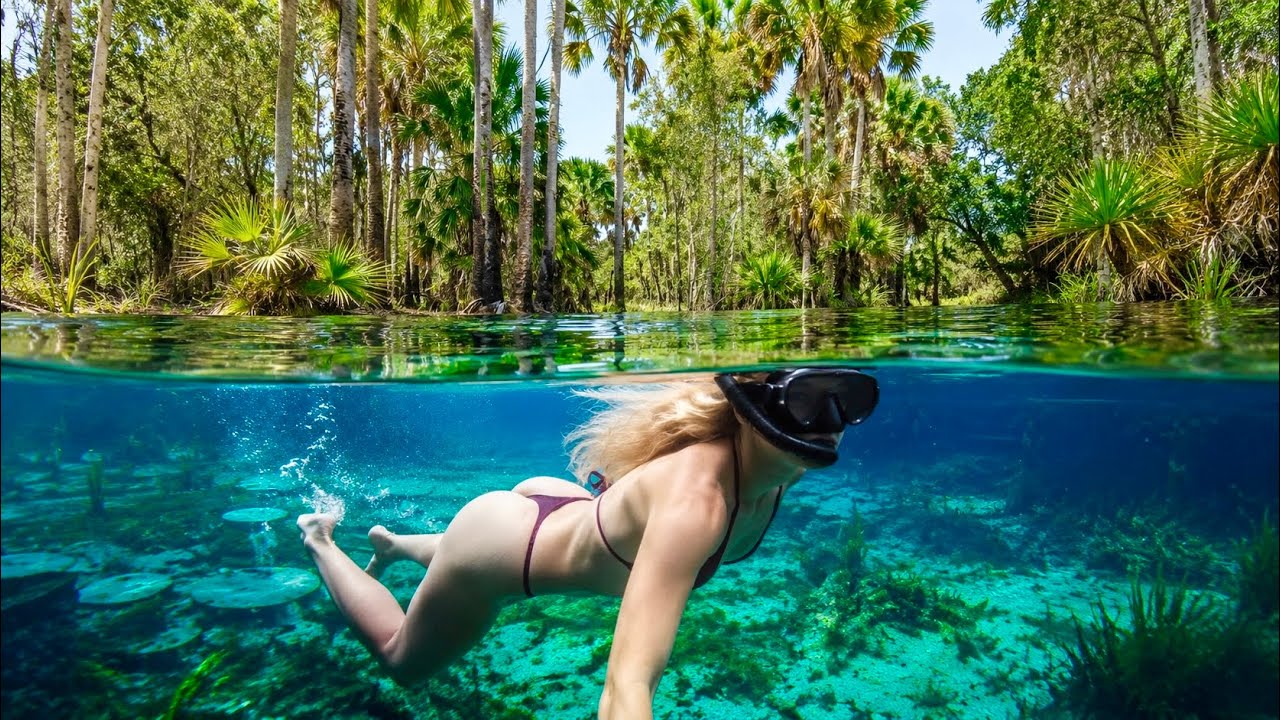
The water at Bitter Springs sits at a steady 34 degrees Celsius year-round, fed by thermal currents deep beneath Elsey National Park, and when Molly Dixon floated down through it at first light, with turtles drifting past and the canopy turning gold overhead, she said she genuinely could not explain how nice it was. That feeling, effortless warmth, crystal clarity, and wildlife close enough to touch, is the whole pitch for the Northern Territory’s far north, a region that rewards anyone willing to rack up the kilometers on the Stuart Highway. Dixon had been doing exactly that, pushing roughly 500 kilometers on what she called a smaller day, working her way up through the red center toward Mataranka, and what she found there made her want to stay for several days.
Outback pubs with genuinely strange histories
The road north is punctuated by towns that seem too vivid to be real. Daly Waters carries the kind of history you do not expect from a roadside stop: it served as a World War II Air Force base, a refueling point for Qantas, and holds the distinction of being Australia‘s first designated international airfield. Across from the pub, a local junkyard museum fills a yard with vintage cars, quirky signs, and classic oddities worth an unhurried look around. Inside the pub itself, hundreds of bras hang from the ceiling, a tradition that reportedly began in the 1980s after a group of bus passengers lost a bet. Every wall is covered in business cards, foreign currency notes, stickers, and hats.
Down the road, the word ‘Larrimah’ translates to ‘meeting place’ in the local indigenous language, and the pub there carries a darker layer of fame. A local resident and his dog vanished without a trace in December 2017. The unresolved case drew attention across podcasts, books, and a Netflix documentary series.
At Mataranka that evening, Dixon caught the crack whip show, a performance she remembered from a visit three years earlier. The performer on stage that night had broken his own world record three times. His best: 697 whip cracks using two whips in a single minute. ‘You’re looking at one of the fastest whip cracks in history,’ he told the crowd, then noted with clear satisfaction that an American had held all three records before he reclaimed them for Australia.
The river that runs 400 kilometers to the Gulf
Bitter Springs sits only 2 kilometers from Mataranka township, and Dixon returned to it twice in the same day, once at dawn with an almost empty car park, then again in the afternoon when the sun was directly overhead and the water had turned a deeper shade of blue. A croc trap near the swimming boundary, baited with chicken, was the visual reminder that saltwater crocodiles are real enough to plan around.
The Roper River, which runs the full 400 kilometers through the national park all the way to the Gulf of Carpentaria, offered barramundi fishing, though the dry season mid-cycle meant the fish were not feeding aggressively off the bank. Dixon cast lures for an afternoon without a single bite and called it a lovely way to spend the time regardless. Later in the week she got out onto the water on a system further south, landed Northern Territory barra, and saw the biggest crocodiles she had encountered in her entire life.
Dinner that night was a burger built from butter, cheese, barbecue sauce, lettuce, and egg, assembled at camp and eaten with one hand while the camera went down. ‘Bloody delicious,’ was the verdict.
The croc trap with chicken still in it
At the downstream end of the Bitter Springs swimming zone, a large metal croc trap sits just past the bridge that marks where swimmers must stop. A piece of raw chicken sat visible inside it.
Bitter Springs was quieter at dawn than it ever was again that day, and Dixon was already planning a return visit before the morning was half finished. The thermal current moved at its own pace regardless of the car park.