A local fisherman stood waist-deep in the Adriatic near Queen’s Cove, pulling an octopus from the water with the casual ease of someone collecting the morning post. Montenegro, for years tucked quietly behind Croatia’s tourist machine, had just served up the kind of unrehearsed moment that no travel brochure can manufacture. Malini Angelica had come to find out whether this small Balkan country deserved the sudden surge of attention it was receiving, and within a day of arriving, the answer was obvious. She had barely started walking the coastal trail south of Sveti Stefan when the encounter unfolded, a brief, warm exchange about octopus salad, London, and whether the tourists were getting to be too much. ‘Not too much,’ the fisherman said, apparently satisfied with the balance. ‘Good amount.’ Then he waded back in.
Where two thousand years of history end up as a cat-filled walking maze
The journey begins in Kotor, Montenegro’s oldest town, settled roughly 2,000 years ago and now a UNESCO World Heritage Site. The old town is encircled by walls that started going up in the 9th century, built first along the waterfront and then extended far up the hillside behind the town as the centuries and the empires kept arriving. The Illyrians came first, then the Romans, the Venetians, the Ottomans, each leaving behind something architectural: Renaissance palaces here, Baroque towers there, Orthodox and Catholic churches sharing the same cobbled squares. The maze of stone alleys developed its current form largely between the 12th and 14th centuries, and the whole ensemble is still arrestingly intact.
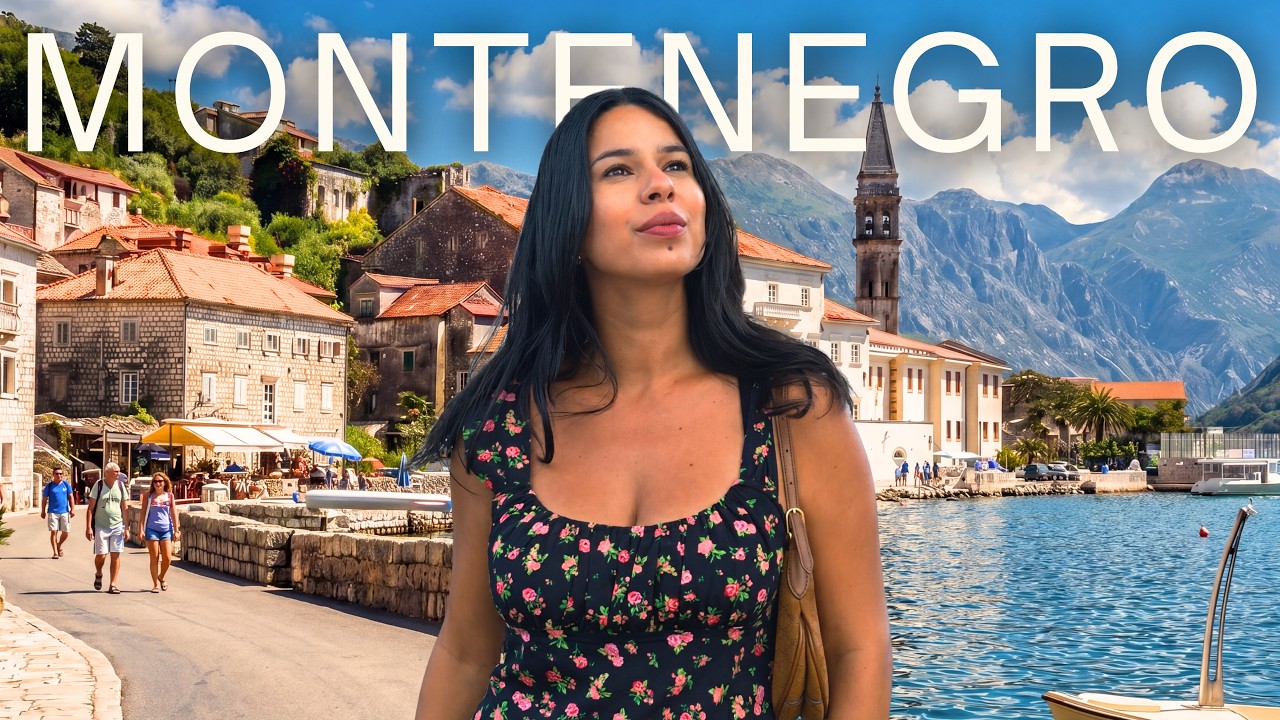
From the old town, a boat makes the short run across the bay to Perast, a place whose waterfront palaces and grand churches carry such a strong Venetian imprint that the town reads like a piece of Venice that quietly drifted south. Just offshore from Perast sits the only man-made island in the Adriatic. Sailors and fishermen centuries ago reported a sighting of Madonna and child at that spot, and they responded in the most literal way imaginable: by dumping rocks into the sea until an island formed. A chapel followed a few centuries later. The island remains a place of protection for sailors and fishermen today.
Back in Kotor, the afternoon’s main event is the climb. St. John’s Fortress sits at the top of 1,350 stone steps, most of the structure now crumbled into ruin. What survives in full is the view: the whole of Kotor’s old town below, the harbor, and the mountains dropping directly into the sea. By the time Angelica reached the summit, the light had gone and the town had lit up. ‘It’s taking my breath away,’ she said simply. ‘A very special place where the mountains meet the sea.’
A mountain grandmother, a shot of rakia, and 70 years of family wine
The coast is only half the story. A narrow road climbs from Kotor up through the clouds and into Montenegro’s interior, and it is here that the country’s character becomes something different. At around 800 metres above sea level, with the whole Montenegrin landscape opening up below, the journey stops at a farmhouse where a woman has spent her life making exactly what her family has always made: honey, nuts, cheese, cured meats, and rakia, the national spirit distilled from fruit. She was born in the village. Her hands showed it. She pressed a glass into Angelica’s hand with the urgency of someone who finds refusing a guest to be genuinely incomprehensible.
The rakia was strong. Very strong. The woman offered a secondary endorsement: good for coronavirus. Then she showed her pig-drying shed, her grape vines, and her animals, all with the enthusiasm of someone who has never once considered that this life might not be remarkable. ‘She can be my Montenegran grandmother,’ Angelica decided.
Further along, a family winery near Skadar Lake has been operating for 70 years, with photographs of the grandfather and great-grandfather on the wall to prove it. The current generation ferments red wine, distills rakia from red grapes using a heating and cooling process that looks unchanged from the mid-20th century, and produces honey, jam, cheese, prosciutto, salami, and pumpkin preserves from the same property. The winemaker’s own summary of why he does it was direct: ‘My ancestors were engaged in this business, but we want to preserve the tradition and make something that’s original, which is our pleasure.’ He personally drinks German beer.
The fisherman and his octopus
Somewhere along the pine-shaded trail between King’s Beach and Queen’s Cove, the man with the octopus reappeared in conversation, his afternoon already complete, the sea having provided exactly what he needed.
Queen’s Cove itself delivered on everything the trail had promised: deep emerald water backed by pine trees, mostly locals in October, the season winding down in the best possible way. Montenegro’s coast is changing, new apartments and hotels reshaping villages along the Budva Riviera, a legal dispute over beach access at Sveti Stefan exposing the tension between luxury tourism and local life. But the fisherman and his octopus were not particularly worried about any of it. He had the sea, the mountains, the food, and the sun, and he was heading home for octopus salad.