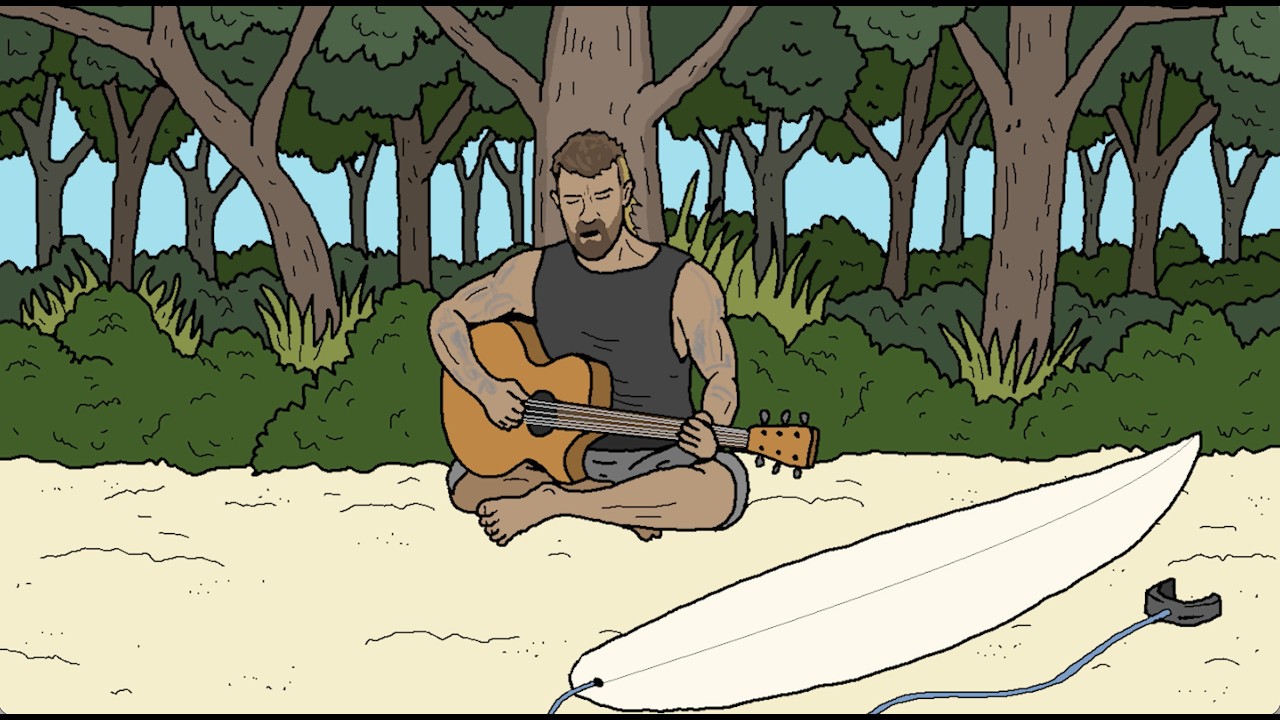
Xavier Rudd leans into the camera and says exactly what a lot of people needed to hear years ago and never did: keep your chin up, mate. That opening line is not a platitude. It is the beginning of a five-minute conversation between a musician and anyone who has ever felt like the weight of their upbringing was not their fault but somehow still their problem to carry. In a cultural moment when mental health discourse has grown loud and often exhausting, Rudd’s approach is something rarer: plain, warm, and bracingly honest about the limits of even the best advice.
The song that sounds like a letter from a slightly wiser older brother
Rudd moves through the song like someone who has actually done the work, not someone performing the idea of it. He acknowledges inherited pain directly: ‘he probably did his best with the tools that he had.’ That single line does something quietly radical. It does not excuse the father or erase the damage. It just holds both truths at once, which is closer to what healing actually looks like than most self-help content gets. The emptiness, he admits, ‘may never go away. At least it’s going to take time.’ That honesty lands harder than any promise of transformation.
The advice that follows is practical and odd in the best way. Hang out with some hippies. Maybe get yourself a van. Strip away the layers. Expand your mind. Rudd put it plainly mid-song: ‘don’t lose yourself or become obsessed with your own healing journey and sacrifice the rest. Because there’s people who love you outside of your mind.’ That line is the sharpest thing in the song, a real warning against the kind of navel-gazing that swallows people whole while the people who love them wait outside.
Where the song turns from personal to planetary
About two-thirds through, the frame widens. Rudd addresses fathers who have let distance grow between themselves and their children: ‘kids are only kids for a very short time. From there, they’ll keep you guessing if they’ll want you in their lives.’ It is the most urgent section of the song, not angry, just truthful in the way that stings. Then the song extends further still, into a spoken closing that carries the full weight of everything built before it. ‘Take good care of the planet. Treat it with respect. It will be there for your family when you’re dead.’ The personal and the ecological arrive at the same point: your choices outlast you, and that is not a burden but a reason.
The closing spoken words move from environmental care into something Rudd describes as a belief in consciousness beyond death, in the idea that life on this planet leaves a mark on whatever comes after. He does not press it hard or ask anyone to agree. He just states it, the way you might tell a friend something you have come to believe after a long time.
The surfer who stayed
Do a bit of running or surfing, Rudd suggests, as casually as if he is talking to someone over a fence. It is the most grounded line in a song that could easily have floated into abstraction. The image of a person running along a beach, not enlightened, not fixed, just moving their body through a hard stretch of time, is what the whole song is really describing.
Near the end, Rudd drops the only thing he is certain of: ‘love truly is the answer. It’s a part of life. It can heal the deepest wounds and keep us inspired.’ He admits it has been said before. He says it anyway.