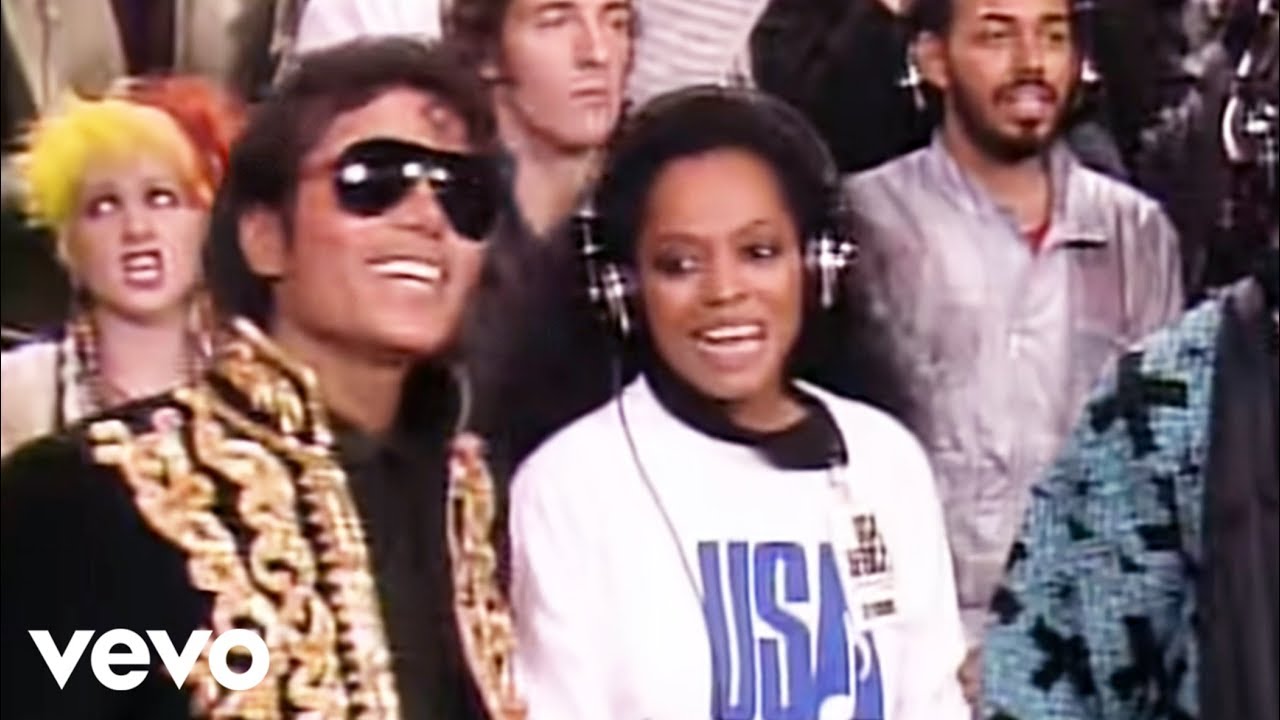
The lyric arrives without warning and refuses to let go: ‘There’s a choice we’re making, we’re saving our own lives.’ It is not a plea directed outward at the comfortable and the generous. It is a statement of shared condition, the idea that the fate of people dying far away and the fate of those singing about them are bound up in the same thread. That reframing, quiet and radical at once, is what has kept ‘We Are the World’ alive across decades as something more than a charity single.
A song built on the belief that waiting for someone else is not a plan
The opening verse lays out the problem with unusual directness for a pop record. ‘We can’t go on pretending day-by-day that someone, somewhere will soon make a change.’ The line does not flatter the listener. It names the comfortable paralysis most people live inside, the quiet assumption that intervention is someone else’s job, someone with more reach, more resources, more authority. The song refuses that assumption from its first minute and does not relent.
The chorus that follows is the answer to that paralysis. ‘We are the world, we are the children, we are the ones who make a brighter day, so let’s start giving.’ The construction matters: ‘we are the ones’ is not motivational shorthand. It is an assignment of responsibility. The people singing are the people capable of acting, and the song insists those two facts are not a coincidence.
The verse that names the hardest moment
The bridge section moves into different emotional territory than the choruses around it. ‘When you’re down and out, there seems no hope at all, but if you just believe, there’s no way we can fall.’ USA for Africa, the organization behind the recording, understood that a song asking people to give had to first acknowledge the weight of despair, both in the people being helped and in the people being asked to help when the problem feels too large to move.
What follows is the song’s sharpest structural choice: the realization is collective, not individual. ‘A change can only come when we stand together as one.’ The singular hero is written out of the story entirely. The massed chorus that carries the song through its final extended passage is the musical argument for that idea, voices layering until the whole is genuinely larger than any single part.
The final choruses repeat without apology, the phrase ‘just you and me’ landing each time as a specific reduction of something enormous into something personal and actionable: two people, choosing.
The line that never quite leaves
Somewhere inside the outro, a voice calls out: ‘Come on now, let me hear ya.’ It is an instruction still waiting to be followed.
The song opens on a ‘certain call’ that the world must answer together, and it ends exactly there, the call still going out, the chorus still building, the choice still being made.