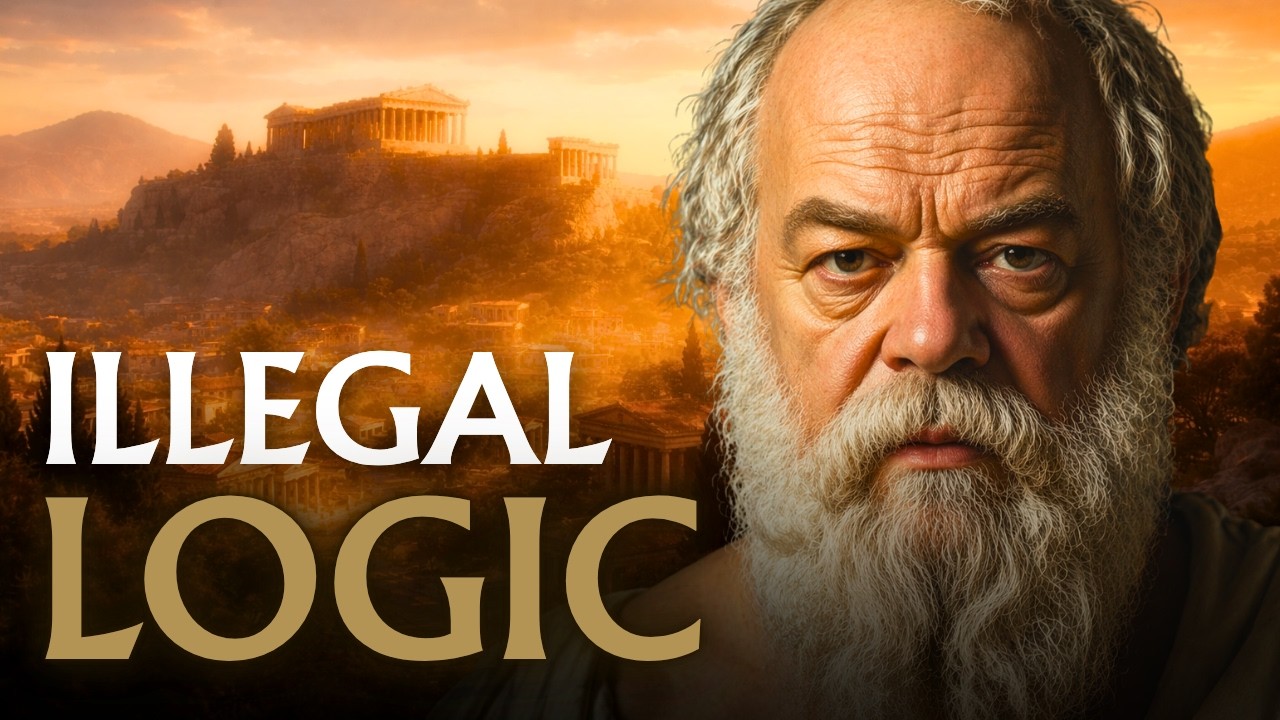
In the village of alopeke, a working suburb just outside the walls of Athens, a stonemason’s son grew up to become the most consequential philosopher in Western history without ever publishing a word. That paradox sits at the heart of everything historians know and do not know about Socrates, born somewhere between 470 and 468 BC, a man whose ideas on knowledge, virtue, and the examined life still shape classrooms, courtrooms, and constitutions today. What makes the Socratic story genuinely extraordinary is not just the ideas he left behind but the remarkable, often violent, always surprising life that produced them.
The soldier nobody pictures when they picture Socrates
The familiar image of Socrates is an elderly, barefoot, paunchy man with a broad snub nose and bulging eyes, shuffling through the Athenian marketplace and interrogating strangers about the nature of wisdom. The earlier version was something else entirely. Years of gymnastics, military training, and likely time in his father’s stone workshop would have produced a compact, muscular young man. His tolerance for pain, cold, and physical discomfort was remarked upon by fellow troops: he marched through ice and snow barefoot, wearing little more than a light cloak over his armor, without complaint. His name, it is worth noting, translates to ‘safe in strength.’
At the Battle of Potidaea in 432 BC, Socrates was 38 years old and still on active campaign when his young protege Alcibiades broke ranks and charged alone after fleeing Corinthian soldiers. Breaking ranks in a hoplite line was a dangerous act that exposed every soldier beside the gap. When Alcibiades fell before a Corinthian counter-push, Socrates crossed the battlefield through active fighting, lifted the young man along with his armor and weapons, and carried him to safety. Plato recorded that Socrates then insisted Alcibiades, not himself, receive the decoration for bravery.
The question that made him enemies for life
Socrates eventually set aside the natural philosophy of his youth, deciding that understanding the inner workings of the cosmos answered none of the questions that actually mattered: what is knowledge, how is virtue acquired, and what constitutes a good life. His method was relentless and, to many Athenians, infuriating. The elenchus was a structured cross-examination designed to expose the inaccuracy of a belief by pressing it until it collapsed into what philosophers call aporia, an unresolvable logical dead end.
When the Oracle at Delphi declared that no one was wiser than Socrates, he set out to disprove her. He questioned politicians, scholars, and skilled tradesmen, each of whom believed themselves wise. Every conversation ended the same way: his interlocutors could not defend their claims. As The People Profiles documentary on his life puts it, Socrates concluded that the difference between himself and the men he questioned was simply this: ‘as for me, all I know is that I know nothing.’ That intellectual humility, he argued, was precisely what the Oracle had recognized. His fellow Athenians were less philosophical about it.
Two of his former pupils, Alcibiades and the oligarch Critias, would eventually bring catastrophe on Athens through defection and tyranny respectively. Neither had acted on Socratic instruction, but the association was enough. In 399 BC, three citizens charged Socrates with impiety and corrupting the youth. A jury of 500 Athenians convicted him by a margin of 30 votes.
When invited to propose his own punishment, Socrates declined to offer anything that implied guilt. He had given his life freely to the education of Athens, he said, charging no fees, wearing shabby clothes, and living without ambition for wealth. If anything, he suggested, the city ought to reward him with free meals for life, as it did for Olympian champions. The jury sentenced him to death by a larger margin than the conviction itself.
A cup of hemlock and an unpaid debt
Socrates spent roughly a month in prison waiting for a religious pilgrimage ship to return from Delos, since no execution could be carried out in Athens while the voyage was underway. His friends urged him to escape. His jailer offered to let him go. He refused, arguing that a lifetime of living inside Athenian law meant he had implicitly agreed to accept its judgments, even unjust ones.
On his last evening he sent his family away before sunset to spare them. He spent his final hours in conversation about the immortality of the soul with the friends who remained. His last recorded words, spoken to his friend Crito just before covering his face with cloth after drinking the hemlock, were these: ‘I owe a rooster to Asclepius. Don’t forget to pay the debt.’ Scholars have debated the meaning ever since.
The debt to Asclepius, the healing deity, remains unresolved. Whether Socrates meant a literal religious obligation, a metaphor for life itself as an illness from which death was a cure, or something else entirely, nobody has settled the question. Which is, perhaps, exactly as Socrates would have wanted it.