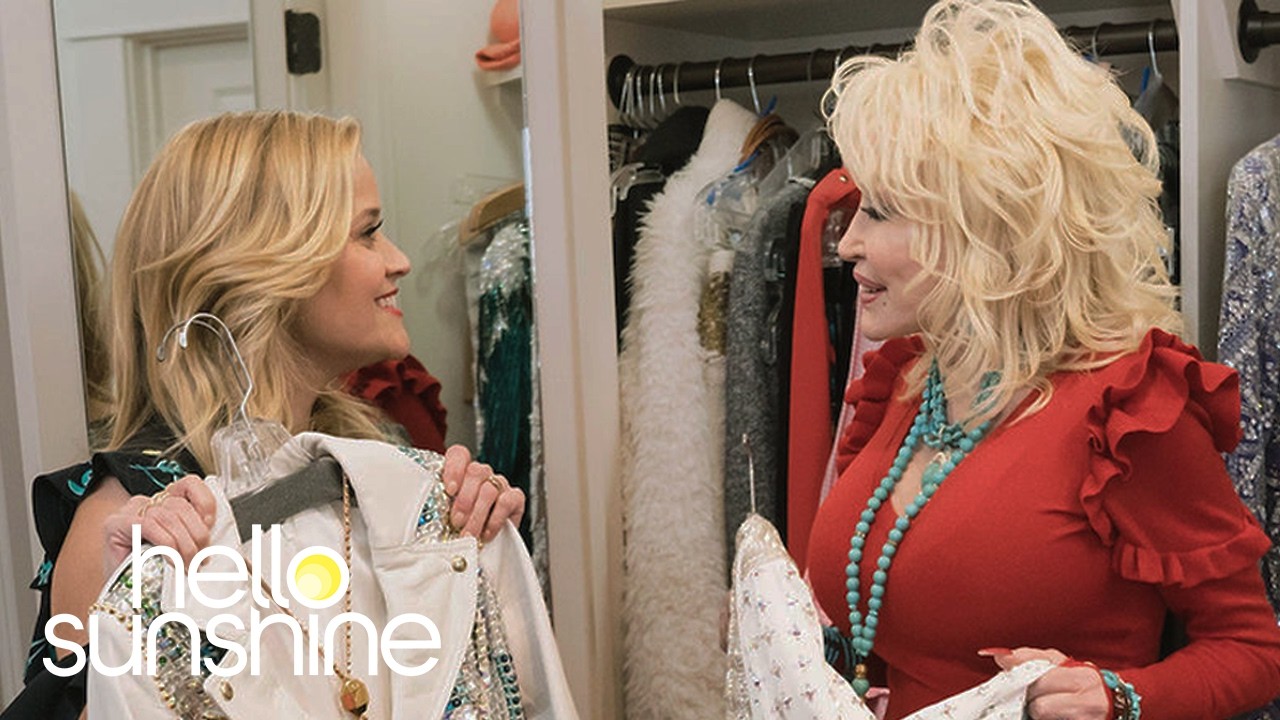
Reese Witherspoon was in kindergarten, skipping rope and singing to herself, when her PE teacher asked what she wanted to be when she grew up. Without blinking, she said she was going to be Dolly Parton. Decades later, she walked into Dolly’s home on a snow day, got her hair fixed at the door, and sat down to breakfast. The conversation that followed touched on bleach bottles, Elvis, publishing rights, and what it actually takes to leave somebody else’s show and start your own.
Running water meant running to get it
Dolly Parton grew up in a holler in the Great Smoky Mountains of East Tennessee as the fourth of twelve children, in order: Willadeene, David, Denver, Dolly, Bobby, Stella, Cassie, Randy, Larry, Floyd, Freida, and Rachel. The family worked their own fields, grew and canned their own food, and raised their own hogs. There was no running water unless someone ran to fetch it. Her father was strict and did not want her leaving home. Her mother, who recognized something particular in her daughter, quietly fought those battles for her.
The early trips to Nashville with her Uncle Bill meant sleeping in the car: her bedroom was the back seat, his was the front. She washed her hair in filling station bathrooms and fixed her makeup in the side mirror. That was just how you did it.
The hair ambitions started early and carried real risk. Reading the instructions on a bleach bottle, a teenage Dolly noticed the warning: do not get in eyes, as doing so may cause blindness. Her sister was rinsing the bleach out at the well, pouring water over her head, and it kept getting in her eyes. ‘I didn’t want to be blind,’ Dolly told Witherspoon. ‘I wanted to be blonde.’
The song she would not sell, not even for Elvis
At 18, she moved to Nashville the morning after her high school graduation and started working with a label that wanted to smooth her out, flatten her hair, and turn her into a teenage pop act. It did not work. She pushed to sing country, and at 20 joined the Porter Wagoner Show, the number one country-syndicated television program at the time. The salary was $60,000 a year. It never changed, even as her popularity lifted the whole show.
When she finally pressed for a raise and told Wagoner she intended to leave and build her own career as a solo artist, she wrote ‘I Will Always Love You’ to say goodbye. She played it for him the next morning. He cried, told her it was the best song she had ever written, and let her go on the condition that he produce it.
Years later, Elvis Presley wanted to record the song. She was invited to the session, told everyone she knew, and was ready to go when the call came: Elvis did not record anything unless he held the publishing. She had already scored a number-one hit with that copyright. She turned Elvis down. She cried all night. Later, Priscilla Presley told her that when she and Elvis left the divorce courthouse, he was singing that song quietly in her ear.
When the production team behind ‘The Bodyguard’ sent word asking for the perfect love song, Dolly sent it over and forgot about it. She was driving home when she heard Whitney Houston begin it a cappella on the radio. She had to pull over.
Witherspoon put the through-line plainly, and Dolly agreed: her father, who could not read or write, had drilled one piece of business advice into her. ‘Try to keep as much of your own stuff as you can,’ he told her. She started her own publishing company as soon as she was able.
A coat made of rags and what it grew into
The Imagination Library, which Dolly started 22 years before this conversation, was built in her father’s honor. Because he could not read or write, and because the family could not afford books, she created a program that mails a book every month addressed specifically to each child. ‘They wait for that book,’ she said.
Witherspoon told her that as a little girl, her favorite song was ‘Coat of Many Colors,’ and that it made her feel like her own life and story mattered regardless of where she came from. Dolly described the song as more than a song: an attitude, a philosophy about bullying, acceptance, and the idea that poverty is a choice you make in spirit, not an address.
At school, kids called the coat nothing but rags and scraps. It broke her heart. The beads that pop off her sequined stage costumes now get swept up, saved, and sewn back on. Her crew calls them Dolly Droppings.
The autoharp sitting in Dolly’s hands
At one point in the visit, Dolly held out an autoharp, the strings catching whatever light was in the room, and asked Witherspoon if she wanted to hold it.
When Witherspoon said she was going to get emotional, that she had always wanted to be more like Dolly, Dolly stopped her. ‘Don’t be like me,’ she said. ‘Be like you.’ Then she added: ‘I’ve chased after rainbows. I’ve captured one or two. And I’ve reached for the stars and I’ve even held a few. I’ve laughed and I’ve cried but I’ve always tried.’ She said it the way someone says a thing they have tested against real life and found to be accurate.