In the United Kingdom, between 2020 and 2024, not a single woman aged 20 to 24 who had been vaccinated as a teenager died from cervical cancer. Zero. That number lands differently when you remember that cervical cancer was, not long ago, an almost inevitable consequence of a virus that most adults will carry at some point in their lives. This is what systematic public health action looks like when it works, and it is one of more than a dozen pieces of genuinely good news from around the world that Freddy, the creator behind the Good News channel, assembled for his August roundup.
The electricity gap that Mission 300 is actually closing
Roughly 600 million people in sub-Saharan Africa still live without electricity, and until recently that number was growing, not shrinking. Power grids across the region are old, expensive to maintain, and priced out of reach for much of the population. In 2023 alone, 24% of the electricity generated was lost before it ever reached a home, simply because the lines carrying it were so degraded.
Mission 300, a joint initiative founded by the World Bank and the African Development Bank, set out to change that math. With nearly $50 billion in funding committed since the program began two years ago, it works with national governments to build long-term electrification plans rather than one-off projects. The results have surprised even its organizers: more than 50 million people across 40 countries have been connected to electricity in just two years. In Tanzania specifically, access to electricity has jumped by five times since the program launched. The rate of electrification across the region is now double what it was before Mission 300 existed.
More electricity means more jobs, more development, and broader internet access. As Freddy put it: ‘So perhaps hello to all of my new sub-Saharan viewers.’
From the Amazon to the Arctic, conservation is producing measurable wins
Amazon deforestation alerts fell to their lowest level since monitoring began in 2014. The satellite-based system that tracks the rainforest in real time detected around 3,000 square kilometers of deforested land over the past year, down from roughly 4,000 the year before. Brazilian President Lula’s decision to reopen the Amazon Fund, which his predecessor had shuttered, and to increase environmental policing by enough to drive a nearly 150% increase in fines for ecological crimes, is credited for the shift.
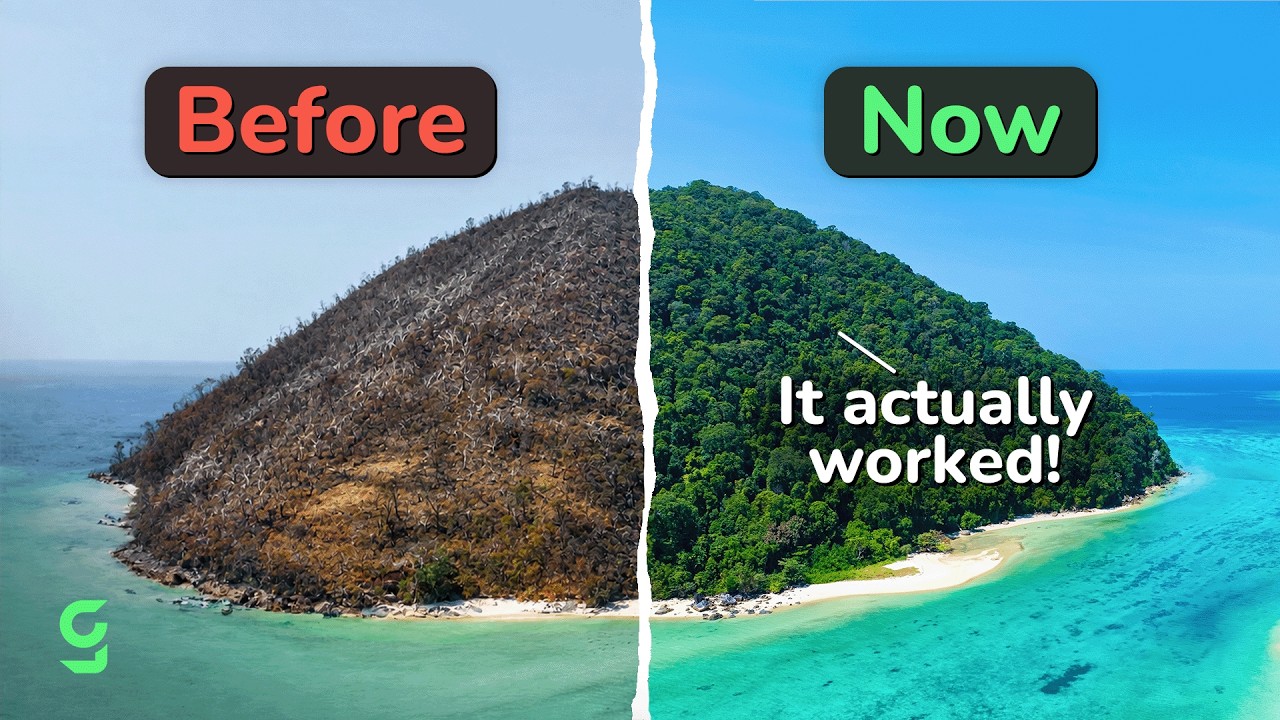
In the Pacific, a tiny island in Palau offers one of the more startling ecological turnarounds in recent memory. Rats had been decimating local seabird colonies by eating eggs and chicks. After Island Conservation removed them using helicopters and drones to distribute poisoned bait across the island, researchers returned one year later expecting modest improvement. Instead, they recorded a nearly 300% increase in calls from one bird species and fish populations that nearly doubled at one nearby location. Scientists had expected recovery to take decades.
Meanwhile, Greece launched four advanced satellites in May capable of detecting fires as small as 4 meters wide. The older generation of satellites required a wildfire the size of a cruise ship before they could identify it. The new system can also calculate a fire’s size and intensity in real time, letting emergency services prioritize the most dangerous blazes first. The investment is part of a broader European push to use satellite networks for everything from border surveillance to crop management.
And in the conservation hall of records, a wild horse once declared extinct in the wild has now reached a population of around 900 animals roaming freely across sites in China, Mongolia, and Kazakhstan. By the 1970s, only 12 remained, all in zoos. A global rescue effort that began with a Dutch organization’s worldwide appeal in 1978 and grew to include breeding facilities in China plus horse donations from Germany and the United States eventually produced enough captive-bred animals to begin restoring wild populations.
One five-year-old who got excellent results
A company called Nature Metrics has built a biodiversity mapping tool so simple it can be operated without scientific training. It collects soil and water samples containing traces of DNA shed by local animals, then analyzes them in a lab network spanning 116 countries. To test how accessible the process really is, Nature Metrics handed the kit to a real five-year-old. She got excellent results. The company has now mapped 10% of the Earth’s surface using the technique.
The August roundup closes where many of the stories began: with the quiet, cumulative logic that protecting nature and the environment tends to pay back in unexpected directions. The UK’s green economy is now worth more than 130 billion pounds a year and employs over a million people. The EU saved 60 billion euros last year by reducing fossil fuel imports in favor of solar power. The Central Arctic Ocean Fisheries Agreement, signed by ten countries including the US, Russia, and China, has kept all ten nations meeting annually for five years to advance scientific knowledge of one of the least understood ecosystems on Earth, even through the years of the Ukraine conflict. The evidence keeps arriving from different corners of the world, and it keeps pointing the same direction.