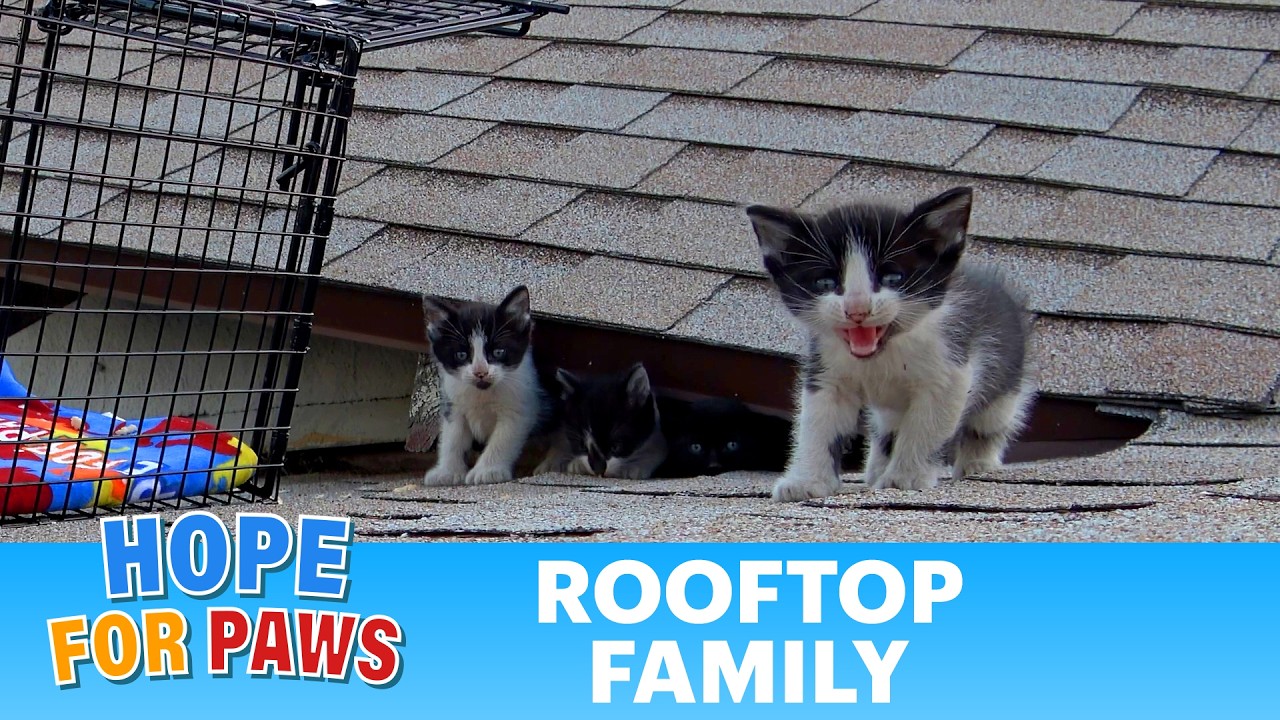
On a roof turned scorching by summer heat, a pair of polydactyl kittens waited. They had extra toes and no way down, and when the Hope For Paws rescuer finally reached them, one tiny voice seemed to say exactly what was on both their minds. The moment a rescuer arrived within arm’s reach, one of the kittens let out a small, insistent cry that the team later captured simply as: ‘I knew you’d come. I knew you’d come to me.’
Help https://www.hopeforpaws.org/donate to provide medical care and support to animals in need.
A roof that was running out of time
Polydactyly, the genetic trait that gives cats more toes than the standard count, makes for an endearing quirk in a safe home. On a hot rooftop with no shade and no exit, it means nothing at all. The kittens had been up there long enough that the heat had become the story, with the transcript registering it in short, repeated beats: heat, heat, heat, heat. Every minute the rescue took was a minute the surface beneath four extra-toed paws stayed dangerous.
The Hope For Paws rescuer moved carefully. Rooftop calls carry their own set of logistics: footing, angle, the unpredictability of a frightened animal near an edge. These two, though, were not running. They were waiting.
The moment the kittens decided to trust
Once within reach, the kittens shifted fast from frightened to curious. One of them immediately found the rescuer’s scissors and went for them, prompting a quick, warm redirect: ‘You can’t have scissors.’ The observation landed with the kind of relief that only comes after something genuinely stressful, when a small absurd moment signals that everyone is going to be fine.
The polydactyl trait, sometimes called the Hemingway cat trait after the famous colony in Key West, means these kittens carried extra digits on paws that were built a little differently from the start. It did not slow them down once they were off the roof.
What one small voice said at the top
The rescuer who reached them first.
High above the street, before the careful carry-down and before the safe transport, one kitten pressed close and made a sound the team described as a greeting rather than a complaint. It was the kind of detail that stays with anyone who does this work: an animal in a bad situation that had somehow, through the noise and the heat, held on to the idea that someone was coming.
The roof was hot. The kittens had extra toes and a short wait left. When the arms finally arrived, one of them said hi back.
Help https://www.hopeforpaws.org/donate to provide medical care and support to animals in need.
 Wake up to Only Happy News!