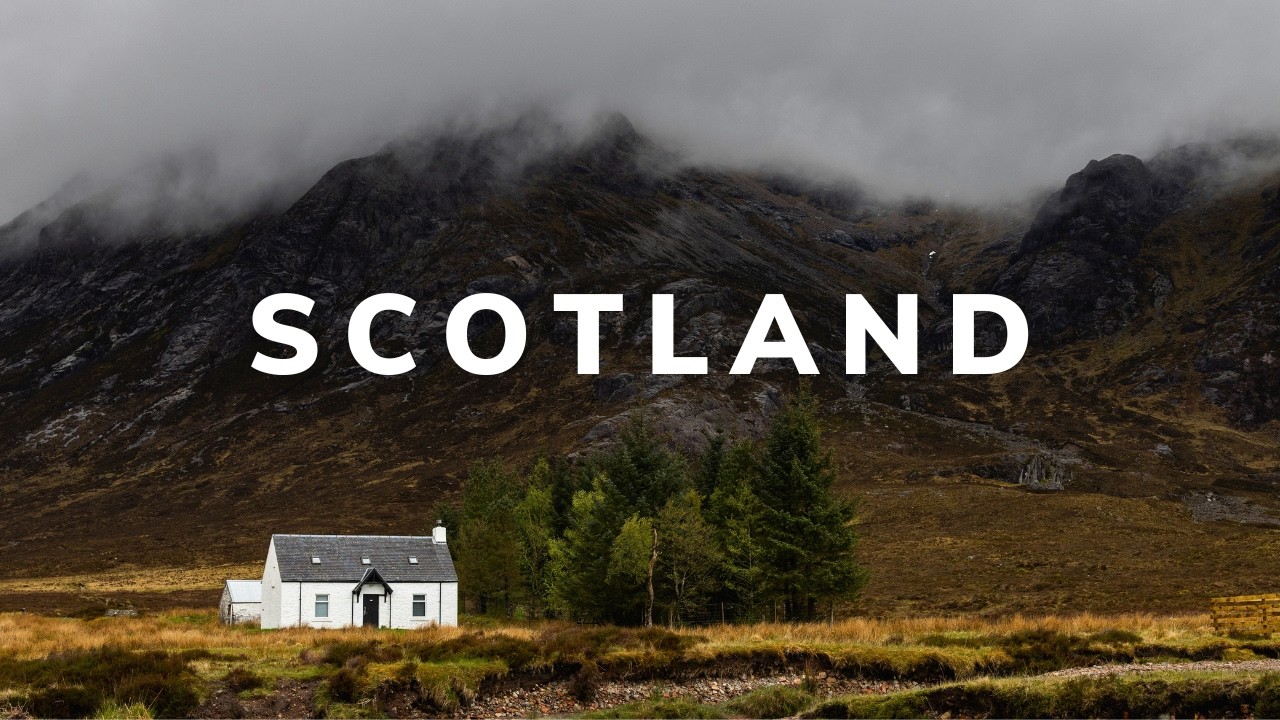
At the Mull of Galloway, the southernmost tip of Scotland, a lighthouse that has guided ships through turbulent coastal waters since 1830 marks the only sensible place to begin. What follows from that windswept point is not a comfortable tour of postcard scenery but something more demanding and more alive: seven weeks, 6,000 kilometers, 21 ferry crossings, and more rainbows than anyone thought to count. Lucas T. Jahn and his traveling companion Anna set out to drive, hike, and sail the length of Scotland, from its southernmost promontory to its northernmost archipelago, and what they found was a country that refuses to behave.
A country that soaks you and then stuns you
The Isle of Arran, reached by the first of many ferry crossings, sets the tone immediately. Often described as Scotland in miniature, the island combines mountains, forest, and a dramatic shoreline into a single compact landscape. Hiking into its rugged interior, Jahn found himself walking directly into a rain front under skies that were, for one brief moment, completely clear. The brooding clouds that rolled in, he noted, only made the surroundings feel more authentic.
That rhythm repeated across the entire journey. Rain-drenched days in the Highlands gave way without warning to extraordinary light. The Pap of Glencoe, a conical peak best seen in the long evening shadows, delivered some of the finest views of the trip. The Aonach Eagach ridge, rated between a Grade 2 and 3 scramble and sitting just below full rock climbing, required secure handholds and what Jahn called ‘a head for heights and plenty of self-confidence,’ especially while managing camera equipment on the exposed Crazy Pinnacles section. Ben Nevis, the highest peak in both Scotland and the United Kingdom, draws around 150,000 hikers each year. Starting at 7 a.m. on a clear summer morning, Jahn had already passed more than 100 people before reaching the top.
One of the trip’s most unexpected hours unfolded on a farm near Loch Lomond, when Anna found herself holding a lamb while farmers worked through ear tagging, worming treatments, vaccinations, and tail docking. The tail docking, Jahn explained, prevents fly strike, a potentially fatal maggot infestation caused by flies laying eggs in soiled wool. An hour and a half of lamb cuddling and an impromptu education in upland sheep farming, he said, ‘will stay with us forever.’
The islands at the edge of the world
The Outer Hebrides surprised them with sunshine on arrival, which felt almost unfair given the weeks of rain that had preceded it. Luskentyre Bay on Harris offered kilometers of white sand against distant peaks, while the Callanish Stones, a prehistoric circle dating back just shy of 5,000 years to the Neolithic period, stood in quiet defiance of everything the Atlantic had thrown at them since. The Butt of Lewis, the northernmost point of the archipelago, felt, in Jahn’s words, raw and remote, with only a lighthouse keeping watch.
Shetland pushed further still. The Isle of Foula, so isolated that the most practical way to reach it is by a small aircraft, is home to cliffs rising 390 meters above the Atlantic, ranking among the highest in Britain. The name derives from the Old Norse Fugla-ey, meaning Bird Island, and estimates put more than 100,000 guillemots, puffins, fulmars, and kittiwakes nesting on its cliffs. On Noss, around 30,000 northern gannets pack the precipitous rock faces, their numbers steadily increasing even as other seabird populations have been ravaged by avian flu.
The crowning moment came at Hermaness on the Isle of Unst, Scotland’s northernmost island, after a day of thick fog and low cloud. The mist cleared just enough to reveal a gannetry of 60,000 birds. Standing above the colony, taking in the sights, sounds, and even the smell, Jahn admitted they were left nearly speechless.
A stranger’s favorite place
One evening near Glen Shiel, after Jahn had completed a single-day traverse of seven Munros covering 28 kilometers and nearly 2,000 meters of elevation gain, a small incident changed everything. An ATV blocked their road, driven by the local estate owner who had taken a liking to their car. Within minutes, he had invited them to his home, introduced them to his family, and offered to lead them to his favorite spot on the estate.
A gravel trail through forest opened onto the placid waters of a hidden lake. Before us lay the secluded Glen Loyne, illuminated by the warm glow of the dying sun. They camped just above the water, the only sound the soft lapping of waves, and woke the next morning to birdsong and a mirror-like surface.
The chanterelles of Cairngorms
In the final days, Cairngorms National Park offered ancient pines and carpets of golden chanterelles underfoot, one last quiet moment before 6,000 kilometers came to a close.
Back at the start, that lighthouse at the Mull of Galloway had guided ships through the same turbulent stretch of water since 1830, indifferent to weather, indifferent to the season, still standing when the road finally ran out.