The view from the upper floor of a Lagos office building stops visitors mid-sentence. Below, the cranes of a working port swing in slow arcs, offloading cargo in real time, and the man standing next to the window points to the containers and says simply: that is all our product. For anyone who still pictures Africa as a continent of scarcity, Lagos rewrites the script fast. Nigeria is home to over 220 million people, and the city has quietly become the address of some of the most consequential business builders on the planet. A recent visit to Lagos produced five sit-down conversations with entrepreneurs whose companies span law, fintech, consumer goods, real estate, and heavy industry, and whose combined revenues run into the tens of billions of dollars annually.
The lawyers, the noodles, and the payment rails
The first stop was the home of the founder of Templars, one of Nigeria’s largest law firms. The backyard alone, complete with a pool and evening cigarette spot, drew the comparison to Beverly Hills out loud. James built Templars to 22 partners and more than 150 lawyers, and the firm’s biggest win was a $2.8 billion arbitration award secured for one of the world’s largest multinationals. Now 58, he grew up in a legal household, took a deliberate bet on himself, and his advice to younger people landed plainly: ‘narrow down on your value add and scrub on that continuously.’
Across town, Tayo Aderinokun, founder and CEO of Paga, described a company processing over $1.5 billion every single month through its payment infrastructure. Paga now employs more than 200 people and is worth hundreds of millions of dollars. Tayo grew up as the youngest of five boys in a single-parent household and credits a boss at a consulting firm in San Francisco with an insight that shaped how he runs his own teams: ‘your job is to make me look good, and I want to work myself out of a job.’ He took that ethos to Stanford Business School and then back to Lagos, where he built financial rails for a continent he describes as the single largest greenfield opportunity in global financial services. By 2050, he noted, one in four people on earth will be African, and 60 percent of Africans are currently under 25.
The meeting with the owner of Nigeria’s largest noodle company happened over a live view of shipping cranes. An Indonesian entrepreneur who arrived in Lagos for a long weekend three decades ago and never left, he built what is now the number-one noodle brand in Africa from scratch, constructing the noodle plant, the packaging plant, the carton plant, the seasoning plant, and eventually a palm plantation. Total annual revenue now exceeds $2 billion and the company employs 25,000 people. It took ten years to build the basics and twenty to build the brand. His formula: ‘right taste, right price, and best quality first.’
The surgeon who stopped trading time for money
A chance street encounter produced one of the most unexpected conversations of the trip. An orthopedic surgeon and investor, 44 years old, born in Lagos, trained in the United States over 25 years, and now back in Nigeria to improve access to high-quality musculoskeletal care. A few years into practice he realized that trading time for money meant working forever, so he pivoted into multifamily real estate syndication. Over six years, his partnership acquired over $276 million worth of apartment complexes. His one rule: location saves a bad deal, but nothing saves a good deal in the wrong location. He stays young, he said, by ‘working out frequently, drinking water, and staying out of other people’s business.’
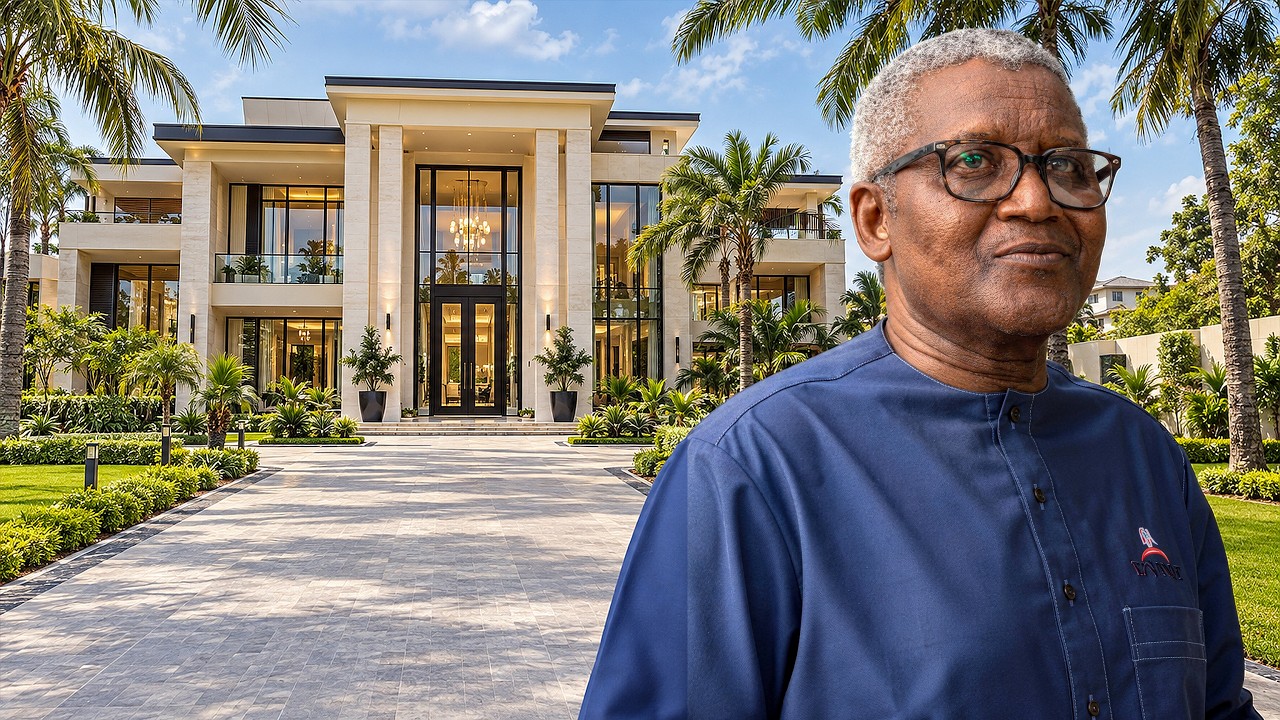
The final interview in the lineup came from an earlier session with Aliko Dangote, a man who describes his own net worth with a shrug: ‘Forbes says $30 billion. I say $38 billion. But most of our businesses are not listed yet.’ His refinery alone, the largest single-train facility in the world at 700,000 barrels a day, he values at over $40 billion. His company’s first-quarter revenue hit $10 billion. He is 69, and he traces his discipline to family: ‘they always taught me to be very, very down to earth.’
The port window nobody forgets
On the wall behind the noodle company’s conference table, a row of branded product boxes lines a shelf next to a Kellogg’s partnership display, and through the glass the port cranes keep moving.
Every entrepreneur in Lagos said a version of the same thing in different words: the opportunity is here, it is large, and most of the world has not looked yet.