In the span of geological eyeblink, one species stripped a third of Earth’s forests, carved canyons into rock for metal, and burned compressed mountains of ancient plants just to keep the lights on. That species is still accelerating. But what if the hunger to expand outward is not the signature of an advanced civilization at all? What if it is just the territorial reflex of a very young one? The Barrow scale, a framework for measuring civilizational progress by depth of control over the small world rather than breadth of cosmic conquest, suggests the most powerful beings in the universe may not be building galactic empires. They may be going quiet, folding inward, and becoming gods of the infinitesimally small.
Why the Kardashev scale only tells half the story
The Kardashev scale is the familiar yardstick: a Type I civilization masters its home planet, Type II commands its star system, Type III dominates its galaxy. It is a useful map, but it measures only one direction. The Barrow scale asks a different question entirely. Consider what actually moved human civilization forward. The pyramids were an astonishing feat of macro-scale engineering, a structure 100 times the scale of the people who built it. But at 100 times smaller than a human, something incomparably more transformative appeared: writing. Knowledge became immortal. Information traveled through time. Every subsequent leap followed the same pattern downward. Metallurgy. Engineered medicines. Nitrogen pulled from air to feed billions. And then the quantum level itself, where sand became transistors and room-sized computers compressed into a pocket.
The Barrow scale codifies this descent. Type 1-minus covers most of recorded human history: mining, refining, building at roughly human scale. Powerful enough to make one species planetary master, but only the beginning.
What mastery of DNA, atoms, and atomic nuclei could actually mean
Type 2-minus is where the scale becomes genuinely disorienting. A civilization with complete command of DNA, the language of life, could potentially do what evolution only stumbled upon once: the jellyfish Turritopsis dohrnii can revert its cells to an earlier stage, making it virtually immortal. A civilization that can instruct cells precisely could heal most diseases, engineer superorgans, grow spare hearts and lungs on demand, and redesign the biosphere itself. Climate remediation, the creation of entirely new life forms, a second Cambrian explosion engineered rather than evolved. Kurzgesagt put the ambition directly: ‘quiet gods of the gigantic small universe in their own corner of the galaxy.’
Deeper still, Types 3-minus and 4-minus involve moving individual molecules and eventually atoms with the ease of stacking bricks. Matter becomes programmable. Scarcity softens, because every broken or rotten object is simply poorly arranged atoms waiting to be rearranged. Nanobots small enough to perform surgery inside a bloodstream. Utility fogs, swarms of billions of nanobots, assembling into furniture or tools on demand. The word ‘waste’ begins to lose meaning entirely.
Type 5-minus reaches atomic nuclei, 10,000 times smaller than atoms themselves. The hydrogen of a mid-size lake, fused, could sustain present-day humanity for millions of years. At that level of energy control, Dyson spheres become unnecessary. The final frontier is not space or land but information: the ability to compute. Protons and neutrons inside nuclei pulse at sextillions of heartbeats per second, billions of times faster than any transistor alive today. Harnessed for computation, they would give rise to machines capable of designing entirely new forms of life and matter.
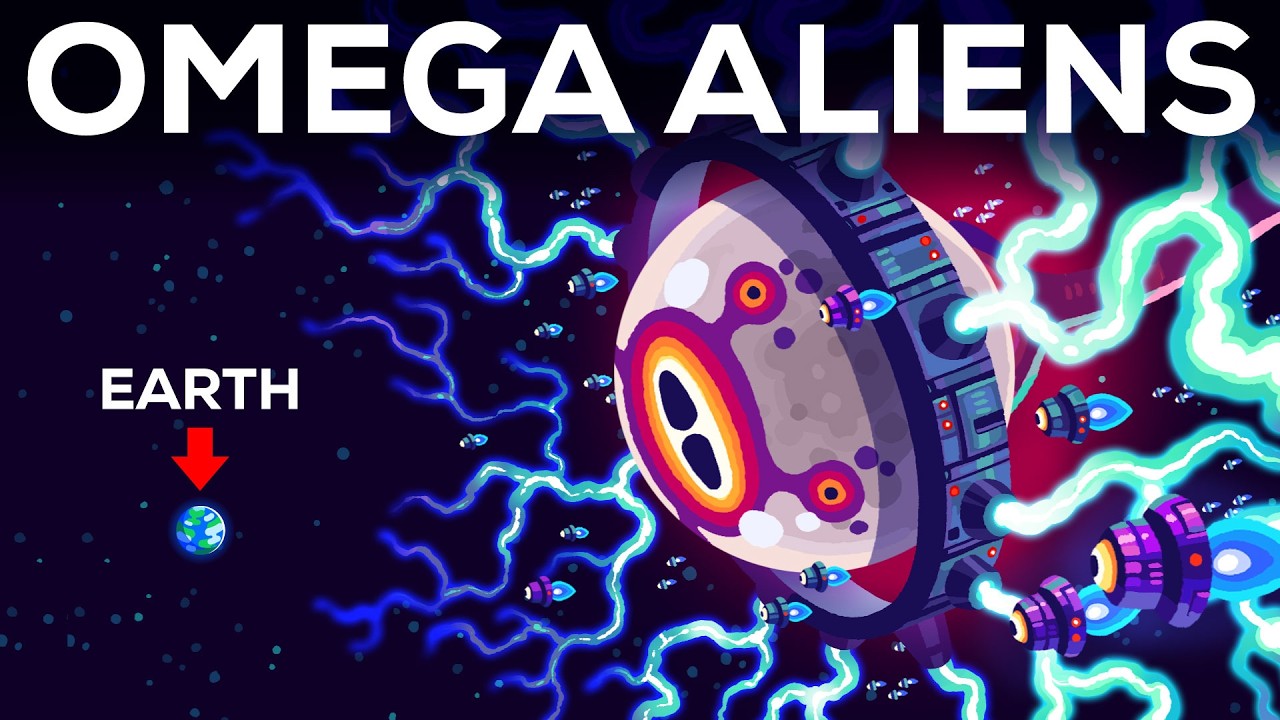
At Type 6-minus and beyond, down among elementary particles where reality dissolves into a quantum vacuum, scientists can only speculate. One possibility considered for decades: full control of the quantum vacuum could enable the creation of new universes, seeded inside what amounts to a test tube. That would be an Omega-minus civilization. Not a galactic empire. An actual cosmic god of the infinitely small.
The jellyfish in the lab
A tank somewhere holds Turritopsis dohrnii, a jellyfish no wider than a fingernail, reverting its own cells when stressed, cycling back to an earlier form of itself. It has done this without intention, without knowledge, entirely by accident of evolution.
The Barrow scale is not a guarantee that humanity or any civilization will make the descent. It is a possibility: that the most advanced minds in the universe are not the loudest or the largest, but the ones that went so far inward they became invisible to anything still looking outward.