On a beach in Trinidad, just before dawn, a leatherback turtle the size of a dining table drags herself back toward the ocean. She has spent the last three hours digging, laying, and covering her nest, and she is exhausted. She is also one of roughly 500 leatherbacks that visited this same stretch of sand in a single night, bumping into one another in the dark, occasionally digging up each other’s eggs, some finishing so late that daylight catches them mid-burial. Trinidad holds one of the largest nesting populations of leatherbacks in the Atlantic, and the beach at peak season is less a tranquil nature moment than a crowded, slow-motion scrum. What unfolds on these shores, and on dozens of wild islands scattered from the Caribbean to the South Atlantic, is the kind of biology that beach resorts tend not to put in the brochure.
Where volcanic rock and hurricane wind shape everything that lives
The Caribbean alone covers an archipelago of over 7,000 islands and coral reefs, each shaped by forces that are still very much active. Dominica, at just 26 million years old, is the youngest island in the chain and carries nine of the region’s 17 active volcanoes, the highest concentration anywhere in the world. The ash those volcanoes produce has made the soil so fertile that hummingbirds run the numbers on it constantly. The antillean crested hummingbird, just 9 cm tall, must eat every ten minutes and consume up to three times its own body weight each day to fuel a heart that can beat over a thousand times a minute.
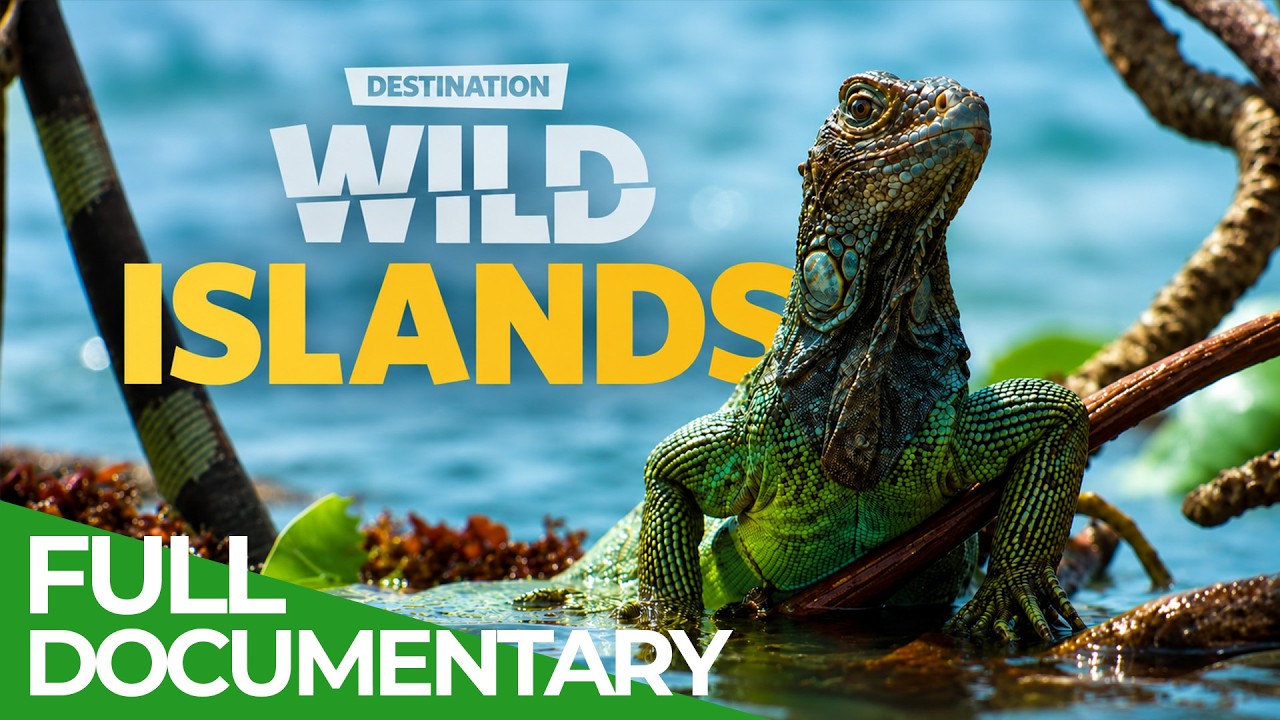
The islands’ weather is equally relentless. Between June and November, hurricanes capable of generating 20-meter waves sweep in from the Atlantic. But the same storms that wreck coastlines have also acted as a transport network. Lesser antillean iguanas, for instance, colonized many eastern Caribbean islands by riding mats of storm-dislodged vegetation across open water. Around 10,000 of them now live on Dominica alone, color-coded by rank: dominant males turn dark gray while females and juveniles stay green.
In Puerto Rico’s Aljunque rainforest, the coqui frog has turned island life into something close to a domestic arrangement. Thirteen species share the forest. When a female selects a mate and leads him to a nest site, it is the male who stays behind to guard the eggs, a commitment that occasionally requires him to eat the clutch himself if a predatory snail threatens it while the eggs are too young to survive relocation. He absorbs the energy and begins again.
Giants on Zanzibar, and the salmon that feed a forest
Off Tanzania’s coast, the Zanzibar archipelago runs on a different logic entirely: scale. Whale sharks here can exceed 20 meters and weigh up to 34 tons, yet survive on plankton filtered through gill rakers that catch anything wider than 2 mm. Manta rays, reaching 7 meters across, queue at cleaning stations where specialist fish work assigned sections of the ray’s skin to reduce competition. A single manta can consume up to 17 kilos of plankton in a day.
On land, the coconut crab, the world’s largest land-living invertebrate, weighs over 4 kilos and carries a leg span of up to a meter. It cannot survive in water and would drown if submerged, yet it began life there. Its gills have evolved to function like lungs, provided they stay moist, and its antennae pick up airborne scents the way an insect’s do. It spends its days hidden to avoid drying out, emerging at night to find fallen coconuts.
On Vancouver Island, far to the north, the Pacific salmon closes a loop that feeds the entire forest. Bears carry hundreds of kilos of salmon out of the rivers each season, eating as little as 5 percent of each fish and leaving the carcasses in the trees. The nitrogen those carcasses release is absorbed by surrounding vegetation. Up to 70 percent of the nitrogen in some riverside areas comes directly from those fish. Sitka spruce on salmon-stocked riverbanks grow three times faster than those beside fish-free streams, reaching 50 cm thickness in 86 years rather than the usual 300.
The male coqui who ate his own eggs
In the damp interior of Puerto Rico’s Aljunque forest, a male coqui frog sits over a fresh clutch he has been guarding for less than a day when a predatory snail approaches. What he does next is recorded without drama in the source: he begins to eat the eggs himself. When a clutch that young faces a threat it cannot survive, a male will often reabsorb the energy and start the cycle over.
The leatherback turtle that pulled herself from Trinidad’s beach as the sky lightened behind her will not return to nest for several years. But in a single season she can produce up to ten separate clutches, and the 65 days her buried eggs need to develop will pass without her present. Only 6 percent of hatchlings survive their first year, propelling themselves into water with an efficiency no other turtle species can match, heading for an open ocean they will not leave for most of their lives.