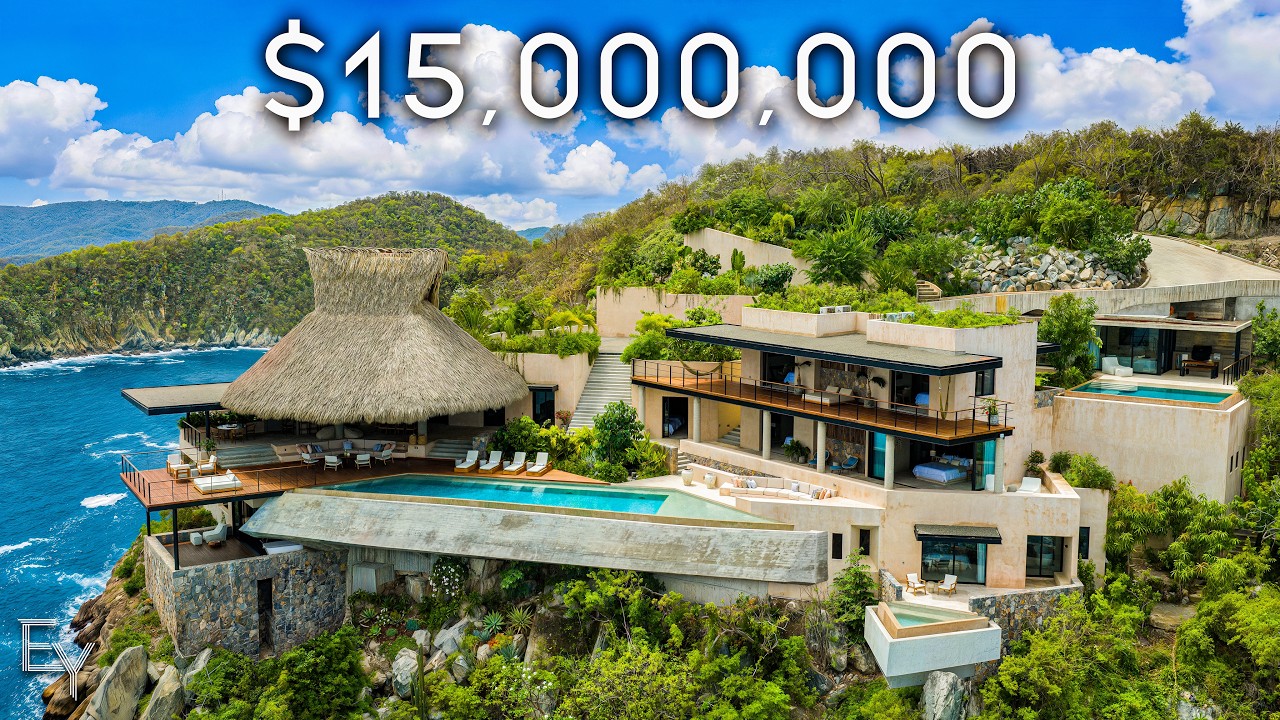
Yuri Elkaim was standing at the edge of a Pacific Ocean overlook in Zihuatanejo when two whales breached the surface directly in front of him. He had just stepped into the outdoor shower of his newly completed master suite for the very first time, perched 25 meters above the sea on a cliffside estate he had purchased sight unseen, over Zoom, during a global pandemic. That moment, he says, confirmed everything. For a family of six that had spent years with ocean living pinned to vision boards, the whales felt less like coincidence and more like punctuation.
What makes Yuri’s story unusual is how it started: not with a real estate agent or a scouting trip, but with a YouTube tour of a neighboring property on this exact stretch of Guerrero coastline. He watched it multiple times, contacted the developers within days, and signed on a lot at Punta Garrobo, a gated community invisible from the town below, reachable only by boat or by plane.
Eighteen months from boulder field to finished estate
Before construction began, the plot where the main infinity pool now sits was a raw boulder field. Yuri has a photo of himself standing on that rock, looking out at the Pacific, wondering how anyone would build anything there. The answer came from Mexico City-based Zozaya Architects, led by a designer named Daniel, whose team turned a near-vertical cliffsite into a four-level, 20,000-square-foot home with six bedrooms, two pools, a full gym, sauna, cold plunge, outdoor dining for twelve, a podcast studio, and a palapa that ranks as the largest the firm has ever constructed. The concrete pillars holding that palapa up are hand-chiseled, exposing the natural aggregate inside the concrete and giving the surface a texture that reads more like carved stone than poured material. Every pebble lining the main pool was placed by hand.
The primary stone throughout the property is Piedra Laja, quarried locally and, in some cases, excavated directly from the lot itself. The furniture is local parota wood, shaped by a craftsman Yuri brought in after moving in. The toiletries in every bathroom come from a natural products company based in Mexico. Zozaya’s philosophy, which Yuri describes as central to the whole build, was to avoid importing foreign materials entirely: use what the land already provides, because those materials already know how to survive the humidity, the salt air, and the tropical storms. All doors and glass panels are rated to Category 5 hurricane standards, a decision Yuri made after seeing lighter glass installations at nearby properties and deciding he did not want to inherit that risk.
The total cost, land included, came to roughly $7 to $7.5 million. The land alone was approximately $1.3 million, which means the structure itself, all 20,000 square feet of it, was built for somewhere between $4.5 and $5.5 million. Yuri’s estimate for replicating the same home in the Hollywood Hills: $30 million, and probably two to three times the construction timeline.
Living the property versus owning it
When Enes Yilmazer first toured the estate two years ago, shortly after completion, the landscaping was young and the interiors were still finding their footing. Returning now, the difference is in the soul. Yuri talks about the distinction between a house and a home as something that cannot be contracted: the soul infusion, as he puts it, comes from the owner’s presence, the extra cushions sourced locally after living through a few seasons, the rooster painting hung in young Julian’s room because he loves chickens, the daybed on the main deck that the family uses as a nightbed to watch constellations above the Pacific.
Yuri Elkaim put it plainly during the tour: ‘You can build a house, but you can’t build a home. That comes from the owner, and you can tell when people live in a place versus when they just rented it.’
He arrived in Zihuatanejo for the first time as a teenager, visiting with his mother. He has now been to the town fifteen or sixteen times. The five-hour direct flight from Toronto, followed by a twenty-minute drive to the front gate, is a detail he raises unprompted, because he considers it part of the value proposition that no contract or square-footage figure captures.
A cold plunge reading of 44 degrees Fahrenheit
The cold plunge beside the gym registered 44 degrees Fahrenheit on the day of the tour. Yuri’s morning routine on property runs from a twenty-minute swim in the main pool to a few minutes in the plunge, then into the dry and infrared sauna that seats six. He lifts in a gym stocked with kettlebells, cable machines, and a squat rack, chosen specifically because his background is in strength and conditioning and he wanted real equipment, not the decorative stationary bicycle that gets installed in estates to tick a box.
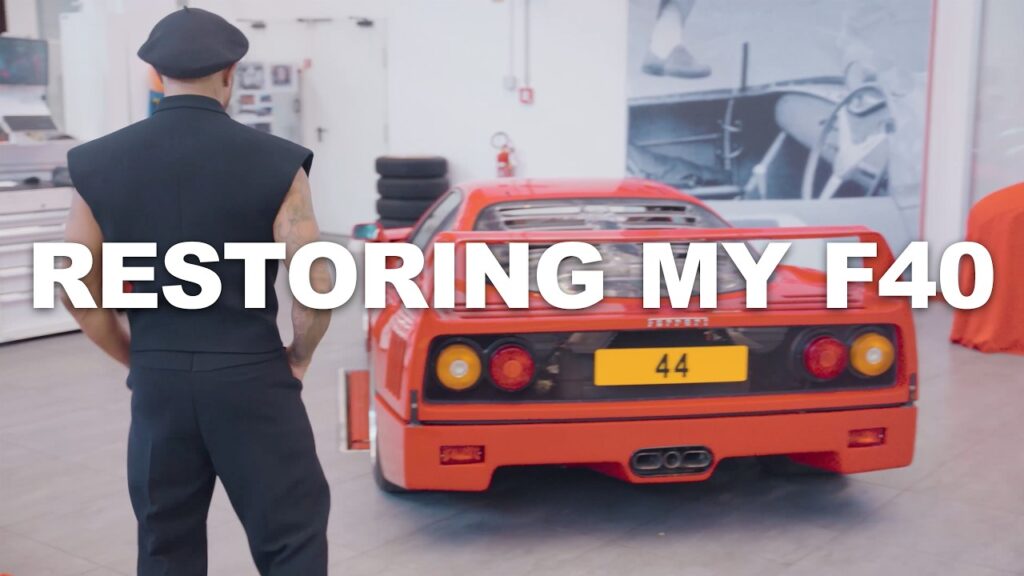
Yuri runs a company called HealthPreneur, which helps medical practitioners build the business infrastructure their clinical training never covered. The office on the estate doubles as a podcast studio, the cliffside stone wall behind the desk serving as the backdrop for client interviews. He works from here, from his home in Canada, and from wherever the schedule allows. The estate is also available for rental.
The mango tree that has not fruited yet
Along the secondary pool terrace, just off the second entertainment area, a young mango tree stands in the planter bed beside the water. It is not producing fruit yet. Yuri expects it will, maybe another year out.
The same turquoise water that drew his eye in a YouTube thumbnail four years ago is right there through the sliding glass doors, unchanged and uninterrupted. The tree is patient.