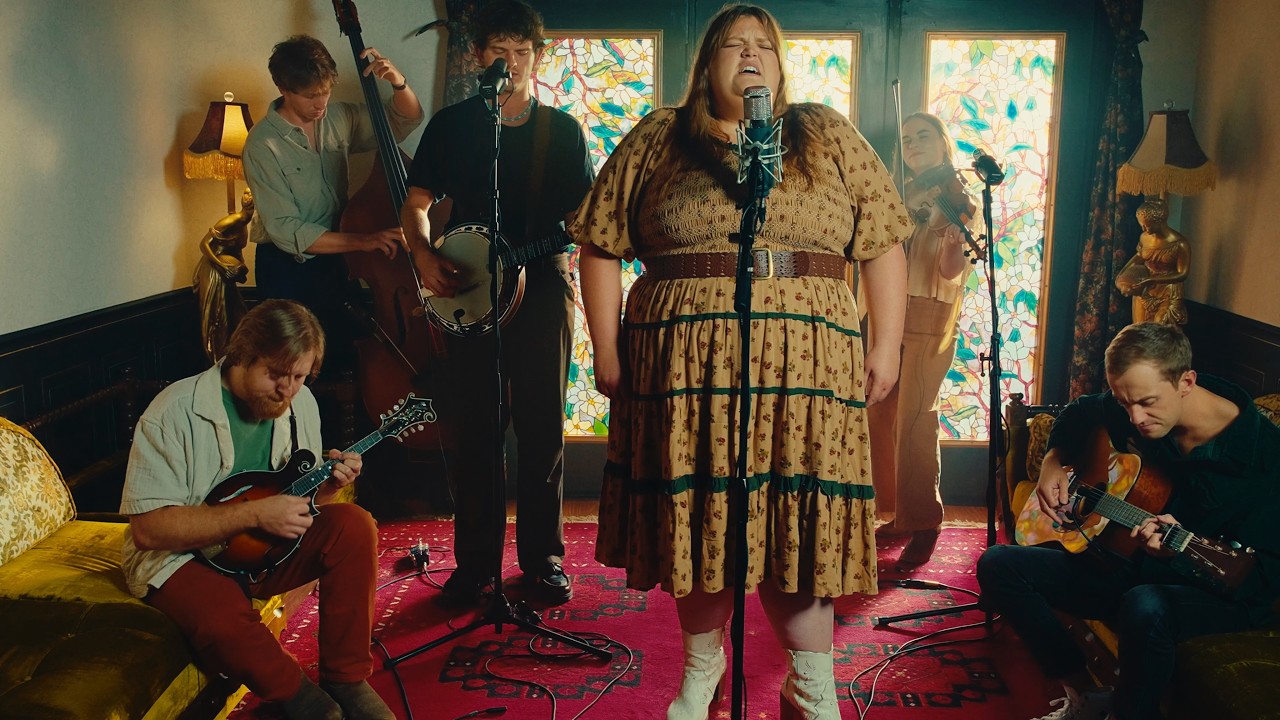
The song opens on a pharmacy store, and that single image pulls the weight of an entire region’s collapse into one plain, recognizable address. DownRiver Collective’s live performance of ‘Poor Man’s Home’ is not a protest anthem dressed up in abstraction. It is a first-person account of what happens to a working community after the mines close and the chemical plants go dark, and the only growth left is in the wrong direction. Anyone who has ever watched an industry town hollow out from the inside will feel the geography of this song in their chest before the first chorus lands.
When the business dried up
The song traces a specific, ordered collapse. Work came from the land, from sweat and blood put into red clay mud. When that work disappeared, something else moved in to fill the void. ‘When the business dried up, the pills became the honey,’ the band sings, naming the substitution without flinching. The lyric is not a metaphor reaching for cleverness. It is a plain description of a documented sequence: extraction industry contracts, economic options narrow, and pharmaceutical dependency expands into the space left behind.
What follows that observation is the structural argument of the whole song. School is too expensive on a miner’s wage. Leaving is not a real option when you have no savings and nowhere certain to go. The chorus frames it sharply: ‘No wonder we can’t escape, like we’ve got a choice to leave this place.’ The people are not static because they lack ambition. They are static because the math of leaving was never in their favor.
Six feet under the rich man’s pavement
The final verse is where the song earns its weight. The singer is not just speaking for a community in the present tense. She is speaking across generations, singing for all ‘son of a homeless man from almost heaven,’ folding his father’s story into her own and into the broader arc of what was promised and what was delivered to this part of the country. The phrase ‘almost heaven’ sits at the center of the song’s grief, borrowed from the cultural shorthand for West Virginia and quietly inverted. Every day spent here, the song insists, is not almost heaven. It is a living hell.
The band puts the cost in the body, too. ‘Our lungs are black as the mountain’s coal’ is not hyperbole when the workers being described spent careers underground. The corporations took the money and left nothing to show for it. That line lands without editorializing because the song has already established the physical evidence.
DownRiver Collective put it plainly in the bridge: ‘They up and buried us beneath the pavement. A poor man’s home that burned and fell.’ The burial is not metaphorical. It is the weight of pavement poured over a place that used to mean something, by people who were somewhere else when it hardened.
The voice that carries it
The lead vocal does not perform anguish. It reports it, which is the harder thing to do and the reason the song holds.
The pharmacy store from the opening line is still there at the close, still open, still the most reliable business on the block. That is the full-circle the song cannot escape and does not pretend to.
 Wake up to Only Happy News!