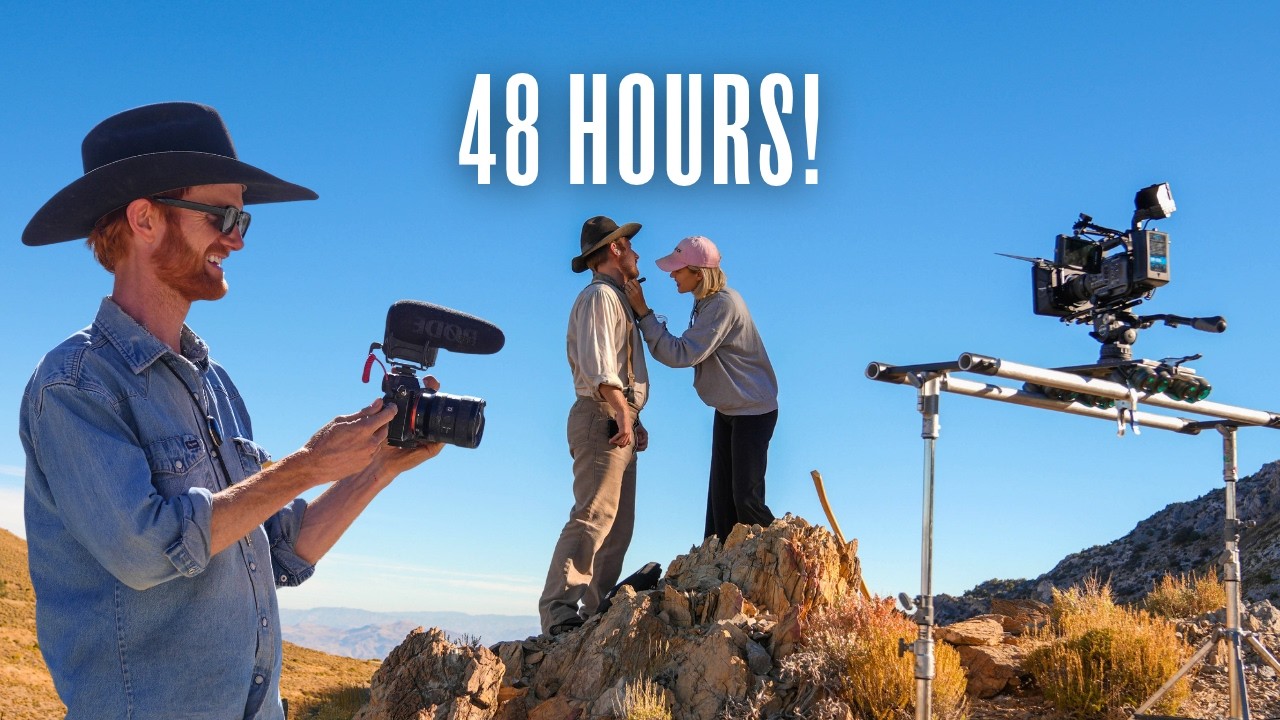
Brent had been waiting six years for this exact weekend. Standing on the porch of the abandoned mining town of Cerro Gordo, the same porch where James Coburn once filmed a scene in the 1960s, he watched a convoy of filmmakers wind their way up eight miles of dirt road with one mission: write, shoot, edit, and premiere a complete film in 48 hours. For anyone who has ever wanted to make something from nothing under real pressure, what unfolded at the first annual Cerro Gordo Film Festival was a rare, chaotic, and genuinely moving proof that it can be done. Twenty-four filmmakers arrived, split into four teams, and by Sunday evening four films existed that had not existed on Friday.
Location slots, rivalries, and a scary mask as a required prop
The rules were straightforward. Each film had to run under six minutes. Every team had to work one randomly assigned prop and one assigned line of dialogue into their script. Twelve filming locations were spread across the ghost town, from the mine shafts to the mountaintop ridgelines, and teams competed in a live drafting session to claim time slots at each spot. The drafting session did not stay polite for long. Ross, the leader of one team, openly admitted he was selecting time slots to make things inconvenient for everyone else. John’s team listened in from behind him the entire time. ‘He’s right where I want him,’ John said afterward, grinning.
Chloe’s team drew the boldest move of the night, reserving the entire town for themselves from midnight to six in the morning. Ross countered with a triple booking starting at six. After enough posturing, Ross and John’s teams eventually negotiated a swap over the writer’s cabin, shaking hands on it in about thirty seconds. ‘Compromise,’ Brent observed. ‘That’s what Cerro Gordo is all about.’
The prop reveal produced the weekend’s first genuine laugh. One team drew a scary mask and the room immediately knew exactly what genre they were heading toward.
Soundtracks recorded in mine shafts, and software that quit at the worst moment
Day two arrived with wind that threatened to ruin entire scenes shot at altitude. One team had shot one out of nine planned scenes by midmorning on the mountain and still sounded cheerful about it. Another team ran out of memory cards. Ross, who had spent the previous evening engineering location conflicts for his competitors, needed to borrow one. His rival handed it over. Soundtracks were recorded inside the mine shafts for the acoustics. ADR sessions scrambled to replace dialogue the wind had swallowed.
By the final afternoon, the bunkhouse was packed, loud, and slightly unhinged. Dogs moved through the hallway. Editing timelines played on every surface. Export failures hit with less than an hour to go, and Chris, the festival’s chief organizer, sprinted between the bunkhouse and the Gordon House carrying hard drives to keep the judging on schedule. ‘I’m a leadership minor in school,’ Chris said, breathing hard. ‘I’m using my leadership skills.’
All four films made it onto the drive.
A red carpet in a 100-year-old theater
Brent had a step-and-repeat banner printed and a red carpet rolled out into the old theater for the premiere. Trophies sat on a table near the stage. Judges, including a film director and two others who joined in person, had built a rubric covering story, direction, performances, cinematography, editing, sound, and a category Brent considered the most important of all: use of Cerro Gordo. ‘Could this have been shot somewhere else?’ he said before the screening. ‘No. It needs to be Cerro Gordo.’
Fourth place went to Ross’s team with their film ‘Tourist Trap.’ Third went to John’s team with ‘I Live Here Forever.’ Second place was announced, and the room already knew what that meant for first. Brianna’s team took the top trophy. In her acceptance speech, she described her researchers spending hours in Cerro Gordo’s old newspaper archives and said the town felt like it was moving through distinct chapters. ‘There was the silver era, then the zinc era, now there’s the YouTube era, whatever it is.’
The leather strip on the wall near the theater entrance
Before the premiere, Brent had set up a leather-stamping station near the entrance. He cut a strip of leather, laid out letter and number stamps, and asked each filmmaker to press their name into it. The strip reads ‘2026 Cerro Gordo Film Festival’ and is meant to hang somewhere permanent in the town, a physical record of who showed up.
Brent pulled up a clip he had found from March 2020, his very first week living in Cerro Gordo, standing in that same theater, talking about wanting one day to hold a film festival there. It took him a little over six years. The leather strip with twenty-four names pressed into it is the first entry in what he hopes becomes an annual record.
 Wake up to Only Happy News!