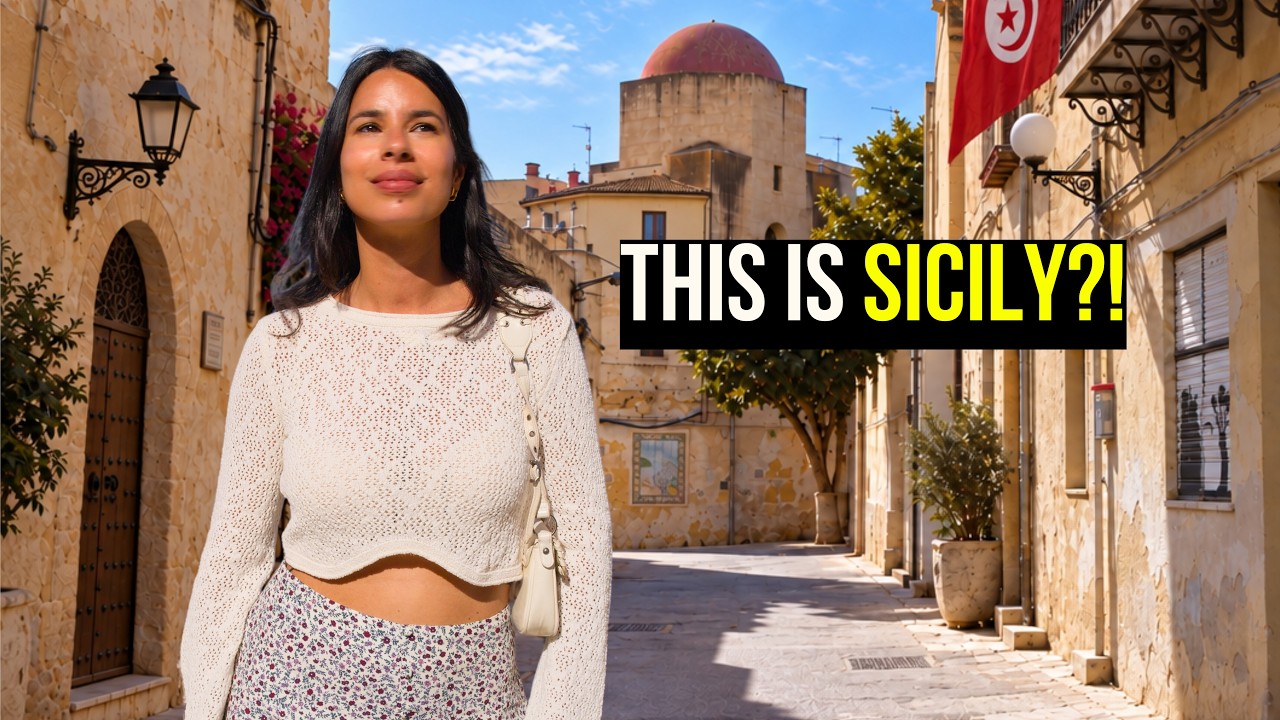
Mazara del Vallo sits on the westernmost tip of Sicily, close enough to Tunisia that the Mediterranean between them feels less like a border and more like a corridor. This small coastal city carries a weight of history that most Italian towns its size simply cannot match, and walking its narrow streets makes that weight felt immediately. The old quarter is officially called the Casbah, borrowing the same term used for the ancient medinas of Morocco, Algeria, and Tunisia, and that naming choice is not decorative. It is a statement about who has lived here, fished here, and shaped this place across more than a thousand years.
A living Casbah built from ceramics and crossing cultures
The Casbah of Mazara del Vallo earned its identity through 9th century historical roots and a large modern Tunisian community that arrived, in substantial numbers, to sustain what was once the largest fishing fleet in Italy and one of the largest in the entire Mediterranean. That Tunisian presence did not fade. It embedded itself into the architecture, the food, and the visual texture of the streets in ways that immediately register on anyone arriving from North Africa. Travel writer Malini Angelica had done exactly that, coming to Mazara del Vallo directly after a visit to Tunisia, and the continuity struck her almost instantly.
What registers first in the Casbah are the ceramics. Large decorative vases anchor street corners. Mosaic tiles run along alley walls. Murals in fired clay cover courtyard facades. According to research Angelica pulled up while walking, these ceramics represent ‘the visual voice of the town’s Tunisian Sicilian cross-cultural identity, transforming the narrow ancient alleys of the Casbah into a permanent open air art gallery.’ The old town has essentially become an interactive museum without admissions, and the installation never ends.
The Piazza della Repubblica opens the city’s grandest chapter. The surrounding buildings carry centuries of sandstone weight, and a dome decorated in colorful Moorish mosaic tiles anchors the square’s far end. The effect recalls Andalucia, that same layering of Arab geometry onto European structure, except here it arrived by sea from across the Mediterranean rather than overland from the south.
Red prawns eaten raw and a statue frozen mid-dance
Mazara del Vallo’s most famous export is its red prawn, fished from the offshore waters and known throughout Sicily for being sweet and unusually plump. The local custom is to eat them raw, which surprises most visitors. At a seafood restaurant right on the piazza, with the centuries-old cathedral filling the view across the square, Angelica tried four pieces of the Mazara prawns served raw alongside a selection of crostini with various toppings decided by the chef. Her verdict was immediate: ‘That’s actually delicious. It’s really sweet.’ The main course pushed further into local tradition with spaghetti in a sauce of red prawn and sea urchin eggs, a combination that lets the natural sweetness of the prawn carry the entire dish.
After lunch, a ruined baroque church stopped the afternoon cold. Built between 1701 and 1714 according to a local guide’s note, its roof has since collapsed and the interior is now open to the sky. Greenery threads through what remain of the original columns and facade. Rather than restoration, the city has left it in place as what it now honestly is: a beautiful, faded ruin.
The Museum of the Dancing Satyr provided the day’s final revelation. Entry costs eight euros, and the building itself, a renovated historical structure with an extraordinarily high ceiling, earns attention before the centrepiece is even visible. The centrepiece is an ancient Greek bronze statue, oversized, depicting a mythological satyr, described as a follower of Dionysus, the god of wine and revelry. The figure is frozen mid-dance, head thrown back, hair caught as though in mid-whip, back arched sharply. It occupies the center of a large room with the original church ceiling above it, and the effect is genuinely imposing.
The harbor where it all still begins
Fishing boats line the harbor in numbers that clarify why this city built the identity it did. Some of the vessels are very large. Fishermen work at their nets along the dockside. The red prawns that starred at lunch did not arrive from far away. They came from these same waters, pulled in by this same fleet, part of an industry that is still alive and that still connects Mazara del Vallo to the sea in ways that the rest of Italy’s west coast cannot quite replicate.
The ancient Greek bronze satyr stands alone at the center of the museum’s main room, arms spread, body caught in a position that no static object should be able to hold. The ceiling of the old church rises above it. No other object in the room competes for the eye.
By the time the harbor comes into view in the late afternoon, the city’s layering makes complete sense. The Casbah, the ceramics, the prawns eaten raw at a piazza table, the collapsed baroque church growing back into itself, the satyr suspended in its frozen ecstasy: Mazara del Vallo is not performing its identity. It simply is what centuries of two cultures sharing one coastline produce.
 Wake up to Only Happy News!