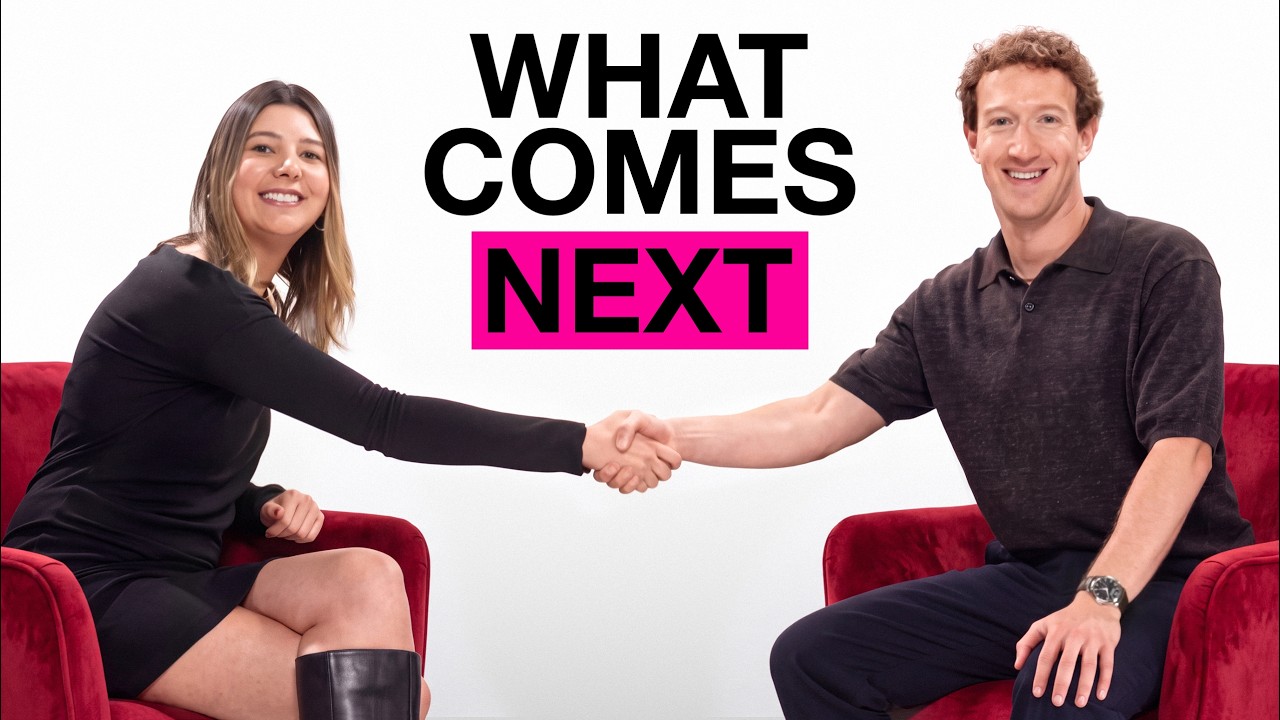
Mark Zuckerberg was sitting across from an interviewer who had watched every interview he had ever done when he described the moment he knew Muse was different. Two weeks after launch, millions of people were already using it, and inside Meta, the reaction was the same as the outside world’s: this one had clicked immediately. That kind of reception is rare for any product, and for a company that had spent years absorbing skepticism about the metaverse and AI bets simultaneously, it landed as something close to vindication. The story of how those bets converged is less a single breakthrough moment than a decade of parallel work finally speaking the same language.
The agent that got its own computer
The idea behind Muse started, in Zuckerberg’s telling, with a frustrating observation. Early AI enthusiasts who wanted a capable personal agent were buying Mac Minis, dropping into terminals, and debugging setups that broke without warning. That was never going to reach billions of people. The question Zuckerberg brought to his team was simple: what is the best experience that approximates having your own local machine, without requiring anyone to buy hardware or touch a command line?
The answer became the Muse Secure VM, a virtual machine provisioned for each individual user, with a layered security architecture that includes a dedicated Sentinel agent monitoring all data moving in and out. The Sentinel can cut off suspicious inputs and flag any action that the user should personally approve before it executes. On top of that, Meta recruited Moxie Marlinspike, the engineer behind WhatsApp’s encryption, to design a second tier called the Muse Confidential VM. In that version, the user holds an encryption key and Meta itself cannot access the contents. ‘If the government might try to get us to do something,’ Zuckerberg said, ‘it’s like we can’t get into it because we don’t have access to it.’ The secure credential store takes the same approach to passwords: the agent can plug them in when asked, but cannot see them otherwise.
The personality layer got equal attention. Rather than settling on a single correct AI disposition, Meta designed Muse to be steerable from the first time someone signs up, asking immediately what basic personality the user wants and allowing edits at any time. Zuckerberg’s own configuration is direct and work-focused. An earlier version, he mentioned, was ‘pretty sarcastic and humorous,’ but the current incarnation runs lean. His Muse avatar, however, wears a toga and speaks in what he described as ‘an extremely deep, to the point of being humorous voice.’
The Llama 4 scare and what it changed
The path to that launch was not clean. Roughly a year before the interview, the Llama 4 model fell off the trajectory Zuckerberg had expected, and he described the period after its release as the genuinely frightening moment, not the buildup. His diagnosis was structural: he had organized the AI research team the way Meta builds recommendation systems, with hundreds or thousands of people working in parallel on many fronts. Language model development, he concluded, requires the opposite, a tight group treating the work as a shared science project where every seat is extremely valuable. That realization produced a complete rebuild under a new structure called Meta Super Intelligence Labs, pulling the best people from inside Meta and from across the industry.
The infrastructure scale running underneath that team is significant. A gigawatt-plus compute cluster in Ohio is already being used to train the next generation of models. A five-gigawatt cluster in Louisiana is in progress. Zuckerberg’s view is that architectural breakthroughs would make the path cheaper and faster, but that scaling alone can likely get the field to whatever threshold people want to call AGI or super intelligence. The human brain runs on roughly ten watts, he noted, which means current systems are on the order of a million times less efficient. That gap is the argument for continued architecture research even while the scaling strategy proceeds.
On the glasses side, the connection to all of this is straightforward. The Ray-Ban Meta displays are already in users’ hands. A prototype full wide-field holographic AR device has been announced. Every pair of glasses that previously connected to a single-turn Meta AI prompt will be upgraded to connect to Muse instead, running tasks inside the user’s secure VM in the background while the person goes about their day.
A virtual cell, and the timeline for medicine
Zuckerberg also spoke about Chan Zuckerberg Biohub’s medical ambitions. The original stated goal was to help the scientific community cure all diseases by the end of the century. He now thinks that framing is far too conservative. A virtual cell model, which would simulate proteins, then full cells, then eventually immune systems or whole organisms, would let researchers run experiments at a scale and speed that physical biology cannot match. He stopped short of naming a specific year. ‘I would guess it’s going to be much sooner than by the end of the century’ was as precise as he was willing to be.
The toga, still running
Somewhere on a server in Meta’s infrastructure, a virtual machine is running, holding a Muse avatar in a toga, waiting for its next prompt.
Zuckerberg built his first social network at nineteen. The avatar with the absurdly deep voice is, in its way, the same impulse: build something that people actually want to use, make it feel like a person worth talking to, and see what happens when it reaches billions of hands.