Jay-Z sat in the back of the recording studio while the beat for 99 Problems looped on repeat, and for the better part of half an hour, Rick Rubin almost forgot he was there. The greatest artists, Rubin has spent four decades learning, do not work the way anyone expects them to. And that gap between expectation and reality, the willingness to follow an interior signal that cannot be explained or defended, is the only skill he believes no tool, algorithm, or generative model can steal from a human being.
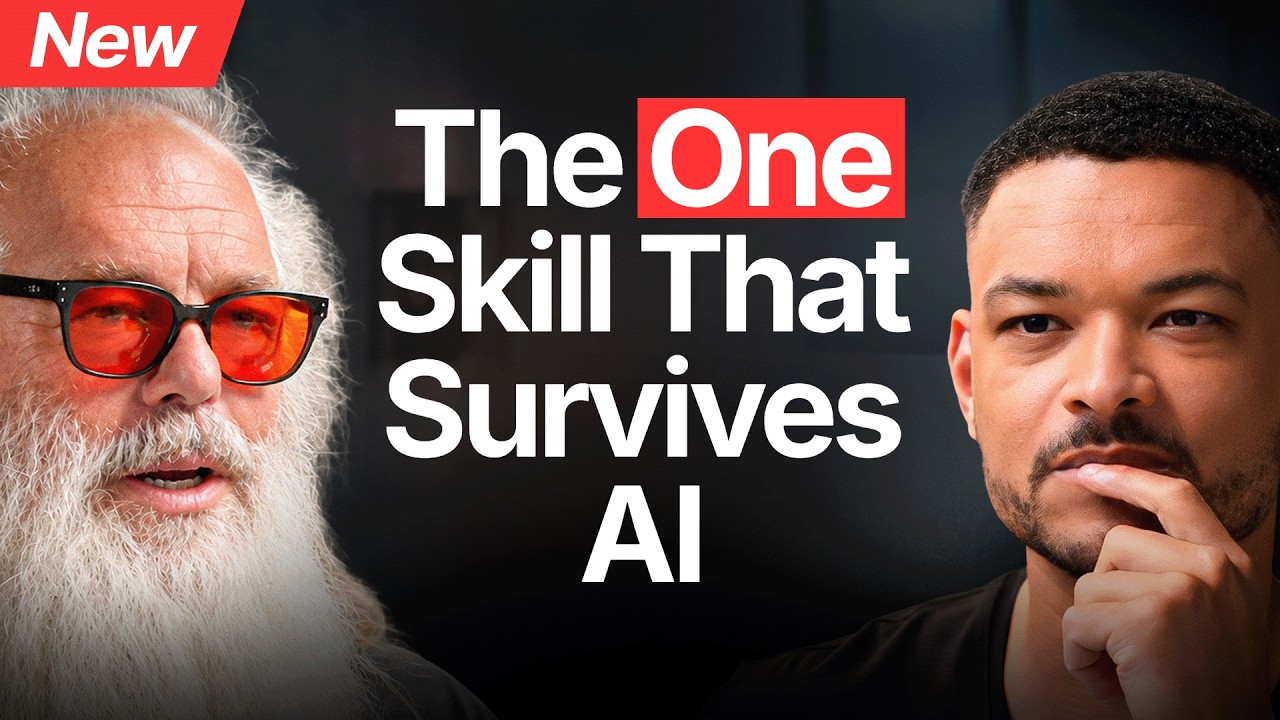
Rubin sat down with The Diary of a CEO host Steven Bartlett and refused, for three hours, to talk about music the way the music industry talks about music. He talked about it the way a philosopher talks about identity, the way a therapist talks about self-trust, and the way a person who lost his house to a Malibu wildfire talks about impermanence.
The word that changed how Rubin makes everything
The word Rubin kept returning to was ‘indefensible.’ In most contexts it is about as negative as language gets. In the studio, he has come to treat it as a navigational instrument. When something cannot be justified by market logic, by precedent, or by what radio sounds like this quarter, that is precisely when he leans in.
He described the moment a meme connected his image to vibe coding, a term coined by Andrej Karpathy. Rubin had no idea what vibe coding meant. But when friends sent him the image in waves, day after day, he recognized the pattern he has learned to trust: too much energy coming from too many directions to ignore. He wrote a single joke tweet. ‘Tools will come, tools will go, only the vibe coder remains.’ It got a million and a half views. He then set aside his other work entirely to write a book about a subject he still barely understood. ‘I couldn’t explain it,’ he said plainly. ‘I was following a calling.’
That same logic governed the making of Kanye West’s Jesus Is King, which Rubin described as a deliberate anti-hip-hop album pushed as far into indefensible territory as they could take it. When Bartlett admitted he hated it at first and took a long time to come around, Rubin did not flinch. ‘Did its job,’ he said.
System of a Down’s debut single was rejected by the leading alternative rock station in California, the gatekeeper that determined national airplay. The program director told Rubin the band would never be played on his station. One year later it was the most requested song. Two weeks before this conversation, System of a Down sold out 80,000 seats in a Paris stadium, two nights in a row.
What Jay-Z in a recording booth reveals about creativity and AI
Rubin watched Jay-Z compose the first verse of 99 Problems without writing a single word. He looped the track, sat in silence for twenty or thirty minutes, hummed occasionally, then walked into the booth and delivered the verse from memory across three takes, each with the same words but a different cadence, like a saxophonist playing a solo he already knows but never plays the same way twice. ‘It just happens in his mind,’ Rubin said.
When Bartlett pressed him on whether artificial intelligence could eventually replace that process, Rubin was precise rather than dismissive. AI, he argued, does not have a point of view. It is the collected sum of ideas that already exist, and it answers the same question differently on different days. A human artist sees the world from a specific angle and cannot help but show you that angle every time. That specificity, the lyrical intricacy of Jay-Z’s writing, the fearlessness Rubin described in Kanye’s approach to every artistic decision, is what the listener is actually buying.
He acknowledged AI could be a remarkable tool, the way crate-digging through old records was a tool for hip-hop producers looking for one useful breakbeat buried in an hour of mediocre vinyl. But the prompt, the initial act of ideation that tells the tool what to build, is where the creativity lives. ‘It’s not in the drawing,’ he said. ‘It’s not in the finished movie. It’s in the prompt. The creativity is there.’
Bartlett described discovering, two months after the fact, that a song he had genuinely loved on Spotify was AI-generated. He had listened with pleasure, recommended it, gone back for more, and only then realized the artist did not exist. ‘I didn’t like it as much anymore,’ he said. Rubin found the reaction genuinely interesting rather than validating. ‘You liked it before you knew,’ he said. ‘That’s interesting.’
The depressive episode at 33 that made him a better collaborator
For most of his career, Rubin had operated without encountering professional friction. His parents believed he could do no wrong. The early success at the label he co-founded confirmed it. Then at 33, a mentor was politically forced out of a company and replaced by someone who called Rubin to say he did not like their existing agreement. That was the whole conversation. For almost anyone else it would have been a manageable business moment. For Rubin, who had never needed the musculature to absorb instability, it felt, in his own words, like being shot with a poison arrow. Panic attacks, no sleep, months of therapy five days a week, and eventually an antidepressant. ‘I thought I was dying,’ he told Bartlett. He would not erase it. The experience gave him a ground-level understanding of what many of the artists he works with are carrying. ‘Before I was 33, I probably didn’t understand how they felt,’ he said. ‘Now I’ve had the experience where I feel like the bottom fell out.’
The lifeguard chair where it finally made sense
Somewhere around his thirty-fifth year in the work, Rubin was sitting on a lifeguard chair in Hawaii when it became clear to him what he had been doing all along. He had not been making records for labels, for radio, for metrics, or for legacy. He had been making offerings. ‘If we’re making it as an offering to God,’ he said, ‘things like the numbers, that’s insignificant.’
The recording made in Johnny Cash’s living room, with no album in mind, just Cash singing through songs he loved while Rubin listened, turned out to be better than anything they later recorded in a proper studio with a full band. The Bonos brothers nailed a take of a song that had been going nowhere, and Rubin knew it was working because something in him became afraid: he did not want them to stop before they reached the end of the song, because he suspected they could not find their way back to that exact thing. The Neil Young record that sounded like the band would never be able to play the songs in week one turned out to have been mostly captured that same week. None of it was planned. None of it was repeatable in the conventional sense. The only repeatable thing, Rubin said, is showing up and not stopping until it is great.