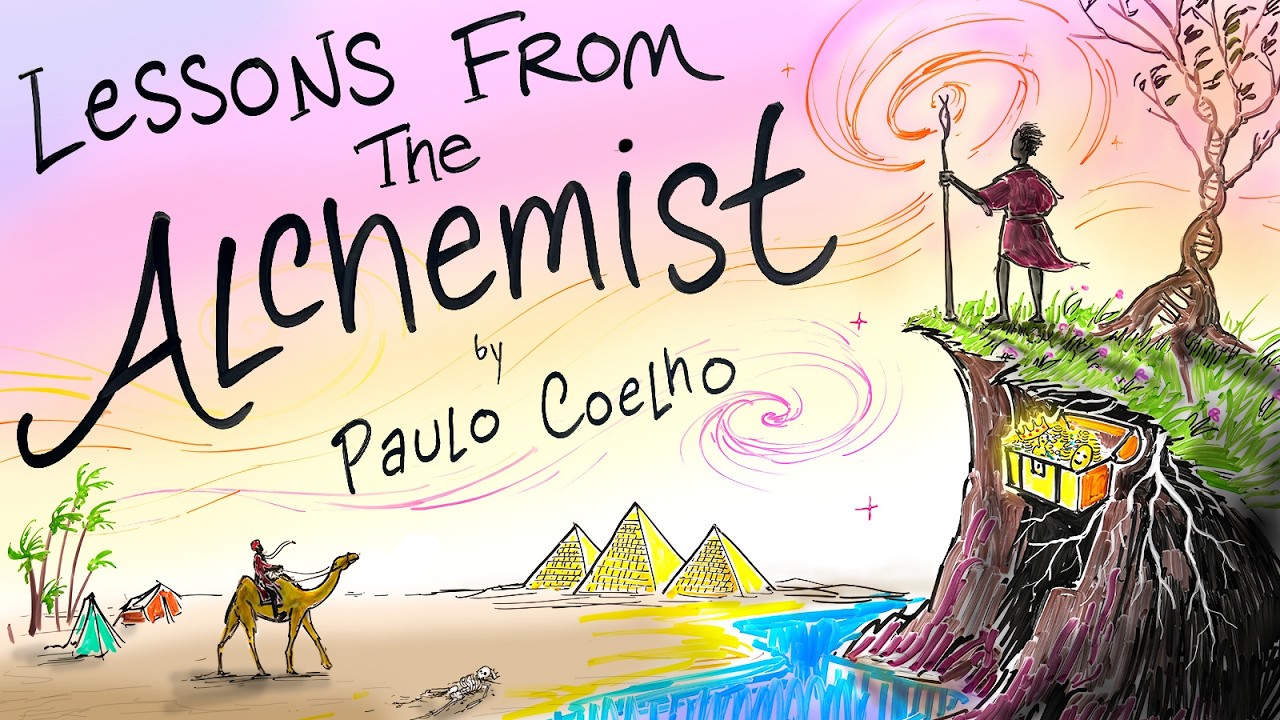
A young shepherd boy wanders the Spanish countryside, sleeping in an abandoned church, watching stars through a hole in the roof, and asking almost nothing of the world. That image, simple and unhurried, is where one of literature’s most enduring arguments about earning your rewards begins. The Alchemist by Paulo Coelho has sold tens of millions of copies, yet its central lesson keeps getting mistaken for a feel-good message about following your dreams. After Skool‘s deep read of the novel argues it is actually a warning: receiving any treasure before you are ready to hold it will destroy you.
A story that refuses to begin at the end
After Skool opens with a pointed thought experiment. Imagine a young prince who was born into riches and simply had everything delivered to him. A soulmate, admiration, authorship of books he never wrote. ‘He got everything he wanted and lived out his days with a high and mighty sense of pride.’ Did you root for him? Almost certainly not, because nothing was earned, so nothing transformed. The prince’s story, as After Skool notes, is not really a story at all.
Coelho’s shepherd boy works in the opposite direction. He sells his sheep, crosses to Morocco, and is immediately robbed of the little gold he has. Stranded with no way back to Spain, he finds refuge in a failing crystal shop, cleans glasses for food, learns Arabic, and over the next year builds the shop into a thriving business. Comfortable again, he walks away from it. The omens point toward Egypt. Across the Sahara, through a tribal war, into an oasis where he falls for a woman named Fatima and is offered a position of power, he keeps walking away from comfort. Each time he gets settled, the universe invites him back into the unknown.
The climax lands with perfect irony. The boy finally reaches the Egyptian pyramids, begins digging, and is beaten by a group of men who demand to know what he is doing. He confesses his dream about buried treasure. The leader laughs, then mentions that he once had a recurring dream about treasure buried in Spain, at an abandoned church with a hole in the ceiling. But it was only a silly dream, and he was not fool enough to cross the world chasing it. Lying in a puddle of his own blood, the boy understands: the treasure was under his feet in Spain the entire time.
What unearned rewards actually cost
The journey was never about the gold. As Coelho writes, ‘The reward for our work is not what we get, but who we become.’ The boy left home a wanderer and returned someone capable of speaking, in After Skool’s framing, to the soul of the world. The chest of gold waiting under the church floor would have meant nothing to the person who left.
This is where the guide draws in a second voice: Carl Jung’s caution to ‘beware of unearned wisdom, which is knowledge that arrives without the inner work, discipline, or maturity needed to hold it.’ The warning was originally about psychedelics as a shortcut to enlightenment, but After Skool extends it to lottery winnings that bankrupt winners, teenagers consuming graphic content that corrodes their ability to form real intimacy, and students using AI to write papers and graduating having learned nothing.
The counterweight is Drake, a figure drawn from Anna Lembke’s book Dopamine Nation. Drake had a DUI charge, a lawyer who could erase it, and all he had to do was lie. Instead, something jolted him into confessing in front of the judge. He lost his license for a year, paid a large fine, completed mandatory classes. A decade later, now a physician, he describes that moment of voluntary pain as the most important positive experience of his life.
A scarab beetle, mid-dig
At the pyramids, just before the beating begins, the boy spots a scarab beetle in the sand. He reads it as the omen showing exactly where to dig.
The treasure was always there. He just had to become someone who could find it.