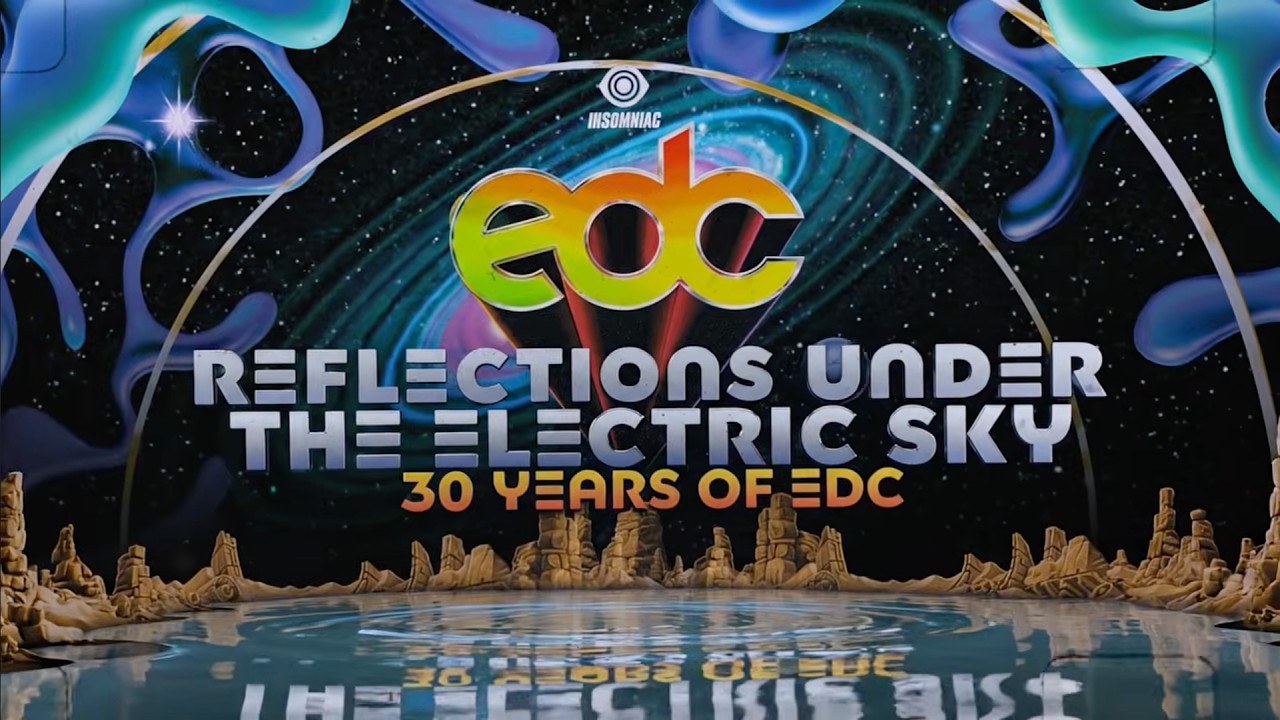
Somewhere inside the Las Vegas Motor Speedway, a first-timer stood still in a crowd of tens of thousands, trying to describe what had just happened to her. She had never been to a rave before. She had not expected to care. But after her first Electric Daisy Carnival, she said something that cut through the noise of three decades of history: ‘I learned what it is to feel alive.’ That sentence is not a marketing line. It is the thing that Insomniac has been chasing, and catching, for 30 years. EDC began as a bunch of kids breaking into warehouses in questionable neighborhoods and trying to figure out what they were building. Nobody in those rooms thought it would end up here.
From illegal warehouses to nine stages in the desert
The founding generation is still around to tell the story themselves, and they do not let it get comfortable. They describe 500-person warehouse parties where showing up at all required real effort, crowds with no legal venue, no map, no guarantee. As one veteran of those early nights put it, ‘We were hardcore, illegal warehouses and very questionable areas.’ The scene was, by design, an alternative to the mainstream, a form of protest that asked people to seek something out rather than consume it passively.
What Insomniac did for the 30th anniversary was pull that original friction back inside the modern festival. A dedicated area inside EDC was built to recreate the warehouse-party atmosphere, tucked away and not easy to find, demanding the same active participation the early raves required. One attendee described it as carrying ‘the Met point vibe where you had to seek that out.’ A back-to-back DJ set that night sent at least one performer straight back to a specific address: 12th and Hope, where those early Los Angeles nights started.
The scale around that hidden room was, by any measure, staggering. Drone shows. Fireworks displays that, according to one long-timer who has now attended dozens of them, have permanently ruined every other fireworks show on the calendar. ‘EDC has ruined fireworks shows for me forever,’ he said. ‘I can’t go to 4th of July’s and be impressed by anything anymore.’ The 30th edition also brought artists and programming the festival had never presented before, including the Prodigy, and a dedicated block called Insomniac Fridays built around the label’s own history.
The four letters that kept it together
PLUR, the shorthand for peace, love, unity, and respect, comes up in almost every conversation about why EDC survived three decades while other festival brands did not. Veterans are careful to insist it is not a slogan. It is described as ‘a way that we operate, a way that we make sure that we’re going to these events and supporting each other.’ The bracelet exchanges, the open-door ethos, the genuine mix of backgrounds and cultures sharing the same dancefloor: regulars say this is the thing that cannot be faked or manufactured, and it is the reason someone can walk into EDC at 18, the way one of the original organizers did, and have ‘a switch that was flipped that night.’
The production team behind EDC, building nine stages per edition, maintains that the distinction is not a concert but a community. Insomniac’s founder has made it plain that the work is not finished. ‘After 30 years,’ he said, ‘feeling like I’m just getting started.’
The first-timer who arrived a little lost
She mentioned going through life trying to figure things out. She mentioned how strange and freeing it felt to just dance, to go up and down, to move side to side without self-consciousness, to be in a crowd where everyone was trying to be present.
She had no context for what EDC was before she walked in. She left with a quote about feeling alive and the suspicion that she would be back.
Thirty years in, that is still how it starts.
 Wake up to Only Happy News!