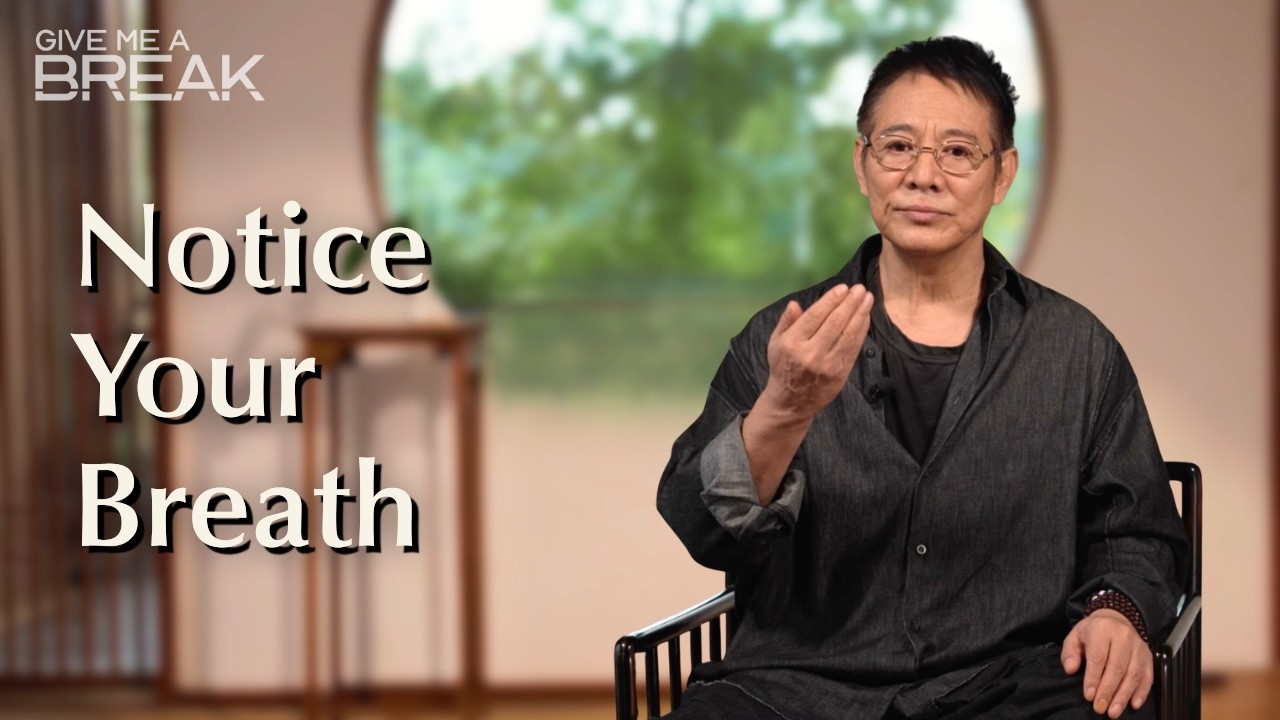
Jet Li takes a slow breath and holds a thought that stops the room: every person alive does this more than 20,000 times a day and almost nobody pays attention to it. That gap, between breathing and actually knowing you are breathing, is where the mind quietly goes its own way. Three short styles, less than three minutes, and 21 days of repetition are the whole prescription.
The thing the breath is actually training
Breathing, Li points out, is universal by definition. The challenge is not the lungs. It is the mind moving separately from the body without the person noticing. The session is built around closing that gap, giving the mind ‘simple work’ at the start so it is not left to wander on its own.
The three styles are brief and physical. The first uses the body’s natural rhythm, with a short, deliberate snort to reset the breath, repeated seven times. The second follows a similar shape but shifts the physical feel slightly, again seven repetitions. The third is a long, audible exhale, a slow sigh that empties the chest fully. Li does not prescribe one over another. ‘Find the one you feel like it,’ he says, and the instruction is genuine: each style is a tool, not a doctrine.
The one rule that cuts across all three is negative: do not hold the air inside too long. Discomfort is not the point. ‘More focus on relax, easy, be friendly, soft,’ he says, and the words are careful, because the whole system collapses if the student treats the breath like a discipline to survive rather than a companion to find.
Why the dog barking is actually the lesson
Halfway through, Li pauses and notices something mid-thought: a dog barking in the background pulls his attention, and he uses the interruption deliberately. The moment you hear the dog and realize you forgot the breath, then come back, that return is called awareness. That knowing is the goal, not an unbroken streak of perfect focus.
The target practice is seven repetitions done three times, which keeps the total under three minutes. Li is specific about the duration because the first priority is building a new habit, and short repetitions done consistently outrun long sessions done rarely. The number he returns to is 21 days. After three weeks of daily practice, he says, ‘the mind and the breath become very close friend,’ and the new habit starts to hold on its own.
Something else Li mentioned on the way out
Before wrapping, Li introduced a second practice alongside the breath work, one he called seeing meditation. The structure follows the same three-beat shape: you see something, then comes the question ‘what is that,’ then comes the judgment, like it or not.
The sequence landed and then stopped there, unresolved, sitting in the air the way a long exhale does just before the lungs fill again.
Twenty-one days from now, the breath that has already happened more than 20,000 times today will finally have the mind riding along with it.
 Wake up to Only Happy News!