Somewhere in a tangle of bark and leaves, a sloth sits completely still, and almost nobody notices. That is not an accident. Across the animal kingdom, some creatures have developed disguise strategies so refined that even careful observers miss them entirely, and four of the most extraordinary examples have been caught in plain sight for anyone sharp enough to find them.
The chameleon’s eyes are doing two jobs at once
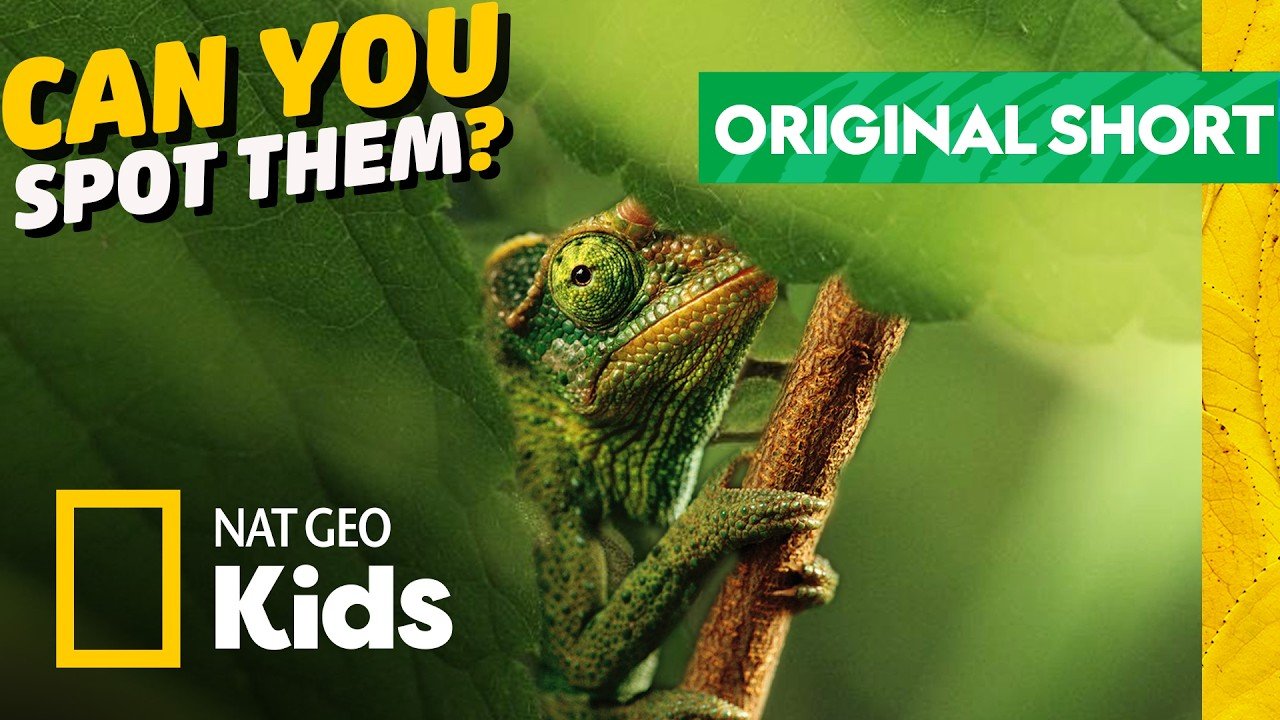
The chameleon is the most famous shape-shifter in the animal world, but its camouflage is more sophisticated than simple color-matching. Its skin responds to light and temperature, shifting hues to blend into immediate surroundings, and it also uses color to communicate with other chameleons entirely. What makes it even stranger is the eyes. Each one moves and focuses independently, giving the animal a panoramic view of its environment without any head movement at all. It can scan for food in two directions simultaneously, which means potential prey rarely gets a warning before it is too late.
Frogs take a different approach. For some species, their skin mimics leaf texture and color so precisely that they become functionally invisible against forest floors. But frogs do not rely on stillness alone. They back their camouflage with explosive athleticism: powerful rear leg muscles and reflexes fast enough to close on prey before it registers what just happened.
The caterpillar that became a twig
Of all four animals in the countdown, the caterpillar operates with the greatest disadvantage. It cannot run, cannot fight, and cannot fly. Its entire survival strategy is deception. Some species blend into surrounding leaves so completely they disappear against a background they are physically sitting on. Others go further and mimic the shape and texture of a twig, holding their bodies rigid at an angle that makes them indistinguishable from a dead branch. It is a commitment so total that even a close look at the right spot fails to register what is there.
The sloth closes the group with the slowest trick of all. Moving at a pace so deliberate it barely registers as motion, the sloth simply does not attract attention. Some individuals go a step further: algae grows in their fur over time, tinting it green and blending it into the canopy around them. The disguise is partly behavioral and partly biological, a collaboration between the animal and the ecosystem living on its body. The sloth’s reputation as a land-bound slow-mover is also only half the story. As the naturalists behind this Nat Geo Kids exploration put it, sloths are ‘excellent swimmers,’ moving through water far faster than their treetop shuffle would ever suggest.
The moment the caterpillar holds perfectly still
A caterpillar angles its body against a bare branch, rigid, unmoving, its surface roughened to match the bark beside it.
Four animals, four completely different survival strategies, and not one of them relies on speed or strength. The sloth barely moves. The chameleon shifts. The frog waits. The caterpillar simply becomes something else. Each one found a way to vanish, and each one is hiding somewhere right now.
 Wake up to Only Happy News!