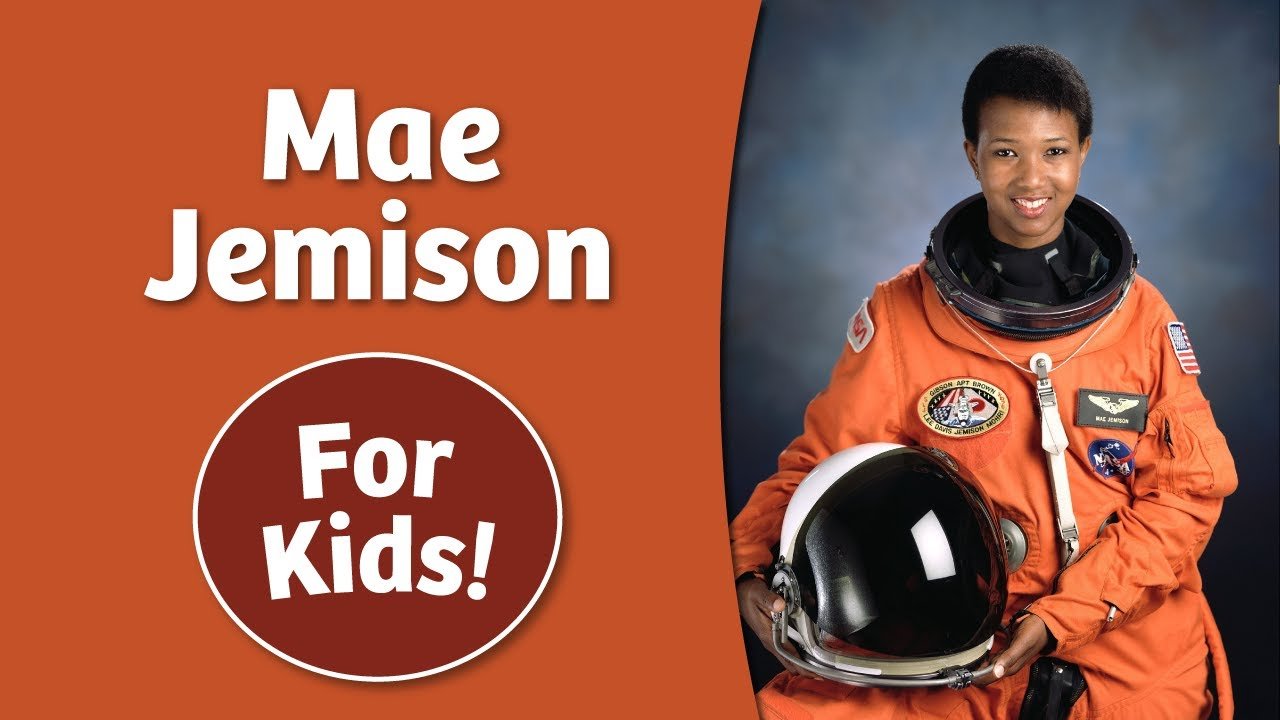
Mae Jemison was a child in Chicago when the summers gave her something the city could not: a dark enough sky to see the stars. Away from the streetlights at camp, she stared upward and started dreaming about what it would be like to go there. That dream did not fade when she grew up. It just got bigger, harder to reach, and ultimately real.
A scientist, not a nurse
Mae was born in 1956 in Alabama. Her family moved to the south side of Chicago when she was three years old, after her parents decided they could find steadier work and better schooling for their children there. Her father worked as a roofer and carpenter, and her mother taught school. Through the 1960s, Mae tracked every detail of the Apollo missions from that city, watching Neil Armstrong and Buzz Aldrin reach the moon in 1969. She read everything the local library had on space and science. But in all the faces she saw in those programs, she did not see anyone who looked like herself or her family.
She found a different image on television. The sci-fi show Star Trek featured a Black woman as part of the starship crew, doing work that mattered. That image stuck with her. So did the resistance she met closer to home: when a young Mae told a teacher she wanted to be a scientist, the teacher asked whether she meant to say nurse. Mae corrected her, firmly and without apology, and kept moving.
She studied chemical engineering in college while also performing in dance and theater productions. She considered a career as a professional dancer before choosing medicine. She completed medical school, then studied and worked in Cuba, Kenya, and a refugee camp in Thailand. She later joined the Peace Corps, serving in Sierra Leone and Liberia. She speaks Swahili, Russian, Japanese, and English. Through all of it, the childhood dream held.
Eight days above the Earth
In 1985, Mae applied to NASA. She was accepted, becoming the first African-American woman to enter the astronaut training program. The training required her to master astronomy, engineering, and shuttle systems alongside intense physical conditioning. It also required her to face a real personal obstacle: a fear of heights. Completing parachute training meant confronting that fear directly. She later said there was no question it was worth it. The alternative was not going to space at all.
In September 1992, Mae flew aboard the space shuttle Endeavour with six other astronauts, serving as mission specialist. She spent eight days in orbit, conducting experiments on the effects of weightlessness and motion sickness on the crew. She brought with her a portrait of Judith Jamison, a famous African-American dancer with the Alvin Ailey American Dance Theater, a West African statue, and a photograph of Bessie Coleman, the first African-American woman to earn a pilot’s license.
As Bedtime History’s Breck put it in recounting her story: ‘We don’t know what we’ll find, but as Mae Jemison learned after her mission to space, we’re already a part of it.’
After leaving NASA in 1993, Mae started a space camp for young people and wrote a book about her life aimed at young readers. She now leads the 100 Year Starship project, which works toward making travel to other star systems possible within the next 100 years. At current rocket speeds, reaching the closest star outside our solar system would take 70,000 years. The project is exploring new technologies to close that gap while also solving the practical challenges of long-duration travel: food, energy, health, repairs, and keeping crews mentally well.
The portrait she carried into orbit
Tucked among Mae Jemison’s personal items on the Endeavour was a portrait of Judith Jamison, an African-American dancer whose work Mae had followed from the ground.
Summers away from Chicago gave a girl a dark enough sky to see the stars properly. She looked up, asked the same questions every curious child asks, and then spent the next several decades building a life that carried her there.
 Wake up to Only Happy News!