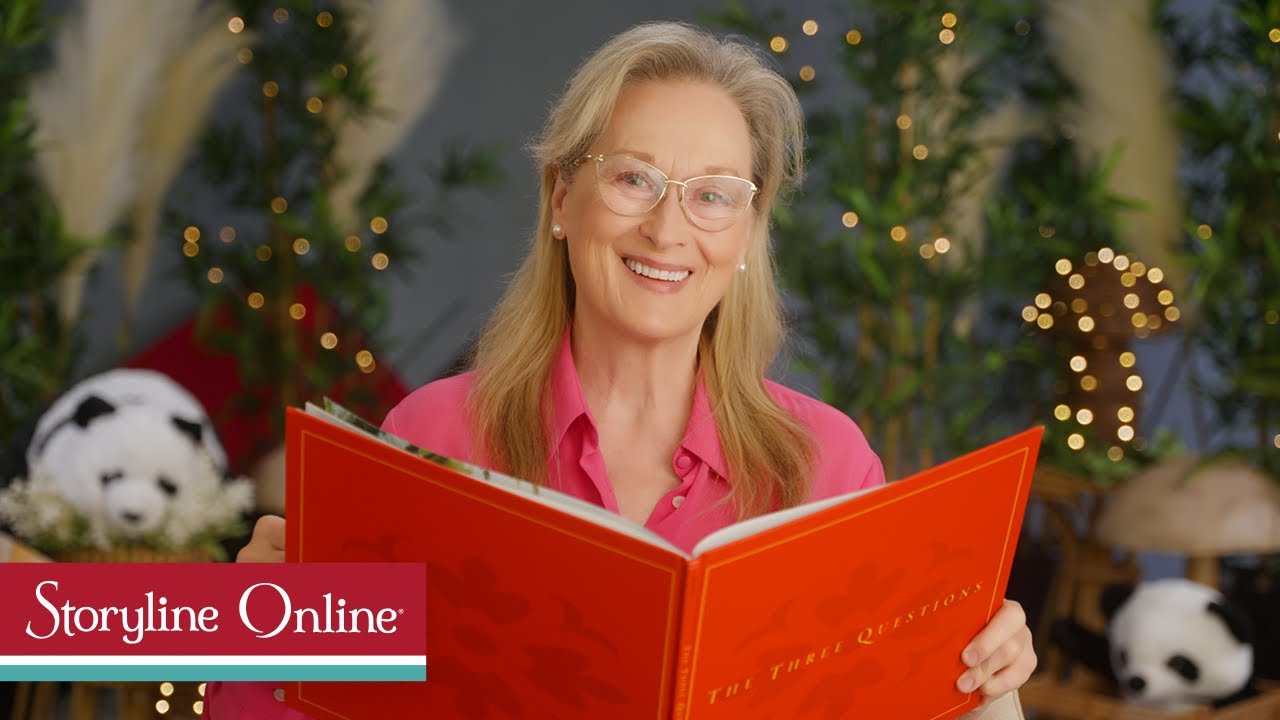
Meryl Streep opens the book quietly, and within the first few pages a boy named Nikolai has already done something most adults spend years trying to do: he has admitted, out loud, that he does not always know the right way to act. That honesty, spoken to a circle of animal friends in Jon J Muth’s illustrated retelling of a Leo Tolstoy story, is the engine of everything that follows. The Three Questions is a small book carrying an enormous question: what does it actually mean to be good?
The advice that didn’t quite fit
Nikolai’s three questions are deceptively simple. When is the best time to do things? Who is the most important one? What is the right thing to do? His friends answer with the earnest confidence of people who have never really been tested. Sonya the heron recommends planning ahead. Gogol the monkey, still rooting through leaves for something to eat, votes for close attention. Pushkin the dog, barely awake, argues for a pack mentality and then proves his own point by warning Gogol about a falling coconut. Their answers for the second and third questions veer toward the self-serving: those closest to heaven matter most, says Sonya, already circling skyward. The right thing to do, Gogol laughs, is having fun all the time.
Nikolai listens to all of it. He loves his friends. He knows they are trying. But something doesn’t land.
So he hikes into the mountains to find Leo, a turtle who has lived long enough to have stopped needing to explain himself. When Nikolai arrives with his three questions ready, Leo just keeps digging his garden. He is old and the work is hard. Nikolai sets the questions aside and picks up a shovel.
What happens next is the whole story. A storm breaks. A panda with an injured leg cries out from the path. Nikolai carries her inside, splits a bamboo stick into a splint, and then runs back into the howling rain to find her child, cold and shivering in the forest. He brings the cub in, dries her off, and places her in her mother’s arms.
Leo explains what already happened
The next morning, with the sun back and the panda healing, Nikolai realizes he still hasn’t received his answers. He asks Leo one more time. The turtle looks at him and says: your questions have already been answered.
The most important time, Leo tells him, was the moment spent digging the garden, because without that he would never have heard the panda’s cry. The most important person at each moment was whoever stood right beside him. The most important thing to do was to help whoever was there.
‘There is only one important time,’ Leo says, ‘and that time is now. The most important one is always the one you are with.’
Streep, reflecting after the read, put it plainly: ‘The turtle says to Nikolai, look inside yourself and to your own experience and what that’s taught you. Be aware of the lessons life is teaching you every second you go along.’
The book, illustrated by Muth with the quiet precision of ink-wash painting, never raises its voice. It doesn’t need to.
The bamboo splint on the panda’s leg
A stick of bamboo, broken to the right length, bound around an injured leg in a stranger’s cottage during a storm. It is the most practical object in the story and also its turning point.
The panda did not ask to be carried inside. The child did not ask to be found. Nikolai did not plan any of it. He just didn’t leave.
By the time Sonya, Gogol, and Pushkin arrive the next morning to check on everyone, the answers have already been lived. The boy who wasn’t sure how to be good had simply kept showing up, one moment at a time, for whoever was in front of him.