Richard Branson once cooked spaghetti bolognese for a self-made millionaire who had been written off by every teacher he ever had. That detail matters because it sits at the center of a genuinely unconventional money list, one built not around frugality or index funds, but around the specific purchases and upgrades that actually changed one person’s financial life. For anyone who has already built a basic investment foundation and has a little spare money to work with, the next moves are rarely the ones personal finance courses teach.
Where the real returns start showing up
The list opens with a category most financial educators ignore entirely: alternative assets. A Ford Fiesta XR2 purchased for 1,750 pounds and sold for 2,700 pounds seemed like a smart flip at the time. Holding it would have meant a 1,000% return. Classic cars, certain watches, fine wine, and art share a quality that stock tickers do not. They exist in the physical world. You live with them while they appreciate.
Books come next, and the framing is sharper than the usual ‘read more’ advice. For the price of a couple of cups of coffee, a biography compresses decades of someone’s lived experience into a few hundred pages. The four recommended titles cover distinct stages: building wealth quickly through unconventional thinking, understanding why most small businesses become another job rather than a real asset, the case for low-cost index investing, and the relational skills that open doors everything else depends on.
The most surprising entry on the list is a partner. The numbers cited are specific: married people accumulate around 77% more wealth per person than those who stay single, with net worth climbing roughly another 16% for every year the marriage holds. The argument is not romantic. It is structural. The person who shares your life shapes your risk tolerance, your work habits, your support network, and your ceiling.
The tools and people most people underinvest in
Outsourcing time is treated as a precise calculation rather than a luxury. The effective hourly rate concept is simple: divide annual earnings by hours worked. At $80,000 a year across 2,000 hours, that rate is $40 an hour. Any task that can be handed off for less than that figure is worth delegating, because the average person spends around 234 hours a year on cleaning alone.
High-income skills follow, grounded in a personal story about learning joinery and carpentry as the first path out of conventional employment. The update for the current moment points toward digital skills: video editing, copywriting, brand design, website funnels, and AI-driven automation. The logic is the same. A skill that creates measurable value for a business commands a real rate.
The accountant entry carries a counterintuitive instruction. Find one who works with clients well ahead of your current position. They will have already solved problems you have not encountered yet.
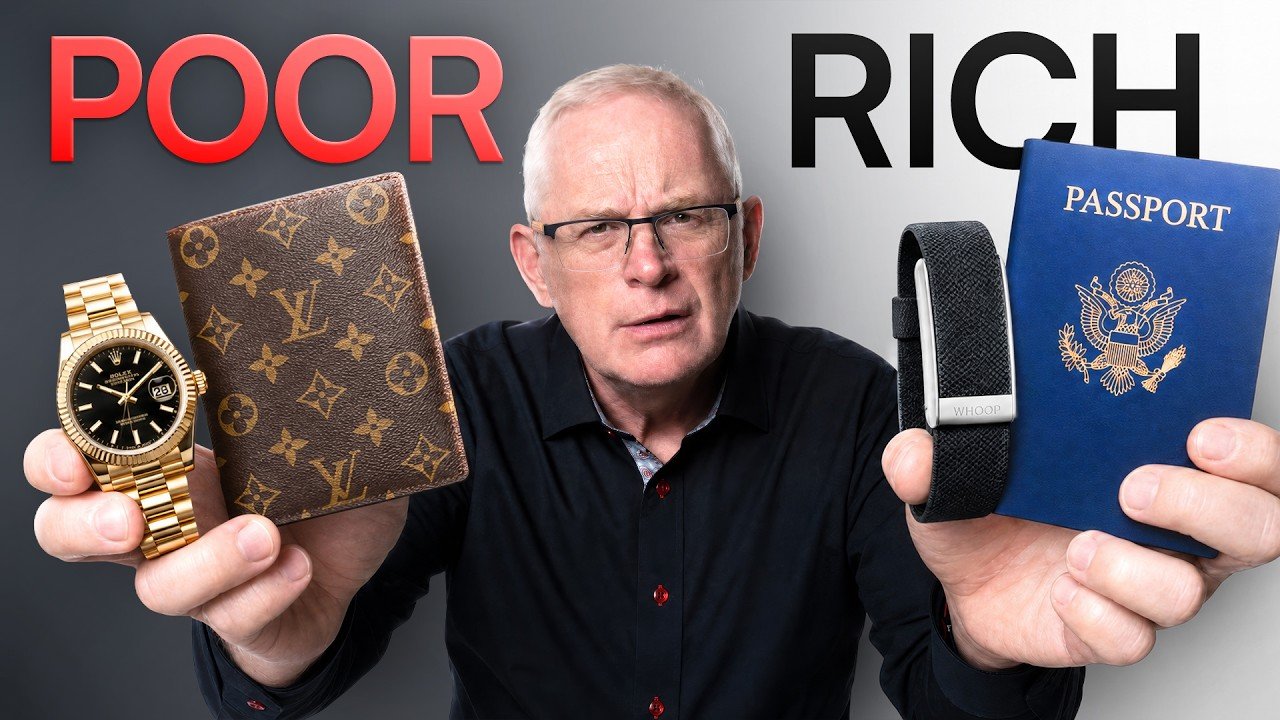
The sleep entry lands hardest. Studies cited in the source suggest sleep deprivation reduces decision-making ability to the same degree as being legally drunk. The point is made personal: cracking three ribs and puncturing a lung after slipping down a familiar staircase while exhausted, with broken ribs missing a kidney by millimeters. A fitness wearable called a Whoop now tracks sleep, recovery, and daily physical strain. As the source puts it, about the device: ‘Whoop, if you’re listening and want to sponsor a big-time athlete with a body like a Greek god, you know where to find me.’
The list closes on experiences over objects, tested against three emotional phases: anticipation, the moment itself, and the aftertaste. Physical things score low on aftertaste. Experiences score high because they get retold. A first solo flight, a trackside seat at the Monaco Grand Prix, flying radio-controlled helicopters for Ridley Scott on the set of Black Hawk Down. None of those have gone out of date.
A chair bought before the first video went live
Somewhere in the background of all of this sits an expensive ergonomic chair, purchased before a single piece of content was published. It predates every subscriber, every brand deal, and every return on any of the investments on this list.
The chair is still there. The back held. Everything else followed.
 Wake up to Only Happy News!